

Higher mortgage rates have pushed buyers firmly into the driving seat, with agreed sales down 9% on a year ago as greater choice and affordability pressures weigh on the housing market.
Average mortgage rates have climbed to 5.2%, their highest level in three years, according to the latest Zoopla House Price Index, up from around 4% at the start of 2026.
Zoopla estimates the increase has added around £150 a month – or £1,800 a year – to repayments for the average homebuyer.
The squeeze is feeding through into activity, with the number of homes for sale 5% higher than a year ago while sales agreed over the past four weeks are 9% lower.
Annual house price growth has slowed to 0.8%, its weakest level since July 2024, with the average UK home valued at £273,000.
BUYERS HAVE MORE CHOICE
The widening gap between supply and demand is most pronounced across London and southern England, where the number of homes for sale is 8% higher than last year.
Sales agreed have fallen across every region and country, with the sharpest declines in the West Midlands, down 15%, and East of England, down 14%.
Scotland is proving more resilient, with sales agreed just 1% lower and the number of homes available up 3%.
Official house price figures also point to a widening geographical divide. ONS data for July showed prices in Scotland were 2.3% higher than a year earlier, while the North East recorded the strongest growth among English regions at 4.9%.
London, meanwhile, recorded a 3.3% annual fall – its 11th consecutive month of declining prices – with the average home in the capital £19,000 below its July 2025 peak.
Mortgage activity had also begun to soften before the latest increase in rates. Bank of England figures showed approvals for house purchases fell to 56,100 in July from 58,200 in June, below the previous six-month average of around 60,800.
ONE IN FOUR HOMES RETURN TO MARKET
Zoopla found a quarter of homes newly listed for sale during September had already been marketed within the previous 12 months.
Six in 10 of those returning properties have been relisted at a lower asking price.
Relistings are particularly prevalent among flats and larger houses, which are generally taking longer to attract buyers. In London, a third of flats coming to market have previously been listed, compared with fewer than one in 10 in Scotland.
The contrast is also apparent in the speed of sales.
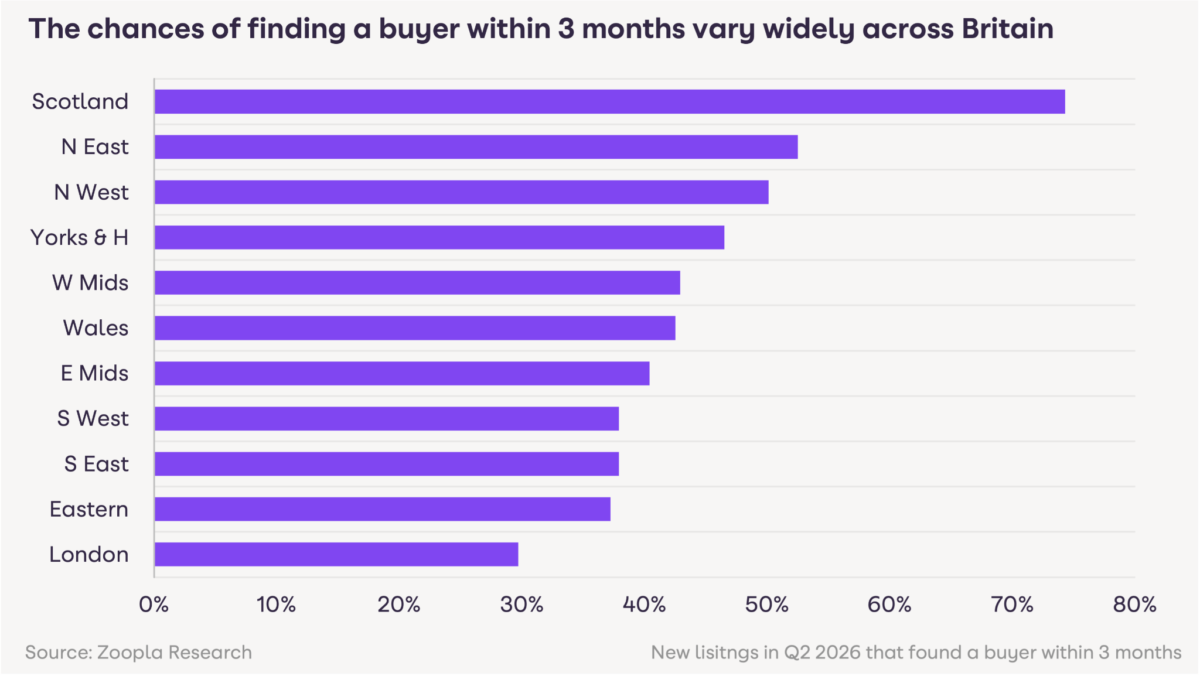
Around three-quarters of homes listed in Scotland find a buyer within three months, compared with approximately half across northern England and just three in 10 in London.
FLAT PRICES FALL FOR 15 MONTHS
Different property types are also increasingly moving at different speeds.
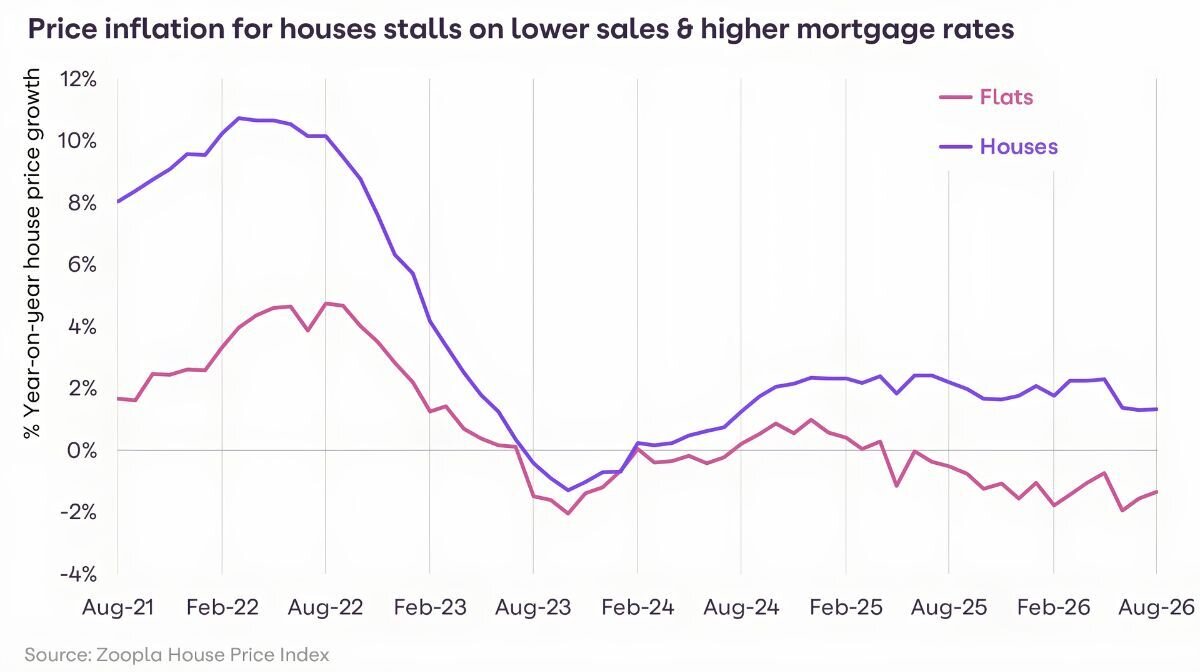
UK flat prices have now fallen for 15 consecutive months, while house prices have continued to increase by around 2% to 2.5% annually over much of the past year, although that growth has slowed more recently.
Zoopla’s latest figures put annual house price growth at 1.3% compared with a 1.3% decline for flats.
The regional differences are substantial. House prices are up 6.7% in Northern Ireland, 3.6% in the North West and 3.3% in Scotland, while they have fallen 0.3% in the South East and 0.2% in the South West.
Flats are falling in value across almost every region, with Scotland and the North East among the exceptions.
PRICE GROWTH SET TO SLOW FURTHER
Zoopla expects overall house price inflation to drift towards 0.5% by the end of the year and forecasts around 1.1 million sales during 2026, compared with 1.2 million last year.
The latest completed-sales figures have so far shown a more modest slowdown. HMRC recorded 96,710 seasonally adjusted residential transactions in July, 1% fewer than a year earlier and 2% below June. The figures typically lag market conditions because completion can take place several months after an offer is accepted.
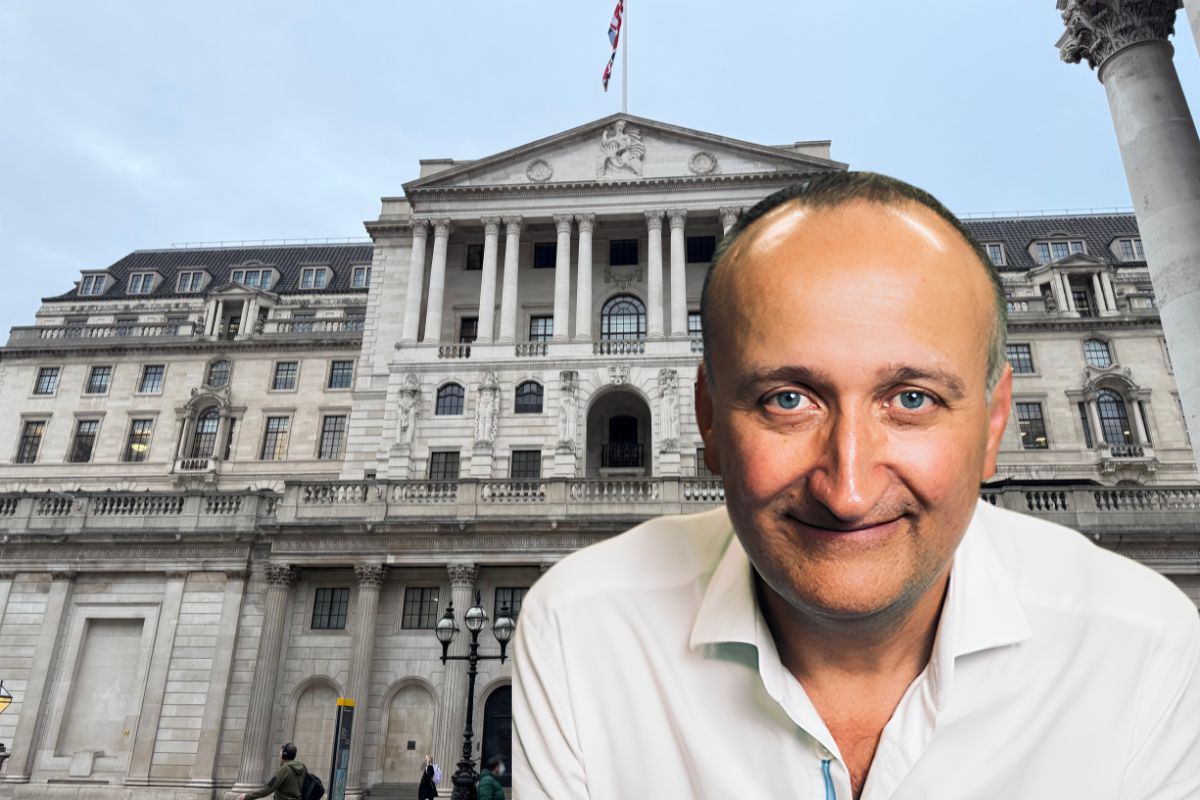
Richard Donnell (main picture, inset), executive director at Zoopla, said: “The Middle East conflict has pushed up energy prices and mortgage rates, tempering the autumn rebound in housing activity. Borrowing costs are likely to remain elevated, with house price inflation drifting towards 0.5 per cent by year-end and annual sales expected to be closer to 1.1 million versus 1.2 last year.
“While key measures of housing market activity are lower than last year, there is still plenty of demand for homes.
“Buyers are simply more cautious and selective about what they view and offer. Sellers who factor in local market conditions and seek detailed advice from their local estate agents on how to set the asking price, can still find a buyer relatively quickly.
“Getting the right price from the outset is essential. If you are selling an affordable two or three bed home in the North of England it is a strong market. The most challenging pricing decisions face sellers of flats and larger houses across southern England.”


