


Bristol has retained its position as England’s Japanese knotweed capital, recording more than twice the infestation density of its nearest rival according to Environet.
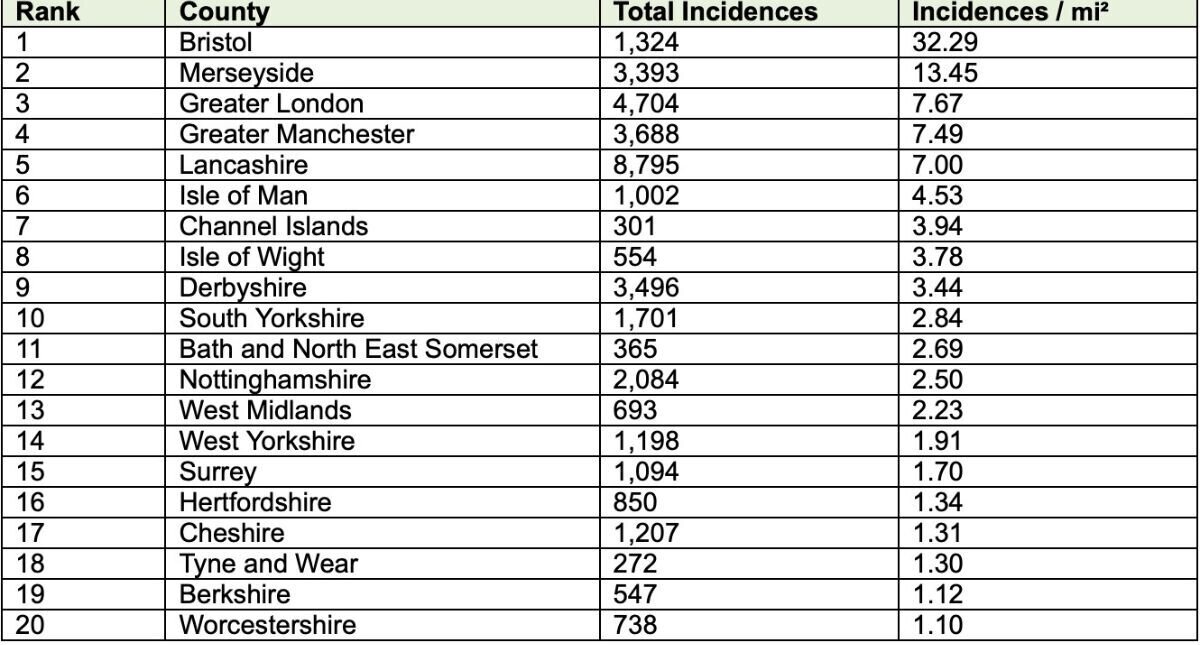
The invasive plant specialist recorded 32.29 incidences per square mile in Bristol, followed by Merseyside at 13.45, Greater London at 7.67 and Greater Manchester at 7.49.
Environet based its rankings on more than 100,000 verified sightings collected through its live online tracker, Exposed: The Japanese Knotweed Heatmap.
The firm estimated that Japanese knotweed affects 7% of UK homes, equivalent to more than 1.58 million properties, potentially creating complications for owners looking to sell or secure mortgage finance.
INDUSTRIAL AREAS DOMINATE
Lancashire completed the top five with seven incidences per square mile, while Derbyshire, South Yorkshire, Nottinghamshire, the West Midlands and West Yorkshire also appeared among the 20 most densely affected locations.
Former docklands and industrial areas featured prominently in the rankings, reflecting the role played by contaminated soil, construction, infrastructure projects and waterways in spreading the plant.
Japanese knotweed can damage buildings, cross property boundaries and lead to legal disputes if it is not properly managed. Environet estimated that an infestation typically reduces a property’s value by around 5%, equivalent to approximately £13,500.
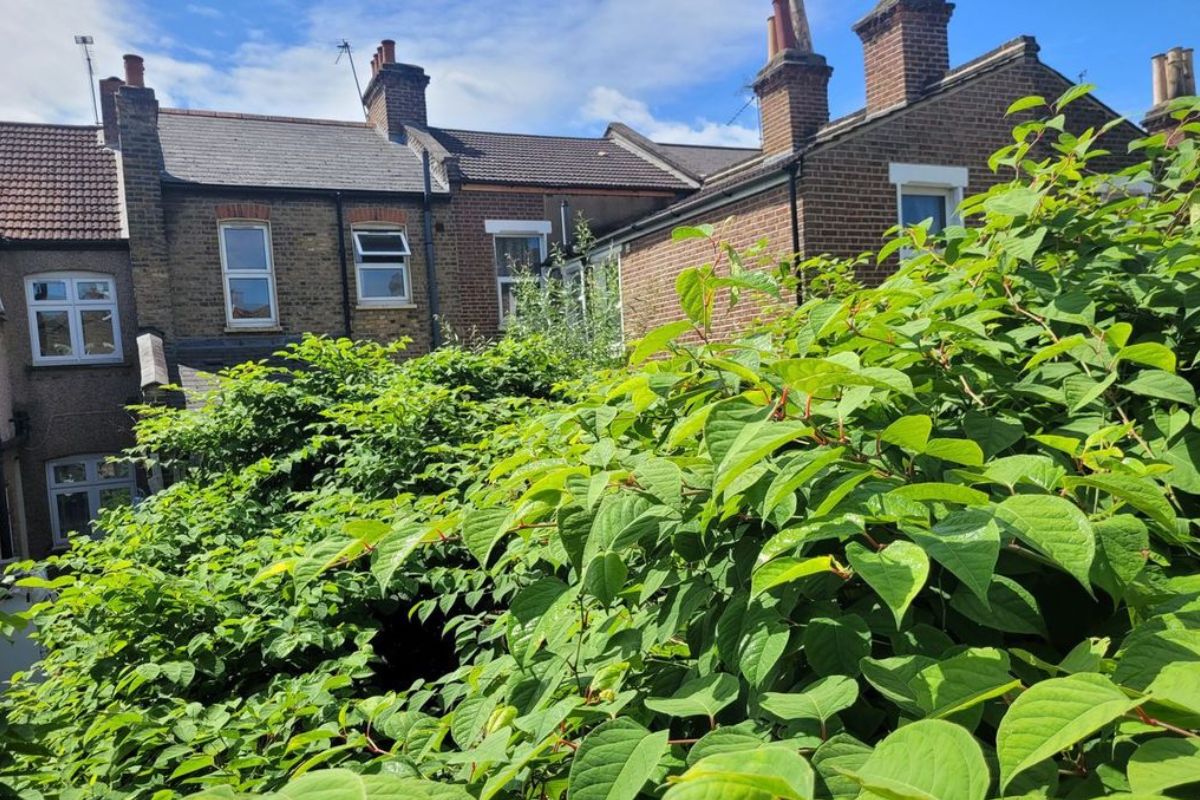
Although knotweed does not reproduce through seed in the UK, its underground root system can extend up to seven metres laterally. Small fragments of its rhizome can also generate new plants.
EARLY IDENTIFICATION
Emily Grant (main picture), director at Environet, said: “Japanese knotweed is now firmly established across England, with former industrial and port areas recording by far the highest concentrations.
“While there are significant hotspots in the south such as Bristol and London, the north of England accounts for more than half of the top 20 hotspots by infestation density.
“My advice to anyone living or buying a home in a Japanese knotweed hotspot is to familiarise yourself with what it looks like and check your garden regularly during the growing season.”
Grant added that early identification could make an infestation easier and less expensive to address, while a professional treatment plan could help homeowners preserve their property’s value.
During summer, the plant can be identified by its tall bamboo-like canes, shield-shaped green leaves and dense clusters of stems. Creamy-white flowers can appear towards the end of the season.
Read more about Japanese Knotweed HERE.


