

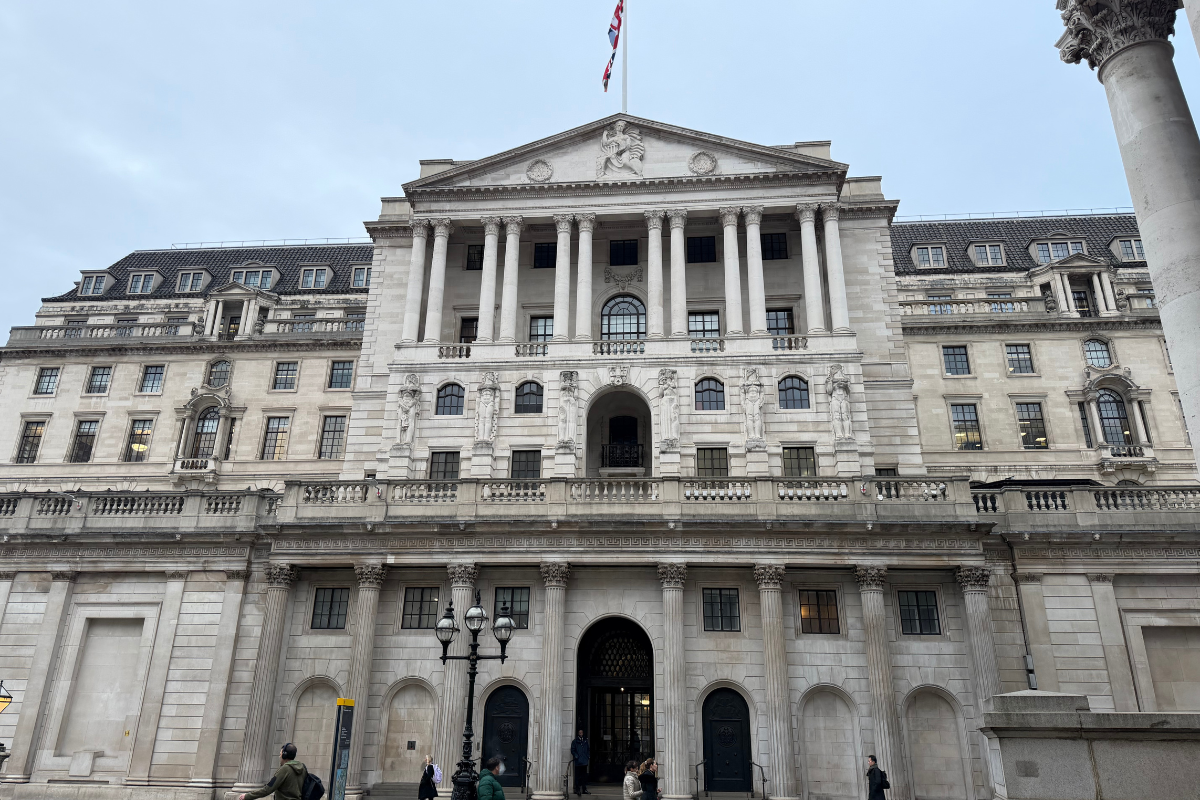
The Bank of England has kept Bank Rate at 3.75%, but warned that persistent increases in global energy prices could force it to tighten monetary policy if inflationary pressures spread through the UK economy.
The Monetary Policy Committee voted by six members to three to leave rates unchanged at its meeting ending on 16 September, with the minority favouring a 25 bps increase to 4%.
The decision came after UK inflation rose to 3.1%, with the Bank expecting it to increase further as disruption to energy supplies and transportation caused by the Middle East conflict feeds into fuel, utility and business costs.
Although the Bank said there was so far little evidence of significant secondary effects on wages and prices, it warned that the risk of more persistent inflation would increase if elevated energy costs were sustained.
Higher mortgage rates and corporate borrowing costs since the conflict began were already making households and businesses more cautious about spending, the Bank said. A weaker labour market, with more people looking for work than there are vacancies, was also helping to contain wage pressures.
Andrew Bailey, governor of the Bank of England, said: “Today, we’ve held Bank Rate at 3.75%. So far, higher global energy costs have had a limited effect on price and wage setting in the UK.
“But the longer this volatility persists, the bigger the impact it will have on inflation, and the more likely it is we will need to raise Bank Rate to ensure that inflation falls back to our 2% target.”
MORTGAGE MARKET ALREADY REPRICING
Mortgage industry figures said the hold would avoid an immediate additional increase for borrowers on variable and tracker products, although they cautioned that mortgage pricing was already responding to movements in swap rates and wholesale funding costs.
Jon Hall, group chief commercial officer at OSB Group, said: “The Bank of England’s decision to hold interest rates at 3.75% follows the European Central Bank’s move to raise its own rates last week. For the mortgage market, a hold offers a moment of stability, but borrowers should remain cautious about how long that hold will last.
“Market expectations already point to a further rise as soon as November. That gap between today’s decision and where rates may be heading is exactly the kind of uncertainty that makes planning difficult for borrowers, particularly those weighing up when to fix.
“For those coming to the end of fixed-rate deals, today’s hold does not change the fact that refinancing conditions remain considerably tougher than when many locked into their current rate. Affordability pressures are set to persist regardless of what the Bank decides today.
“In the buy-to-let market, landlords are still absorbing the cumulative impact of higher borrowing costs, and the prospect of further rate rises ahead means that pressure is unlikely to ease soon.
“Whatever direction the rates move next, the relationship borrowers and landlords build with brokers and specialist lenders who understand their circumstances will matter more than ever.”
PRESSURE IS NOW BUILDING
Steve Cox, chief commercial officer at Fleet Mortgages, said: “On balance, holding BBR at 3.75% feels like the right decision, although yesterday’s inflation figures underline just how much pressure is now building on the MPC.
“CPI has risen for a second consecutive month, from 2.9% to 3.1%, and with higher oil and gas prices continuing to feed through as the conflict involving Iran and the US persists, the risks clearly remain to the upside.
“However, increasing BBR would do very little to address inflation being generated by global energy prices, while it would immediately increase costs for borrowers on tracker and variable-rate mortgages. The MPC has therefore chosen to hold its position for now, but if inflation and energy costs continue moving in this direction, the pressure to act is likely to become overwhelming.
“For the buy-to-let mortgage market, today’s hold certainly should not be interpreted as meaning product rates will stand still, because lenders have already had to respond to higher swap rates and funding costs over recent weeks.
“Mortgage pricing has effectively been moving ahead of the MPC, although the need for some lenders to build business volumes during the remainder of 2026 could provide some counterweight to those funding pressures.
“For landlords approaching a refinance there is clearly a need to act, but purchasing landlords should also think carefully about simply waiting for rates to improve, because there is no guarantee they will.
“Exploring what is available now, and working with an adviser to understand those options, appears far more sensible than trying to predict exactly where pricing might be several months from now.”
ATTENTION TURNS TO SWAPS AND INFLATION
Ben Allen, managing director of The Right Mortgage & Protection Network, said: “The decision to maintain Bank Base Rate at 3.75% is welcome, particularly as there had been a growing expectation in recent weeks that the MPC might have felt this was the time to act.
“Inflation rising from 2.9% to 3.1% in August was in line with expectations, and some of that increase was driven by higher motoring costs, particularly fuel, so the Committee has clearly concluded there is not yet sufficient evidence that these inflationary pressures require another increase in BBR, or indeed that any rise would actually work in terms of bringing inflation down to target.
“However, the inflationary risks have certainly not disappeared, particularly from the two ‘W’s’ of war and weather, with the continuing US-Iran conflict creating uncertainty around energy, shipping and consumer goods costs, while adverse weather conditions affecting crops could continue to feed into food price inflation.
“If we have avoided a rise today, there will inevitably be a question over whether it has simply been postponed.
“For the mortgage market, however, today’s hold feels slightly irrelevant because change is taking place anyway. Swap rates and lender funding costs have risen, mortgage rates have been moving upwards and the widespread product price reductions we saw earlier in the year have become something of a distant memory, with some lenders having to reprice more than once in a week and advisers working increasingly hard to meet product/rate withdrawal deadlines for their clients.
“Lenders have to react to their own funding costs, but those continuing to give advisers meaningful notice of changes deserve credit because it makes a significant difference in such a fast-moving market.
“Maintaining BBR at 3.75% at least avoids adding further pressure to borrowers on tracker, discounted and variable rates, but attention will now turn to swaps, the future inflation outlook and, of course, the Budget next month and accompanying OBR forecast, as the country waits to see what those might mean for households, the economy and ultimately the mortgage market.”


