

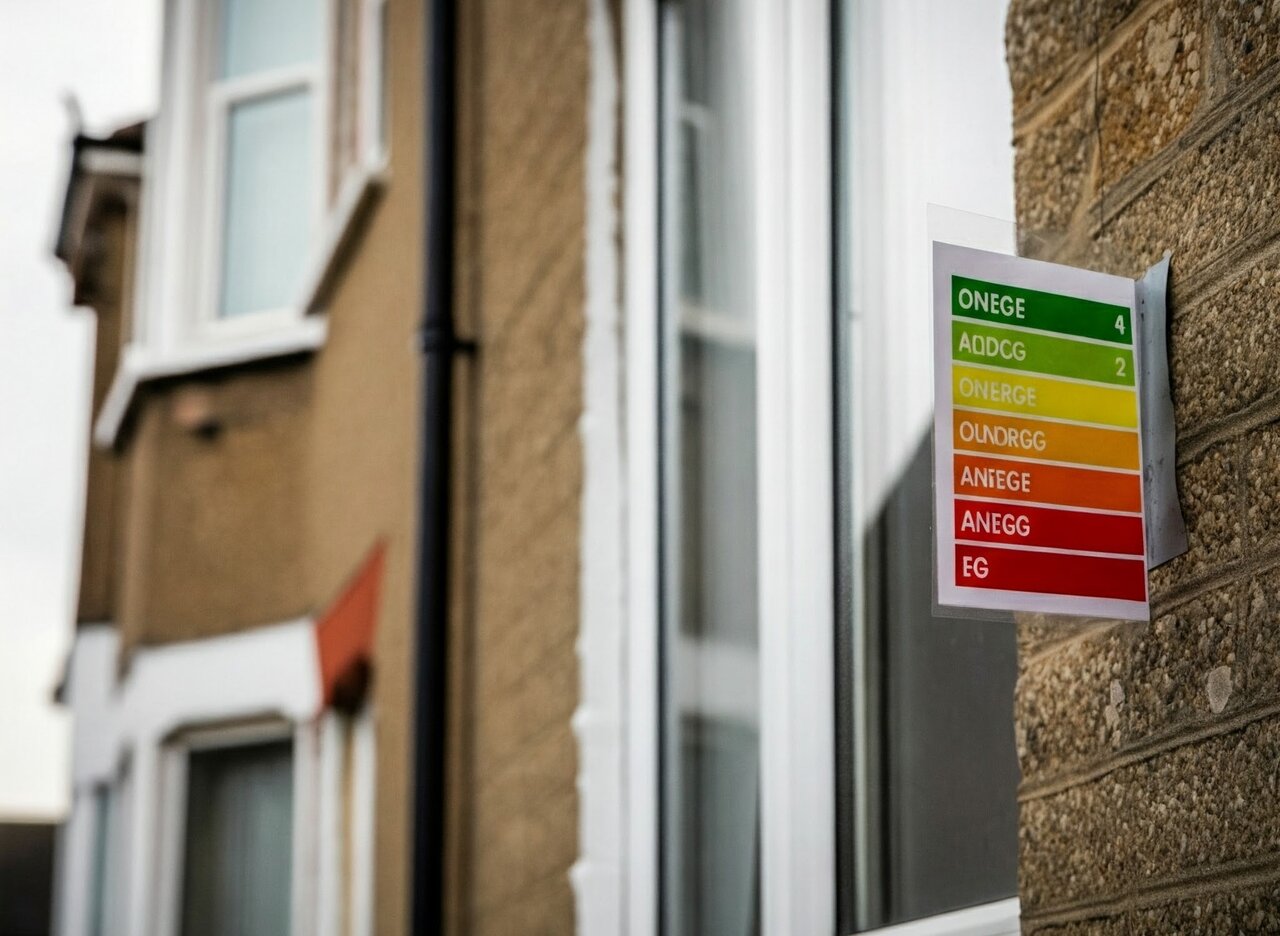
Almost three-quarters of consumers believe homes with weaker energy-efficiency ratings could become harder to sell over the next five years, according to research from Together.
The survey of 2,000 UK adults found 73% were concerned that properties with poor EPC ratings would become increasingly difficult to sell, while 74% said they would pay more for an energy-efficient home.
Those prepared to pay a premium said they would spend an average of £5,293 more for a property offering better energy efficiency.
Running costs are also playing a greater role in purchasing decisions. Some 45% of respondents identified low energy bills as one of the most important factors when buying a property, while 15% said higher energy costs could be enough to rule out a purchase altogether.
However, the cost of carrying out improvements remains a significant obstacle. Half of those surveyed cited the expense of upgrades as the main barrier to improving their property’s energy performance, while 34% said they were considering work but could not afford it.
Nearly two-thirds, 63%, said they would be more likely to carry out energy-efficiency improvements if affordable finance was available.
REGIONAL DIVIDE
Separate analysis by Together highlighted wide variations in EPC performance across England and Wales.
The Isles of Scilly recorded the lowest proportion of homes rated EPC Band C or above, at 12.42%. It was followed by Gwynedd at 27.79%, Ceredigion at 31.51% and Staffordshire Moorlands at 31.66%.
Castle Point, Pendle, Hyndburn, Powys, Blackpool and Carmarthenshire also appeared among the 10 local authority areas with the lowest proportions of Band C-or-above properties.
At the other end of the table, Tower Hamlets recorded the highest proportion, with 82.21% of homes achieving Band C or above. Knowsley followed at 74.40%, with Salford at 71.18%.
Milton Keynes, Southwark, Hackney, Newham, the City of London, Dartford and Eastleigh completed the 10 highest-ranked areas.
The research also found 22% of respondents expected rising energy bills to be among the biggest influences on UK homes by 2030, compared with 24% who selected rising house prices.
Buyers were also looking for features capable of reducing household energy costs. Solar panels were sought by 41% of respondents, while 34% cited triple glazing and 25% loft insulation.
Ryan Etchells, chief commercial officer at Together, said: “Rising energy bills have put pressure on all homeowners’ pockets over the past few years. Savvy buyers are now thinking beyond the purchase price of a property, ensuring they’re aware of what a home will cost to run every month.
“Energy efficiency is a key part of affordability, so homes with lower running costs are becoming more attractive. While owners of less efficient properties may need to invest more upfront to save money in the long run, the benefits of home improvements can counter the costs.
“As many homeowners recognise the benefits of improving energy efficiency, finding ways to spread costs through bridging or second charge loans can help homeowners make the improvements they need whilst also increasing their property’s value and appeal.”


