

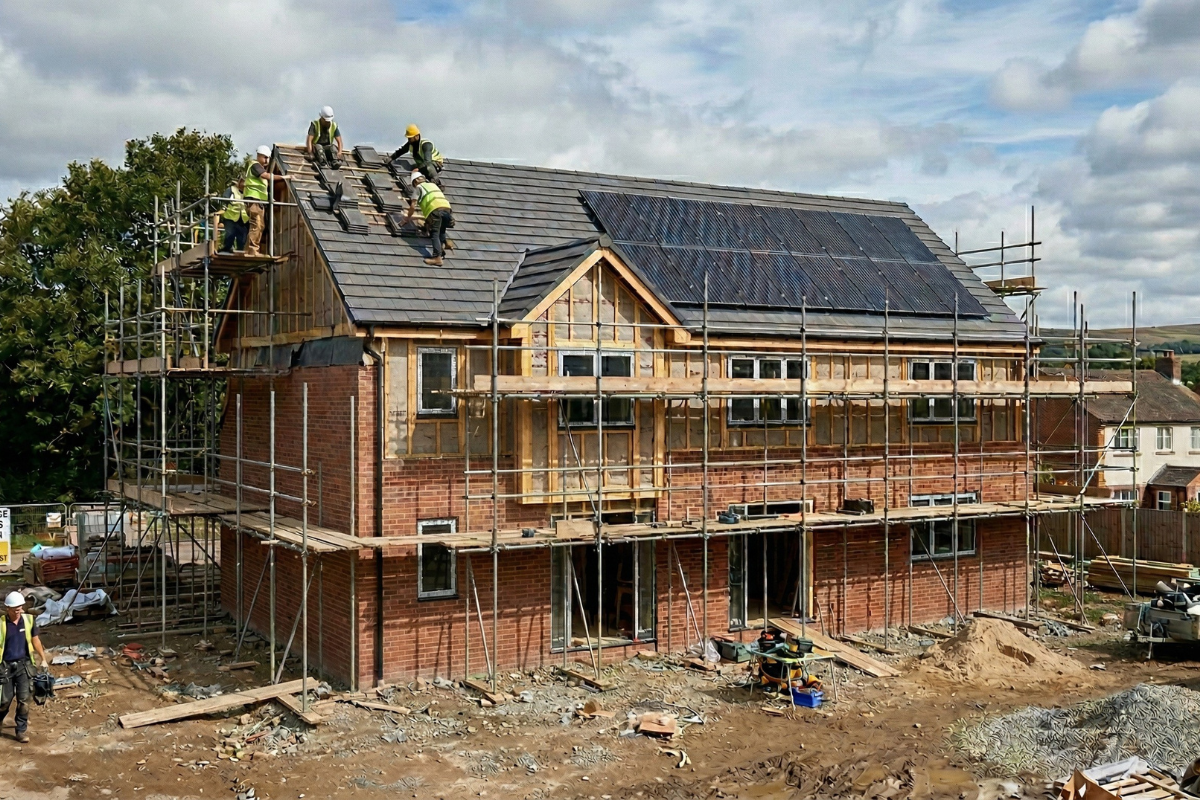
The average asking price of newly instructed new-build homes in Great Britain edged higher in the year to July, according to Propertymark.
The average price rose from £500,450 in July 2025 to £501,658 in July 2026, although the national figure concealed marked regional differences.
Scotland, Wales, the East Midlands, the North East, the North West, the South West, Yorkshire and Humberside, and the West Midlands all recorded annual increases.
The West Midlands posted the largest cash rise, with the average new-build asking price increasing by £33,838 from £384,443 to £418,281.
Yorkshire and Humberside recorded the smallest increase, with the average rising by £4,848 from £342,998 to £347,846.
Prices fell in London, the South East and the East of England. The South East recorded the smallest decline, with its average falling by £3,300 from £552,109 to £548,809.
The sharpest fall was in the East of England, where the average asking price dropped by £18,713 from £523,714 to £505,001.
Propertymark said regional averages could be affected by the location of developments, planning requirements, property types, and material and labour costs. Northern Ireland was excluded from the analysis because of limited data availability.
Nathan Emerson, chief executive of Propertymark, said: “While these figures show an overall year-on-year rise in the average asking price of many new-build properties, regional disparities remain, making it more challenging for some aspiring homeowners to get onto the property ladder.
“With the Budget due on 28 October 2026, any housing-related announcements will be closely watched, particularly measures aimed at helping more first-time buyers purchase a home.
“Across the entire UK, there is a continued focus on delivering the right homes in the right places. Greater devolution across England could give regions more control over housing policy and help deliver solutions that better reflect local needs.
“Every nation faces its own housing challenges, and addressing them will require ambitious, targeted policies to better balance housing supply and demand over the long term.”


