


The gap between UK house prices and earnings has narrowed to its lowest level since 2015, although higher mortgage rates have limited the benefit for borrowers, according to Lloyds.
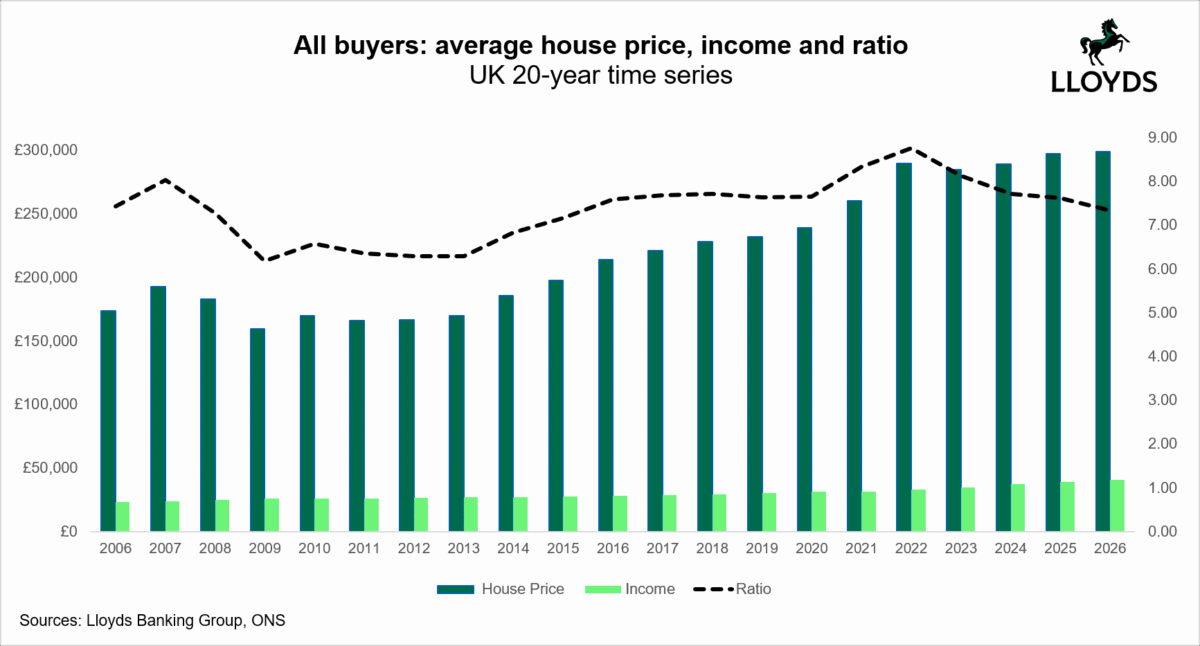
The average home now costs 7.3 times average earnings, down from 7.6 times a year earlier, after wage growth continued to outstrip house price inflation.
Average property prices increased by 0.5% over the year to £299,131, while average earnings rose by 4.5% to £40,790.
However, the improvement in the price-to-income measure has not translated into lower monthly borrowing costs. Lloyds said average mortgage repayments had risen by £57 over the year, from £1,100 to £1,157, as a result of higher interest rates.
Andrew Asaam, mortgages director at Lloyds, said: “There are some encouraging signs for people looking to buy a home. Wages have continued to rise while house prices have remained relatively stable, helping to narrow the gap between earnings and house prices.
“However, affordability remains stretched for many households. Mortgage rates are higher than they were a year ago and saving for a deposit continues to be one of the biggest barriers facing first-time buyers.”
 FIRST-TIME BUYER AFFORDABILITY IMPROVES
The price-to-earnings ratio for first-time buyers has fallen below six for the first time since 2015, dropping from 6.1 to 5.9.
The typical first-time buyer property increased in price by 0.3% over the year, from £238,875 to £239,681. A 10% deposit on the latter figure would still require buyers to accumulate almost £24,000.
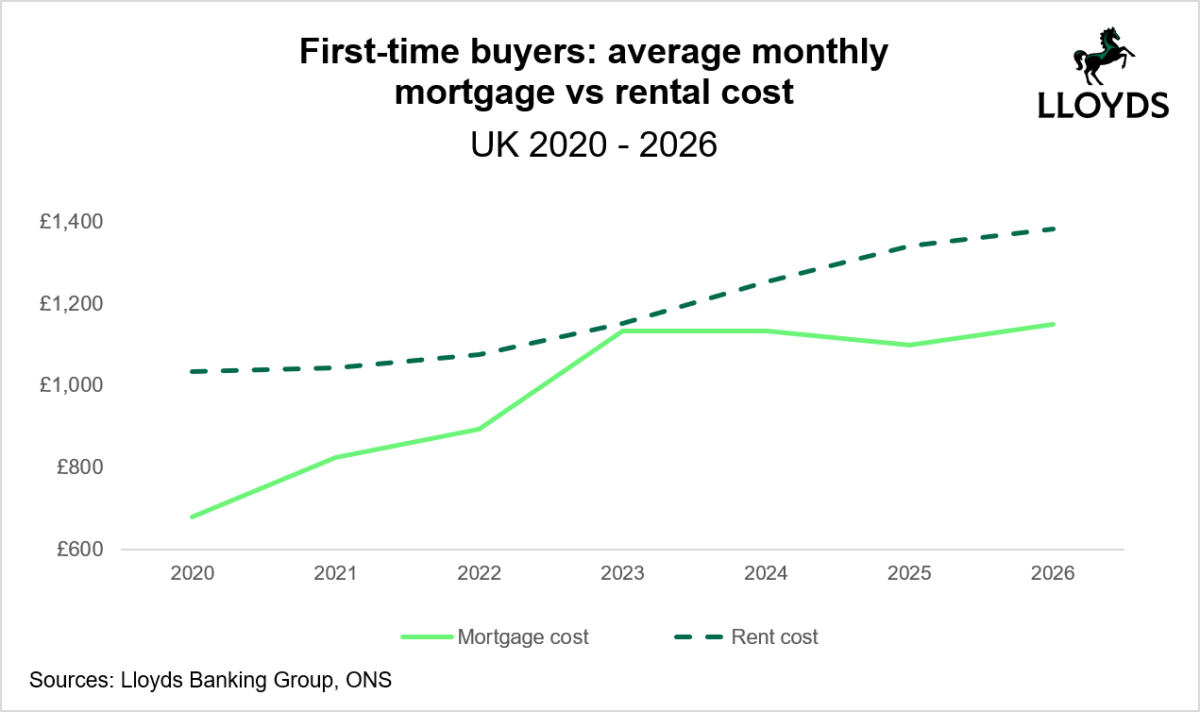
Borrowing costs have also increased. Lloyds calculated that average monthly mortgage repayments for first-time buyers had risen from £1,100 to £1,150 over the year.
Wage growth meant those repayments continued to account for about 34% of average monthly income. By comparison, average rents increased by 3.2% from £1,339 to £1,382 a month, equivalent to 41% of income.
Asaam said: “Buyers may have more options than they realise, including mortgages designed for those with smaller deposits. While these won’t be right for everyone, they can help some buyers take their first step onto the housing ladder sooner.”
SOUTH RECORDS BIGGEST IMPROVEMENTS
Some of the largest falls in price-to-income ratios were recorded in traditionally more expensive parts of the country, although London and the South East remained the least affordable regions.
In the South East, the ratio fell from 9.7 to 9.1, while Greater London recorded a reduction from 10.9 to 10.3. Eastern England improved from 8.7 to 8.2 and the South West from 8.2 to 7.7.
Changes were smaller in less expensive markets. The North East ratio edged down from 5.1 to 5.0, Scotland remained at about 5.3, the North West fell from 6.5 to 6.3 and Yorkshire and the Humber moved from 6.0 to 5.8.
Northern Ireland was the only nation or region where the ratio increased. House prices rose by 7.4%, compared with earnings growth of 3.7%, taking the measure from 5.8 to 6.0.
SCOTLAND AND NORTHERN ENGLAND LEAD LOCAL RANKINGS
At local authority level, Inverclyde and Aberdeen were the most affordable areas covered by the research, with average homes costing 3.5 times earnings. Kingston upon Hull, Blackpool and Dundee followed at 3.6 times earnings.
Elmbridge in Surrey remained the least affordable, despite its ratio falling from 18.7 to 17.4. Kensington and Chelsea recorded a ratio of 17.3, followed by St Albans at 14.1.
Other expensive markets recorded substantial improvements. Westminster’s ratio fell from 15.2 to 13.3 and Cambridge’s from 11.4 to 10.0, while New Forest moved from 10.1 to 8.7.
Some comparatively affordable markets moved in the opposite direction. Rossendale’s ratio increased from 4.8 to 5.4, Wrexham from 4.9 to 5.5, Halton from 5.1 to 5.6, Argyll and Bute from 4.6 to 5.2 and Chesterfield from 5.2 to 5.8.
Asaam said: “Where you buy continues to make a huge difference to affordability. Our recent research showed homebuyers can save 28% on average by looking just next door to the UK’s priciest postcodes.
“For first-time buyers in particular, a small shift in location could make a big difference – not just in getting on the ladder, but in what kind of property is within reach.
“Many parts of Scotland and northern England continue to offer some of the best value relative to local earnings. For buyers with flexibility over where they live, that can make a meaningful difference to what they can afford.”


