


More than a third of UK employees remain financially fragile despite being in work, highlighting the potential impact that even a short interruption to household income could have.
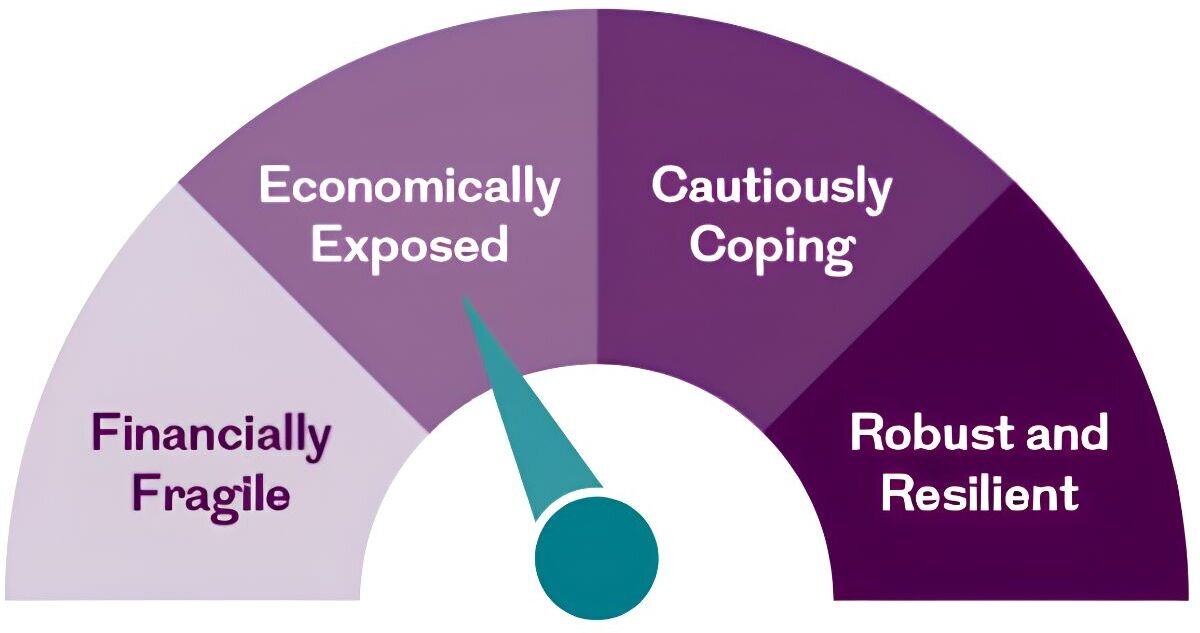
Royal London’s latest Financial Resilience Report classified 35% of employees as financially fragile, with another 40% described as economically exposed.
Across the wider adult population, the average score on the provider’s Financial Resilience Barometer was just 33%, placing the UK as a whole in its “economically exposed” category.
The findings suggest that employment alone is no guarantee of financial security, strengthening the case for advisers to frame protection around everyday household resilience rather than only death or critical illness.
LITTLE ROOM FOR FINANCIAL SHOCKS
Financially fragile households held average cash savings of £1,136 and had only £77 left each month after essential expenditure, according to the research.
The report also illustrated how quickly an unexpected event could weaken household finances. Among people who had experienced bereavement, divorce, job loss or another significant life event during the previous two years, 42% were classified as financially fragile.
“Income has always been the engine room of a family’s finances.”
Gregor Sked (main picture), Senior Protection Technical Manager at Royal London, said: “When people think about protection, they often focus on the biggest life events, such as death or serious illness. Those conversations remain incredibly important, but modern family finances can be knocked off course by a much wider range of pressures.
“Income has always been the engine room of a family’s finances. Our Financial Resilience Report shows many households are operating with very little financial breathing space, meaning even a short interruption to earnings can have significant consequences when cash savings are low and disposable income is limited.
“That’s why income protection should be viewed as part of a broader financial resilience strategy. Families aren’t simply looking to insure against illness, they’re looking for confidence that they will be able to withstand life’s unexpected challenges.”
PROTECTION CONVERSATION
Demand for income protection increased for a second consecutive year during 2025, with applications rising by 7% following growth during 2024.
However, the figures suggest a substantial protection gap remains between the number of households exposed to an income shock and those with cover capable of replacing lost earnings.
For mortgage and protection advisers, Royal London said the findings presented an opportunity to broaden client conversations. Rather than discussing policies in isolation, advisers could examine how savings, sick pay, income protection, life insurance and critical illness cover work together if household earnings suddenly fall.


