

The Bank of England left interest rates unchanged at 3.75% today despite inflation remaining above its 2% target as policymakers weigh persistent price pressures against a weakening economic outlook.
The latest inflation data showed CPI remained at 2.8% in May, unchanged from April and below both market and Bank of England forecasts.
While inflation remains elevated, easing food prices and lower energy costs helped offset increases in transport and fuel costs, reducing immediate pressure on the Monetary Policy Committee to tighten policy further.
Markets are also taking comfort from the recent US-Iran agreement which has eased concerns over energy supply disruption through the Strait of Hormuz. Oil prices have fallen from their conflict-driven highs, reducing fears that the Middle East crisis would trigger a sustained inflation shock across the UK economy. Seven members voted for a hold in base rate at 3.75%, two members favoured a quarter-point increase to 4%.
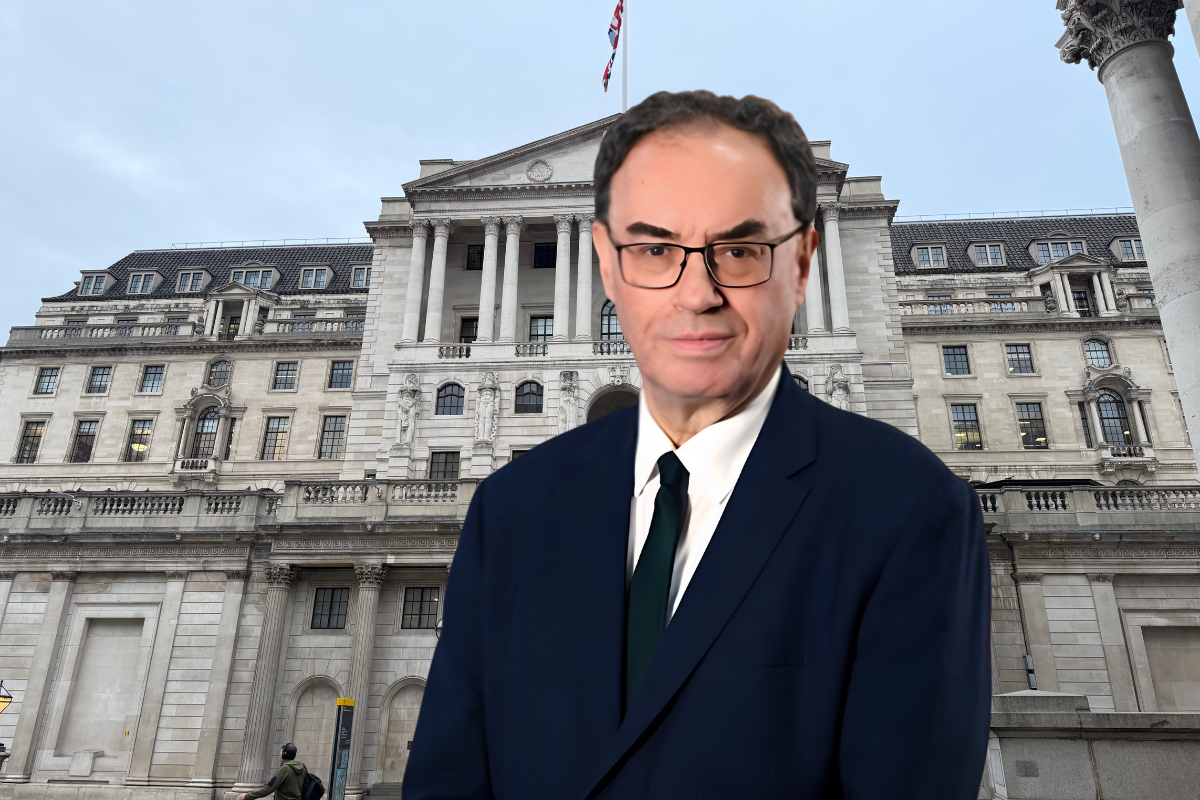
Bank of England Governor Andrew Bailey (main picture, inset), said: “Oil prices have fallen in recent days, and that’s encouraging.
“Whatever happens in the future, the higher energy prices of the past four months mean there’s already some inflationary pressure in the pipeline.
“The Bank’s job is to make sure that doesn’t turn into sustained inflation above our 2% target.”
INDUSTRY REACTION

Frances Haque, chief economist at Santander UK, said: “The Monetary Policy Committee (MPC) had some leeway to hold bank rate today at 3.75% as they wait and see how the second-round effects from the conflict in the Middle East filter through the UK economy.
“Although the inflation data released on Wednesday held steady at 2.8%, the longer-term impact of the conflict and the closure of the Strait of Hormuz has yet to fully unwind, and will inevitably push up inflation as we move through the rest of the year.
“Looking forward, while both global and domestic uncertainty means the outlook remains challenging both for the economy and the housing market, the good news is, the risk of a hike in Bank Rate in 2026 has been much reduced.
“The mortgage market has been pricing down in recent weeks, with a growing number of sub 4% fixed-rate products entering the market, which should help improve affordability and reinstate confidence in borrowers looking to move home this year.”
AFFORDABILITY STRETCHED

Adrian Moloney, Group Lending Distribution Director, OSB Group, said: “The Bank of England’s decision to hold the base rate at 3.75% provides a degree of reassurance, but it also highlights the complex balancing act facing the MPC.
“While inflation has shown encouraging signs of easing with April’s CPI at 2.8%, the trajectory back to target remains uncertain, particularly given the potential for renewed pressure from energy costs. Against this backdrop, today’s decision signals caution rather than clarity.
“For the mortgage market, a hold on rates is unlikely to drive any immediate change in pricing.
“Lenders continue to take their lead from swap rates and forward expectations. Affordability remains stretched, especially for those approaching the end of fixed-rate deals and facing a markedly different refinancing environment.
“As a result, early engagement and access to specialist, structured broker advice will be increasingly important.
“Within the buy-to-let sector, landlords are still adapting to a higher cost of borrowing, which continues to influence both investment decisions and rental dynamics. While the market has demonstrated resilience, it remains finely balanced, with sentiment closely tied to expectations around the future path of interest rates.”
BALANCING ACT

Steve Cox, CCO at Fleet Mortgages, said: “Today’s decision to hold Bank Base Rate at 3.75% feels like a sensible option but still shows the difficult balancing act facing the MPC.
“Economic growth remains subdued, with GDP having contracted by 0.1% in April, however with inflation staying steady at 2.8% this appears to have given the MPC further leeway in terms of maintaining the status quo.
“While it now looks like we have a peace plan agreed in the Middle East, the impact on energy prices and supply chains is still going to be felt for some time.
“And that’s if the plan holds. It is therefore entirely understandable, and in my view right, that the majority of Committee members have voted to hold again.
“Financial markets may be pricing in one rate rise this year, but today’s decision suggests policymakers want more clarity before taking that step.
GEOPOLITICAL RISKS

Ben Allen, managing director of The Right Mortgage & Protection Network, said: “The decision to hold Bank Base Rate at 3.75% looks like the right one given the latest inflation data for May released yesterday.
“Most had expected inflation to tick upwards in response to higher energy costs caused by geopolitical tensions, but the figures showed a more balanced picture, with lower food prices helping offset some of those pressures.
“While there remains a significant amount of uncertainty about the outlook, today’s decision suggests the MPC is comfortable taking a little more time to assess how these competing factors develop before making any further moves.
“For the mortgage market, stability is always preferable to surprises. Encouragingly, we have seen lenders across the market cutting rates in recent weeks as swap rates have eased, providing some welcome relief for borrowers and creating opportunities for advisers to help clients secure more competitive deals.
“There is still no guarantee this trend will continue, particularly given the number of economic and geopolitical risks that remain, but the recent direction of travel has been positive.
“The hope now is swap rates continue to move lower and borrowers can benefit from a more competitive finance environment in the months ahead.”
RIGHT THING TO DO

Joshua Elash, founding director of specialist lender MT Finance, said: “It is encouraging that the MPC has held base rate. This was the right thing to do.
“To increase it at this point could have put further strain on both lenders and borrowers.
“With a framework for peace in place between Iran and the US, we should see some stability return to the mortgage market, as well as an easing in tensions around energy costs.”
STEADY HAND

Mark Harris, chief executive of mortgage broker SPF Private Clients, said: “An increase in base rate was always possible at this meeting but never looked likely.
“While there are inflationary concerns, and expectations that prices will rise further – with May’s hold at 2.8 per cent coming as a welcome surprise – there are other factors to consider.
“Concerns for the labour market and wider economy have to be factored in, as well as secondary effects caused by the Middle East conflict.
“However, while seven members voted for a hold in base rate at 3.75%, two members favoured a quarter-point increase to 4% this time around.
“A steady hand on the tiller, rather than a knee-jerk reaction to raising rates, is vital for overall market stability and confidence, which is why we welcome today’s decision.”
PRESSURE OFF

Jeremy Leaf, north London estate agent and a former RICS residential chairman, said: “In making this decision, the Bank must weigh up whether to potentially compromise a slowing economy, including the jobs and housing market, in order to reduce the chances of inflation getting out of hand.
“We know how important the housing market is to the overall strength of the economy, bearing in mind the knock-on effects on so many other businesses. An increase in rates now would further reduce confidence and activity.
“With CPI inflation holding steady at present, the pressure is off a little from the Bank for an early increase, even if it means one will come a little later in the year.”
WELCOME NEWS

Matt Smith, Rightmove’s mortgage expert, said: “Today’s decision to hold the Base Rate will give some welcome short-term certainty to movers, and some recent easing in geopolitical tensions has helped to improve market sentiment, though the outlook remains sensitive to global events.
“There is now more limited pressure for mortgage rates to increase, and we may see lenders continue to gradually reduce rates in the coming weeks if this stability continues, with the average 2-year fixed rate currently just above 5%.
“However, borrowing costs are still higher than many buyers have been used to, and remain a key factor shaping market behaviour.
“Our latest House Price Index shows that asking prices have dipped this month, with sellers responding to more price-sensitive buyers and increased competition.”
TURNING POINT

Scott Clay, a director at Together, said: “Today’s rate hold from the Bank of England may signal a turning point for the property market, with the announcement of an end to the war in the Middle East lessening the chances of steeply-rising inflation in the near-term.
“We’ve also seen swap rates dip in the past couple of weeks, and lenders’ pricing is expected to follow suit, providing greater affordability for home buyers and movers and leading to increased movement in the housing market.
“This could provide some impetus for mortgage borrowers to move ahead with their property plans ahead of any possible future price rises.”
IMPROVED BACKDROP

Adam Bovingdon, managing director – real estate finance – United Trust Bank, said: “As expected, the Bank of England held Bank Rate at 3.75% today.
“The decision comes on the back of encouraging economic data this week, with inflation holding at 2.8%, below expectations of 3.0%, and unemployment edging down to 4.9%, suggesting the economy remains relatively resilient despite global uncertainty.
“For housebuilders, developers and property investors, today’s decision provides stability at a time when confidence is much needed.
“While challenges around viability, affordability and planning remain, easing inflation helps support expectations that interest rates will gradually reduce over time, providing an improved backdrop for development and investment activity.”
CONFIDENCE BOOST

Ben Thompson, director of home moving strategy, Mortgage Advice Bureau, said: “A second consecutive rate hold provides further reassurance to borrowers, providing a sustained period of stability for those looking to buy, remortgage, or move home.
“For first time buyers, a hold provides greater confidence when budgeting for mortgage repayments, and may encourage more people to move forward with their homebuying plans.
“Our research found that 41% of prospective buyers are waiting for a ‘sign’ before taking the next step, and a sustained period of rate stability could provide some of the reassurance they’ve been looking for.
“Even though we know we have a new wave of inflation and price pressure coming through because of the Iran conflict, the greater concern is likely to be the slow pace of economic growth. This means the outlook for mortgage rates may well soften now, as base rate cuts start to look more likely.”
RATE CUTS EXPECTED

Simon Gammon, managing partner at Knight Frank Finance, said: “The Bank of England’s decision to hold rates, combined with weak pay growth and lower-than-expected inflation, will pave the way for mortgage lenders to cut rates over the coming weeks.
“The repricing began earlier this week when Nationwide reduced its headline two-year fixed rate to 4.29%, which is now the cheapest fixed rate on the high street.
“Many lenders have fallen short of their lending targets so far this year and will be looking to win a greater share of business during the second half.
“While we are unlikely to see a dramatic fall in mortgage rates, borrowers should benefit from a gradual improvement in deals over the summer, which will help support housing market activity later in the year.”
ECONOMIC GROWTH

John Phillips, CEO of Just Mortgages and Spicerhaart, said: “I think even with the surprise news on inflation yesterday, this was always the most likely outcome. We shouldn’t be disappointed though, particularly with more hawkish members of the MPC calling for hikes.
“That threat does appear to be dissipating, but it’s certainly not gone for good. Even with the signing of an initial peace deal that intends to end the war, the impact of the Middle East conflict is still likely to feed through in the coming months – members will be conscious of this.
“I’d argue though that we also need to consider economic growth which wouldn’t be helped by any future increases in rates.
“Even with this backdrop, we have been seeing positive movements in the mortgage market and some increasing competition.
“The overriding message that brokers need to be sharing with clients is that there is still plenty of money out there and lenders that are willing to lend.
“Rate changes are coming with tweaks to products and criteria as lenders hit the halfway point of the year and look ahead to their end of year targets.
“Depending on where they are, lenders are having to be a bit more brave and bold in their appetite to risk and in their pricing to make sure they end the year where they want to be.
“This is good news for potential borrowers and all the more reason why they should rely on quality advice.”
AFFORDABILITY ISSUES REMAIN

Joe Pepper, UK Chief Executive Officer, PEXA, said: “No news is good news for borrowers and prospective buyers. With geopolitical tensions easing this week, inflation expectations are being revisited, and we are likely in for a period of interest rate stability rather than rises.
“This should support market activity as we head into the summer.
“While this is not going to improve housing affordability, we are likely to see buyers’ nerves calmed, and demand improve.
“If inflation does start to recede in the longer-term, rates will resume their downwards trajectory. Either way, the market needs to be ready to cope with a spike in demand as pent-up demand is uncorked.
“This is not currently the case. Backend infrastructure is still reliant on inefficient, fragmented legacy systems that are simply not built to deliver the speed and certainty needed to progress transactions at the scale the economy needs, nor cope with any surges in activity.
“And while the Government’s forthcoming response to its consultation on Home Buying and Selling is likely to drive positive change, improving the process, we need a holistic approach that places as much emphasis on streamlining completion as it does on securing a home and a mortgage.
NO SURPRISE

Tony Hall, head of business development at Saffron for Intermediaries, said: “Few will be surprised to see rates left unchanged this month.
“With inflation still above the 2% target, policymakers have opted on the side of caution.
“Although speculation of a rate increase had grown in recent weeks, today’s decision shows there are still grounds for cautious optimism.
“Lender competition remains strong, with mortgage rates continuing to edge down, and buyer demand remaining resilient.
“Meanwhile, the FCA’s proposed mortgage reforms are a welcome step towards borrower flexibility.
“However, affordability remains a key concern, making expert mortgage advice more important in helping borrowers navigate a fast-moving market”
STRUCTURAL SHIFT

Ryan McGrath, director of second charge mortgages at Pepper Money, said: “Today’s hold reflects the difficult position the Bank of England finds itself in. With global economic uncertainty still very much in the picture, the MPC is clearly not ready to commit to a cut just yet.
“For homeowners, the reality of this prolonged higher-rate environment is already showing up in borrowing behaviour.
“Consumer demand for second charge mortgages remains strong, and that’s not a coincidence.
“More people are choosing to raise funds against their home without touching their existing mortgage, because disturbing a competitive fixed rate to access extra capital simply doesn’t make financial sense for many of them right now.
“What we’re seeing in the market points to a structural shift, not just a short-term trend.
“Demand for loans continues to hold up well even as criteria tightens and affordability gets squeezed.
“Until rate cuts become a consistent reality, the second charge market will remain a practical, mainstream route for borrowers looking to manage their finances sensibly.”
ROOM TO BREATHE

Karen Rodrigues, director of sales at TAB, said: “This was absolutely the right call. Borrowers and brokers need stability right now, and a hold gives the market room to breathe.
“Our focus is on building momentum in lending, and that becomes very difficult when rate uncertainty is hanging over the market. Businesses are already navigating a challenging environment, and the labour market has cooled considerably.
“This is not the time to add further pressure. The committee made the right decision, and we hope it gives both lenders and borrowers the confidence to keep moving forward.”
SENSIBLE OUTCOME

Martin Sims, distribution director at Molo, said: “The Bank’s decision to hold rates feels like the most sensible outcome, given where the market is at the moment.
“Inflation is still above the Bank of England’s 2% target, growth is not exactly racing away, and there are enough global and domestic pressures in play to make keeping a steady hand the obvious call.
“For brokers and landlords, though, a hold does not mean no change at all. The market has already had to adapt to higher funding costs, tighter affordability and a more cautious investor mindset. We are not in a place where people can just assume rents will keep rising and the numbers will look after themselves.
“That is why the broker conversation has become much more detailed. Location, tenant demand, property type, rental strength and exit strategy all carry more weight than they did. In many cases, the useful work is being done before the application even lands, in how the deal is shaped and whether the income is genuinely sustainable. And this is only likely to continue in a more settled economic environment.
“At the same time, lenders have continued to respond to improving market conditions where they can.
“We have seen pricing become more competitive in parts of the market over recent months, which is helping to create opportunities for brokers and investors even without a change in Bank Rate.
“The focus now is less on where rates move next and more on how borrowers make the most of the options available to them.”
FEARS REMAIN

Jo Carrasco, business partnerships director of Stonebridge, said: “This rate hold means there’s a tantalising chance that rates have peaked.
“Inflation came in lower than expected, oil prices have been coming down and an end to the conflict in the Middle East is in sight. It meant ratesetters were able to think a bit more long term, much to borrowers’ relief.
“Fears about economic growth and unemployment remain and that’s likely to temper the temptation to increase rates to control residual price rises in the coming months.
“A return to the gradual softening of rates we saw last year beckons now that the status quo has won out, but rates won’t get back on track overnight. That creates a timing issue for many borrowers.”
RESILIENT DEMAND

Richard Pike, sales and marketing director at Phoebus Software, said: “A decision by the Bank of England to hold the base rate was widely expected, particularly following yesterday’s inflation figures. Markets had largely priced in the decision, and lenders have been competing strongly for business.
“Looking ahead, much will depend on whether inflation continues to ease over the coming months.
“Recent falls in oil prices following developments in the Middle East could help reduce some inflationary pressures further down the line, potentially giving the Bank more room to continue its gradual easing cycle.
“But for now, holding rates steady represents a sensible balance between supporting growth and maintaining confidence that inflation will return sustainably to target.
“The underlying picture for the housing market remains positive. Demand has proven resilient, lenders are continuing to innovate, and competition is supporting attractive mortgage pricing.
“The challenge for many borrowers is no longer simply the cost of borrowing, but affordability and access to the right products.”
STABILITY MATTERS

Enzo Mora, CEO and founder of The Mortgage Brain, said: “Stability is the name of the game right now with interest rates ticking downwards and the peace deal between the US and Iran.
“As we head into summer, lenders still have a strong appetite for lending and are competitively pricing mortgages.
“However, it’s not just about interest rates, we have to keep a close eye on housebuilding volumes which are still woefully low due to the uncertainty of build costs over the next 12 months, speeding up the buying and selling process and the perennial issue of stamp duty.
“The government needs to take a radical look at this tax to make some permanent reductions which will help the property industry across the board and contribute to growing the economy.”
CAUTIOUS APPROACH

Charles Resnick, CFO at Afin Bank, said: “No surprise that the Base Rate was held today, but it’s a case of rate cuts remaining delayed rather than being cancelled as the Bank of England waits for evidence that inflation is easing.
“Yesterday’s news that CPI was holding steady at 2.8% was a surprise, so that has helped reduce near-term pressure to increase the Base Rate. However, inflation is still expected to rise over the summer as the Ofgem price cap increases.
“With lower oil and gas prices pointing to a less severe peak, the question is how much of that energy shock will feed into prices and wages. The Bank of England’s Monetary Policy Committee will look for a clearer indication that second-round effects are contained.
“Lenders are likely to remain cautious, with higher funding costs, subdued housing demand and elevated macro uncertainty limiting scope for repricing, but policy uncertainty should keep swap rates and lender pricing disciplined.
“For savers, fixed-term deposit prices continue to be significantly higher than the Base Rate, providing an opportunity for customers looking to put their cash away for a while.”
CHANGING BEHAVIOUR

Melanie Spencer, growth director at Target Group, said: “Good news continues this week with inflation stabilising and the Bank of England keeping base rate as it is.
“While many would have hoped for a clearer path to rate cuts this year, the reality of the situation we’re in means I think many are just glad we’re not facing one or even multiple rate hikes.
“The mood music around that has seemed to change, as reflected in swap rates and mortgage pricing more broadly. It’s safe to say though we’re not out of the woods just yet.
“For lenders and building societies, there is a clear need to remain operationally agile in such a volatile market and economy.
“Borrower behaviour is changing, product demand is shifting and competition for both mortgage and savings balances remains intense.
“Firms need to be able to react quickly to changing funding costs, evolving borrower demand and shifts in retention activity.
“Whether it’s launching products faster, improving servicing journeys or scaling operations efficiently during periods of increased activity, lenders need infrastructure and operational models that can flex with the market.
“Specialist partners with deep expertise in mortgage servicing, collections and core platform delivery can play a key role in helping firms respond at pace without compromising on service or compliance.”
PREDICTABLE DECISION

Nick Smith, CEO of Reward Funding, says: “The decision to once again hold the Bank of England base rate at 3.75% comes as little surprise and closely reflects what we are hearing across the wider market.
“Ahead of the announcement, our latest broker survey found that 86% expected rates to remain unchanged, with just 7% predicting an increase and 7% a decrease. It’s very clear that the market was expecting continuity over change.
“It’s important to note that the decision to hold the base rate should not be confused with stability.
“The rates remaining unchanged may provide some short-term certainty, but SMEs are still operating in a volatile environment that is defined by rising costs and geopolitical uncertainty.
“For many businesses, the challenge is no longer simply the cost of borrowing but having the confidence and flexibility to act when opportunities arise.
“SMEs are not going to sit around and wait for optimal conditions. Opportunities will still appear and decisions need to be made.
“Speed, flexibility and access to the right funding make all the difference, and this is where we step in. We act fast, back ambition and help SMEs move forward when others hesitate.”
CHALLENGING TIMES

Phil Jeynes, head of individual protection at MetLife UK, said: “Today’s decision to hold interest rates means households and businesses still face a challenging economic environment, and homeowners continue to contend with higher monthly repayments.
“For those who experience illness or injury and need time away from work, the impact on household finances can be significant.
“Our research shows that more than a quarter (28%) of homeowners have missed a mortgage payment due to illness or injury, underlining the importance of financial resilience in uncertain times.”
More to follow…


