

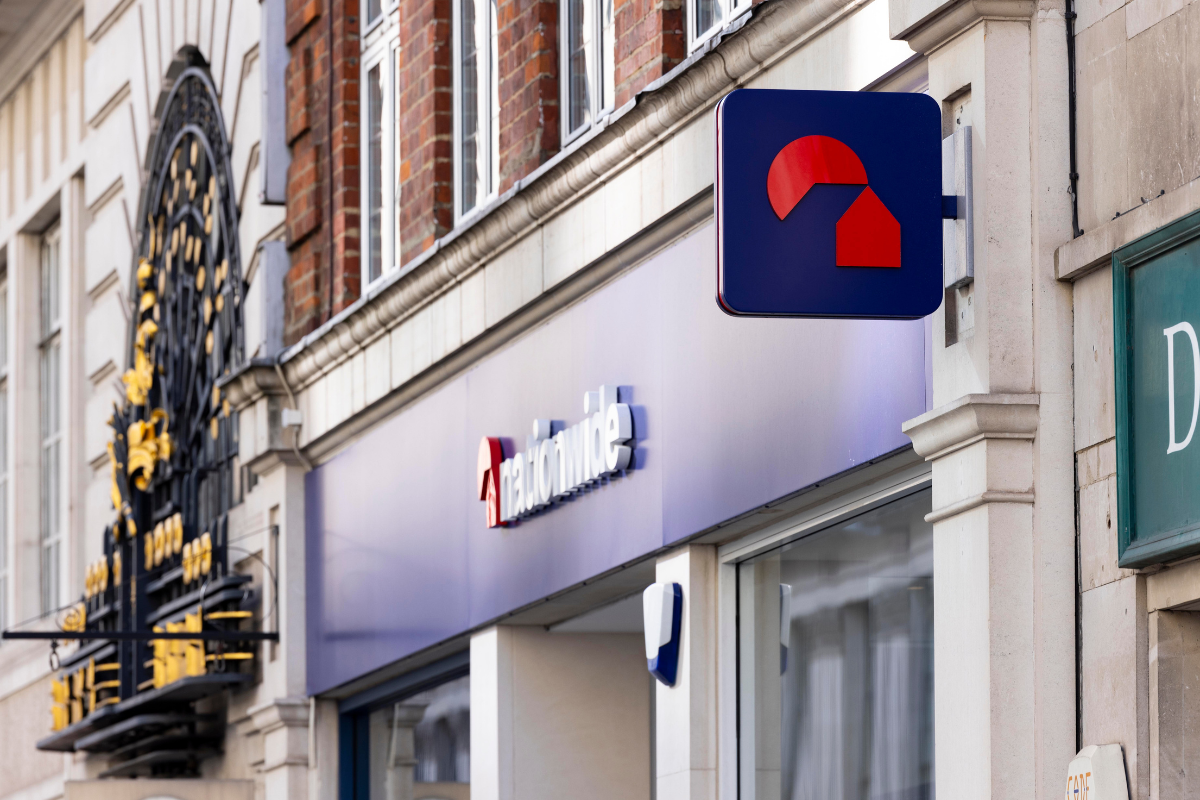
Nationwide’s latest house price index showed annual growth rose to 3.0% in April, up from 2.2% in March.
Prices increased by 0.4% month on month, after seasonal adjustment, taking the average UK house price to £278,880 on a non-seasonally adjusted basis. This compared with £277,186 in March.
The lender said the figures suggested the market had continued to regain momentum following the slowdown seen around the turn of the year.

Robert Gardner, chief economist at Nationwide, said: “UK annual house price growth picked up to 3.0% in April, from 2.2% in March. Prices increased by 0.4% month on month, after taking account of seasonal effects.
“Despite the uncertainty caused by developments in the Middle East and the subsequent rise in energy prices, the UK housing market has continued to regain momentum following the slowdown recorded around the turn of the year.
“This is somewhat surprising given that indicators of consumer confidence have weakened noticeably. GfK’s headline index has fallen to its lowest level since late-2023, reflecting households’ more pessimistic views of the economic outlook and their own financial position over the year ahead.”
WEAKENED SENTIMENT
Gardner said housing market sentiment had also weakened, with the Royal Institution of Chartered Surveyors reporting a sharp fall in new buyer enquiries in March, taking the index to its weakest level since 2023.
He said: “This softening is likely to have been influenced by higher market interest rates following the onset of the conflict, alongside a more uncertain backdrop.
“The market is likely being supported by the relative strength of household finances. In aggregate, household debt is at its lowest level relative to income for around two decades, and sizeable savings buffers have been built up in recent years, although these have not been evenly distributed across households.”
Nationwide said the outlook would depend on the duration of the energy price shock and the policy response, with UK economic growth likely to be weaker and inflation higher than previously expected.
RESILIENT MARKET
Gardner said: “However, the UK economy and housing market have proved remarkably resilient in recent years. This provides some confidence that, if the latest shock passes relatively quickly, and energy prices normalise in the quarters ahead, any near-term softening in the housing market will also prove short lived.
“Moreover, housing affordability had been improving steadily in recent years due to a combination of income growth outpacing house price growth by a wide margin and a modest decline in mortgage rates.
“While market interest rates have risen in recent months, the impact on affordability has so far been limited. Indeed, swap rates, which underpin fixed-rate mortgage pricing, remain well below the highs reached in 2023 and are broadly in line with levels prevailing in late-2024, implying only a partial reversal of earlier gains.”
INDUSTRY REACTION

Emma Cox, MD of Real Estate at Shawbrook, said: “House prices rose again in April, highlighting the property market’s underlying resilience.
“However, with geopolitical tensions yet to fully feed through, there could still be some pressure to come. Inflation remains elevated and interest rates are still relatively high, reinforcing a cautious stance from the Bank of England.
“For property investors, this may prompt a rethink on portfolio strategy or expansion plans. HMOs continue to stand out, offering stronger yields and the ability to spread risk across multiple income streams.
“In an uncertain environment, that added resilience is likely to remain attractive. Investors considering their next move may benefit from speaking to a broker to better understand their options.”
SUSTAINABLE MOMENTUM

Nicky Stevenson, managing director at luxury estate agent Fine & Country, said: “The property market is seeing an uplift at the moment, which is typical for this time of year, but this momentum looks sustainable for buyers and sellers alike.
“What’s particularly notable is that this resilience is coming through despite a more unsettled backdrop. Tensions in the Middle East and the knock-on rise in energy prices are creating cost-of-living challenges for some households, but so far, these have not deterred buyers from moving forward with their plans.
“The fact that prices have edged higher tells you there is still underlying demand. This is not the first storm the property market has weathered.”
“The key risk is whether higher energy costs feed into inflation and mortgage pricing long enough to dent confidence. But for now, these figures paint a picture of a market that is proving more robust than many expected.”
UNDER PRESSURE

Gareth Lewis, deputy CEO of specialist lender MT Finance, said: “While it is only a small uptick in prices, one wonders where they get these figures from when we are seeing values under pressure and a significant volume coming in lower than anticipated.
“As these prices were negotiated a few months ago, this may be why the figures aren’t reflecting a softening market. But from a lending perspective we are seeing valuers cautious on value while buyers are looking for a steal and prepared to negotiate on price.”
REALISM STARTING TO PREVAIL

Jeremy Leaf, north London estate agent and a former RICS residential chairman, said: “Write the housing market off at your peril.
“Another market survey – this time from the country’s largest building society – shows prices holding up better than we’d dared hope, particularly of houses, bearing in mind continuing uncertainties about the cost of living, including mortgages.
“Although the data covers the period up to the first month of the war in Iran, perhaps before it became apparent hostilities would become more protracted, we are finding on the ground realism is starting to prevail.
“Buyers and sellers are negotiating hard but the overwhelming majority of transactions are continuing. On the other hand, the volume of property on the market means it’s taking longer to secure commitment and likely to continue that way for several months yet.”
GLOBAL UNCERTAINTY

Iain McKenzie, CEO of The Guild of Property Professionals, said: “The latest figures from the Nationwide HPI are a clear sign that the housing market is continuing to rebuild momentum after a softer start to the year.
“While global uncertainty has created a more cautious backdrop, the UK market has remained notably resilient. The Bank of England’s decision to hold the interest rate, will further help to anchor confidence even as inflationary pressures persist.
“Encouragingly, mortgage markets are also showing signs of improvement. Although borrowing costs have experienced some volatility in recent weeks, a number of lenders are sharpening their pencils and introducing cuts to their mortgage products. This renewed competition will help to further improve buyer sentiment and should support activity through the coming months.”
VOLATILE BORROWING COSTS

Tom Bill, head of UK residential research at Knight Frank, said: “The impact of rising mortgage rates on house prices will be more gradual than sudden as offers that pre-date the conflict work their way through the system, which is why we have downgraded our price forecasts for this year marginally.
“Borrowing costs have been volatile in recent weeks, underlining the high degree of uncertainty that exists over how long the war lasts, to what extent it escalates and the impact of second round effects on inflation.
“Markets are pricing in two further hikes in Bank Rate this year, but the Bank of England appears as uncertain as anyone else about what comes next and looks content to sit on its hands for now.”
CAUTIOUS MOVEMENT

Karen Noye, mortgage expert at Quilter, said: “This resilience will be tested by what happens next geopolitically, particularly if swap rates begin to climb again.
“The Bank of England’s decision to hold rates at 3.75% yesterday offers stability, but not certainty. Governor Andrew Bailey has warned he cannot give a ‘cast iron assurance’ against further rate rises, underlining how the Iran war and its impact on energy prices is keeping inflation risks in play. For now, today’s data suggests that uncertainty has yet to dent house prices in a meaningful way.
“Part of that resilience reflects improving conditions in the mortgage market. Lenders have started trimming fixed-rate deals again as swap rates ease and competition for borrowers intensifies. That has created a slightly more supportive backdrop, although pricing remains highly sensitive to shifts in market expectations.
“The result is a housing market that is moving, but cautiously. Demand remains, but buyers are more price-sensitive and quicker to react to changes in mortgage costs, keeping a lid on stronger price growth.”
AFFORDABILITY CONSTRAINTS

Nathan Emerson, CEO of Propertymark, said: “While the latest Nationwide House Price Index shows house prices continuing to edge upwards, this reflects a market still heavily influenced by constrained supply rather than a sharp surge in demand.
“Stock levels remain limited across many areas, meaning even modest levels of buyer activity can translate into upward pressure on prices.
“From a market perspective, this signals cautious but improving sentiment, rather than a renewed boom.
“Affordability remains a key constraint, with higher mortgage rates continuing to cap the pace of growth. As a result, the market appears to be stabilising in a low-growth environment, where structural supply issues are doing much of the heavy lifting on pricing.”
