

UK house prices rose by 2.1% in the year to June, down from 3.5% in May, according to the latest figures from Nationwide.
On a monthly basis, prices fell by 0.8% once seasonal effects were taken into account, bringing the average house price to £271,619, down from £273,427 in May.
The figures suggest a cooling in demand, which Nationwide’s chief economist Robert Gardner said may reflect the impact of higher stamp duty costs introduced in April. However, he noted that underlying conditions remain supportive for prospective buyers.
“Unemployment remains low, real wages are rising, and household balance sheets are healthy,” he said.
“If the Bank of England lowers rates further in the coming quarters, borrowing costs may ease, helping to support market activity as we move through the summer.”
REGIONAL ANALYSIS
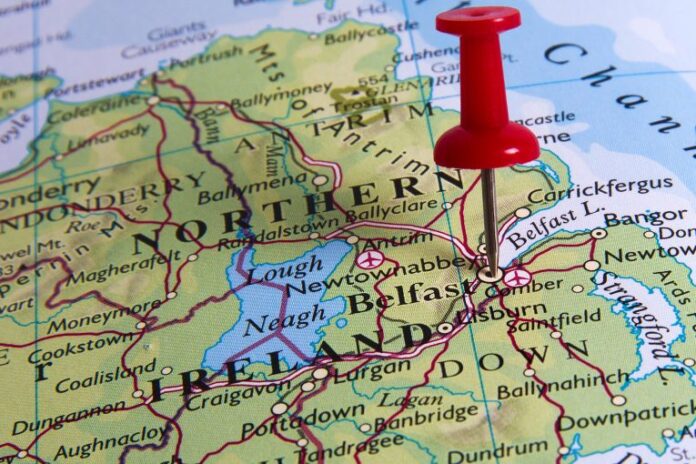
Northern Ireland remained the UK’s top performing region in the second quarter, with annual price growth of 9.7% despite a slowdown from 13.5% in Q1. Scotland recorded growth of 4.5%, while Wales saw prices rise 2.6%.
Across England, house prices rose by 2.5% annually, compared to 3.3% in the previous quarter. The north-south divide narrowed slightly, with Northern England – including the North, North West, Yorkshire & The Humber, East Midlands and West Midlands – recording annual growth of 3.1%, compared with 2.2% in Southern England.
The strongest performing English region was the North, with prices up 5.5% year on year. At the other end of the scale, East Anglia recorded the weakest growth, at just 1.1%.
When analysed by property type, terraced houses saw the largest increase in prices, with a 3.6% rise over the past 12 months. Semi-detached homes were up 3.3%, while detached properties increased by 3.2%. Flats saw only marginal growth of 0.3%, down from 2.3% in the previous quarter.
Commenting on the data, Nathan Emerson, chief executive of Propertymark, said it was “highly encouraging” to see signs of market stability despite the economic turbulence of the first half of the year.
“We still sit in a phase of inflation not quite being where the Bank of England ideally want it to be and we still have elevated base rates,” he said.
“Nonetheless, it remains encouraging that consumers are still approaching the buying and selling process with a firm degree of confidence.”

SPF Private Clients chief executive Mark Harris said slower house price growth could benefit first-time buyers, especially as lenders ease affordability pressures by cutting rates and improving loan-to-income ratios.
However, he warned that expectations around further base rate cuts may need to be tempered.
“While the borrowing environment may be easing, higher inflation and the wider economic picture remains a concern,” he said.
Gareth Lewis, deputy chief executive of MT Finance, welcomed the slower rate of growth but argued that prices remained out of reach for many buyers.

“Softening house price growth is not necessarily a bad thing when buying a home remains beyond the means of many,” he said.
“Stamp duty is a big concern, particularly now that the concession has been removed, while the high cost of living isn’t easing and interest rates haven’t come down as quick as many hoped.”
He called for structural changes to improve affordability, including tax reform and further rate reductions. While more affordable housing would help in the long term, he noted that progress remained slow due to the “archaic” planning system.

