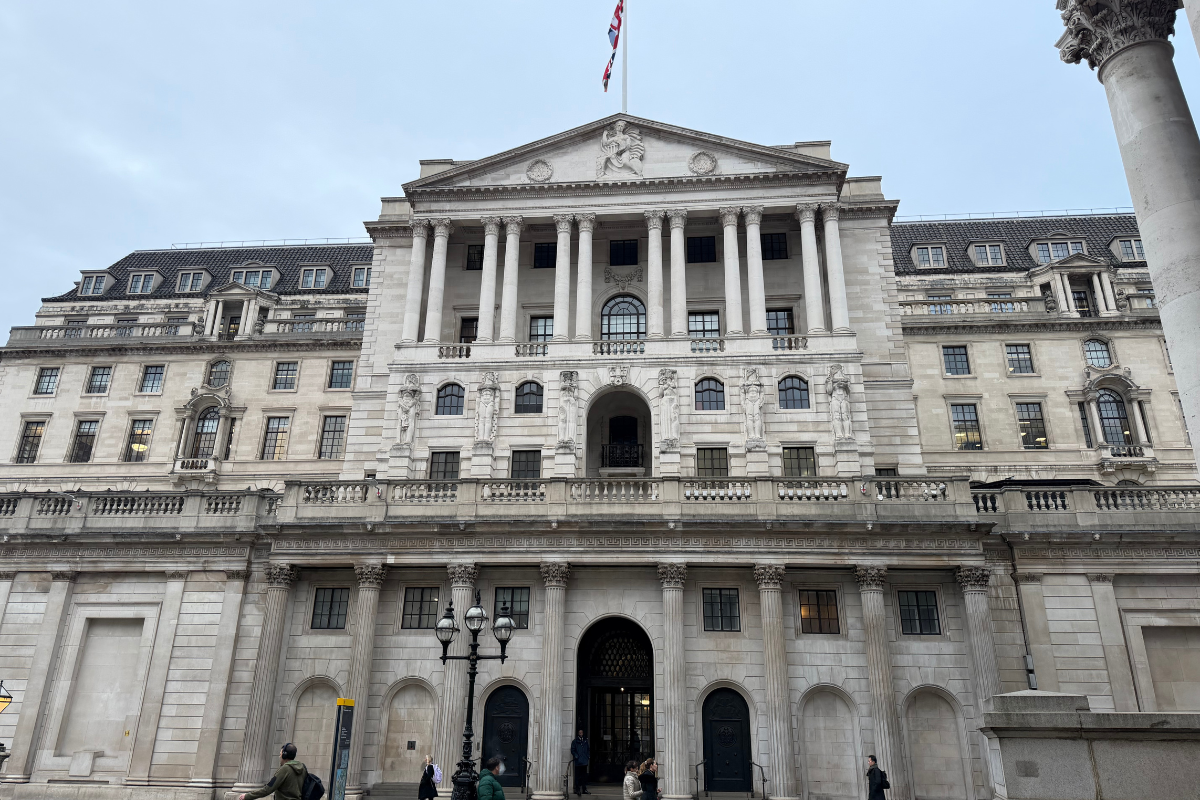
The Bank of England has held Bank Rate at 3.75% as policymakers assess the inflationary impact of higher energy prices caused by war in the Middle East.
The decision follows six cuts since August 2024 and comes after inflation rose to 3.3%, with the Bank warning that disruption to energy transportation and supply would push up fuel, utility and business costs.
The Bank’s Monetary Policy Committee (MPC) voted by a majority of 8–1 to maintain the Bank Rate at 3.75%, while one member voted for a 25 basis points increase to 4%.
The Bank said monetary policy could not affect global energy prices, but said it would act to ensure inflation returned sustainably to its 2% target over the medium term.
For mortgage borrowers and brokers, the decision leaves the market in a holding pattern, with swap rate volatility continuing to play a significant role in lender pricing.
INDUSTRY REACTION

Frances Haque, chief economist at Santander UK, said: “Given the ongoing uncertainty of the conflict in the middle east and its impact on the economy, it made complete sense that the MPC decided to hold rates today.
“From the data released last week, we can see the conflict is beginning to have an effect on inflation, which will inevitably be a concern for MPC members. But, with unemployment falling on one side, and more near-term data showing declining payrolls and wage growth slowing on the other, there’s still a mixed picture being painted in terms of the outlook.

“Despite a somewhat mixed backdrop, the UK housing market remains strong, with both applications and house prices holding steady according to recent HM Land Registry data.
“Rate cuts across the mortgage market have provided some light relief for borrowers, particularly for those coming off a fixed rate in the next three to six months. In terms of Bank Rate, what the MPC decide to do next is still very data dependent, but the cuts that markets had originally predicted for 2026 are looking rather unlikely compared to a couple of months ago.”
FLUID SITUATION

Rob Clifford, chief executive of Stonebridge, said: “The decision over whether to raise rates was finely balanced, so it will come as welcome news for borrowers across the UK.
“However, expectations around how many rate changes we might see this year have shifted a number of times, ranging from as many as three down to a single hike in recent weeks. This means that around one million borrowers with fixed term products ending over the remainder of this year will need to think hard about how any further increases in borrowing costs might affect them.
“A good mortgage adviser will look closely at the individual circumstances of every borrower at a time like this, and help them to work out whether they could be better off paying an early repayment charge to remortgage ahead of their current product end date. It won’t be right for everyone, but this way they’d lock in new rates as they stand rather than risk waiting until they’re free of an ERC.
“Thanks to a wave of deals that went through with very low rates during the pandemic, 1.8 million fixed rate deals had been due to naturally expire in 2026, so there will be a lot of consumers in this boat. This is an important consideration for those remortgaging and, remember, there’s no guarantee that rates will rise further. It’s a very fluid situation and some homeowners in a strong financial position may opt to ride it out on an SVR or tracker if they think the rate volatility will be short-lived.”
RIGHT THING TO DO

Joshua Elash, director at MT Finance, says: “Holding base rate at 3.75% was the right thing to do in the current climate.
“The conflict in Iran has lasted longer than many expected and has already impacted inflation and energy prices. That the MPC continues to stand firm and not rush decisions is a good thing.
“This will hopefully provide some form of stability for lenders and borrowers alike.”
GREATER CERTAINTY

Ben Thompson, director of home moving strategy, Mortgage Advice Bureau, said: “The Bank of England holding the base rate brings a welcome sense of stability at a time of ongoing uncertainty. While it won’t lead to an immediate drop in mortgage rates, it does support continued competition among lenders and gives borrowers a clearer backdrop to plan against.
“For those remortgaging or moving home, it’s less about sudden change and more about greater certainty and the ability to plan ahead. The biggest opportunity, however, could be for aspiring buyers. Our research shows 47% of renters would buy immediately if mortgage payments matched their rent, and with rates stabilising, that gap is starting to narrow in some cases.
“Despite this, hesitation remains – with 41% still waiting for a ‘sign’ to act. This latest decision could help provide that nudge by removing a layer of uncertainty. Ultimately, the challenge now isn’t just affordability, but awareness. Many buyers are closer to homeownership than they think, and clear, expert advice will be key to helping them take that next step.”
UPWARDS CREEP

Colin Bell, founder and COO of Perenna, said: “The market is already pricing in hikes further down the road, so while a hold might appear positive on the surface, the reality for homeowners is that mortgage rates could continue to creep upwards.
“This is ultimately a symptom of a wider problem. For many households, the stress doesn’t come from today’s decision alone, but from a complete lack of clarity around how much their monthly repayments will increase the next time they remortgage. This is also occurring alongside a resurgence in household inflation, increasing pressure on everyday living costs, an area where consumers have limited ability to shield themselves.
“Short-term fixes have a valuable and crucial role to play in a functioning mortgage ecosystem, but they cannot be the be all and end all. Plenty of families would massively benefit from a longer fix, protecting them from the impact of these decisions and allowing them to save and invest with confidence.”
LITTLE TO ACHIEVE

Ben Allen, managing director at The Right Mortgage & Protection Network, said: “The MPC’s decision to hold BBR may be slightly surprising given the jump in inflation last week, but at the same time, members have clearly asked themselves what would be achieved by an increase at this point.
“The answer is perhaps very little, apart from heaping slightly more pressure on mortgage borrowers at a time when the cost of living is rising. The last decision to hold gave the Committee breathing space, and with that time now passed, it is clear they still see enough uncertainty to avoid moving too soon. A stable ‘wait and see’ approach always felt like the most likely outcome.
“For the mortgage market, Bank Rate of course is only part of the picture. Swap rates continue to drive many pricing decisions, and these have been far from stable. We have seen sharp movements which have made it hard for lenders to price products with confidence, although there has been some calm more recently, allowing some rates to edge down and products to return.
“That said, this stability may not last. The priority for advisers and borrowers is to secure suitable deals when they appear, particularly for those coming up to refinance, while keeping the option to move if pricing improves.”
WELCOME RELIEF

John Phillips, CEO of Just Mortgages and Spicerhaart, said: “The decision to hold rates today will come as a relief to many, particularly given the shadow of uncertainty that continues to hang over markets following recent geopolitical tensions.
“There had been concern that rising pressure on inflation and energy prices could force a more hawkish response from the Bank, so a hold should help steady some nerves for now.
“That said, it does little to remove the uncertainty around where rates go next. Markets are still trying to assess how prolonged global disruption could impact inflation and whether that risks slowing or even reversing the current direction of travel for rates. Borrowers are increasingly aware that expectations can shift very quickly and that is feeding into decision-making.
“Despite that backdrop, we are seeing good level of activity across our network. Clients are continuing to move forward with purchases, remortgages and protection conversations, but they are taking a more proactive approach and seeking advice earlier in the process. That is helping drive business and speed up decisions where clients want certainty before products change or affordability shifts further.
“It’s another reminder of the value brokers bring in uncertain conditions. Lender pricing and criteria move quickly in these moments and clients need support to understand their options and act when opportunities arise.”
MORE CERTAINTY

Ben Nichols, managing director of RAW Capital Partners, said: “There was some talk of a rate hike ahead of today’s decision, so the market will be breathing a small sigh of relief that it has held steady for now.
“The conflict in the Middle East has clearly added some upwards pressure to the inflation outlook, particularly around energy costs, but growth has to remain part of the conversation too. On that front, after a challenging few years, it’s encouraging to see the Bank avoid adding further pressure to the economy.
“For the property market, it also gives brokers and borrowers a bit more certainty in the short term. We’ve already seen some lenders start to reduce rates after initially pricing in more risk and, hopefully, today’s decision supports that trend and gives brokers and borrowers more confidence to move ahead with their plans.
“That said, the speed at which rates have risen since the start of the conflict has naturally affected sentiment, so lenders need to keep providing clarity and flexibility, while listening closely to the challenges brokers are seeing on the ground.”
COMPLEX ENVIRONMENT

Steve Cox, CCO at Fleet Mortgages, said: “Today’s decision to hold Bank Base Rate at 3.75% underlines just how difficult the current environment is for the MPC. In most cycles, it’s possible to get a fairly clear sense of the likely direction of travel ahead of the announcement, but this time it has been far less predictable.
“That reflects the complexity of the situation, particularly given the geopolitical risks we’ve seen emerge since March and the challenge of trying to future-proof policy against those uncertainties. With the announcement last week that inflation has risen to 3.3%, and expectations that it could move higher in the months ahead, it’s understandable the Bank has continued to wait and assess.
“In the buy-to-let market, we have seen some welcome stability return to product pricing in recent weeks, but it would be unwise to assume this will continue uninterrupted. Swap rates remain volatile and are highly sensitive to wider economic and political developments, which makes consistent pricing difficult for lenders. Advisers and landlord clients therefore need to remain alert to changes and be ready to act when opportunities arise, particularly in a market where conditions can shift quickly.”
ALWAYS ON THE CARDS

Richard Pike, chief sales and marketing officer at Phoebus Software, said: “A base rate hold was largely expected and already priced in by the mortgage markets, but it remains to be seen where rates will go next.
“We’ve seen some lenders reducing rates in the past couple of weeks, but if swap rates remain volatile then it could spell bad news for homeowners. Household budgets are already stretched and for those coming to the end of a five-year deal, there could be an unpleasant payment shock.
“The Bank is caught in a difficult balancing act. On the one side, there are inflationary pressures fuelled by rising energy prices and rising business costs, while on the other, growth is weak and business confidence is fragile.
“The industry must prepare for continued volatility. The priority for lenders is ensuring they have agile systems and real‑time data capabilities to allow them to respond quickly to whatever the market delivers next.”
PAUSE AND ASSESS

Tom Davies, group financial services MD at Mortgage Scout, part of LRG, said: “The decision to hold the base rate is in line with what many in the market expected, particularly given how much short-term volatility we’ve seen in recent weeks.
“With swap rates moving up and down in response to global events, this feels like a moment for the Bank of England to pause and assess rather than react too quickly.
“From a mortgage perspective, the headlines don’t always reflect what’s actually happening on the ground. We have seen some repricing, but these are relatively small movements and often driven by lenders managing demand as much as wider economic shifts.
“What is more noticeable is a change in borrower behaviour. Periods like this tend to bring decisions forward, particularly for those approaching remortgage. Clients are looking to secure a rate now to give themselves certainty, rather than waiting and trying to time the market.
“That approach makes a lot of sense. In a moving market, securing a rate early gives peace of mind, but it doesn’t lock you in completely. If rates improve before completion or refinance, you can revisit those options and move to a better deal. It’s about having a plan in place while keeping flexibility.
“The key message is not to get caught up in short-term noise. If the property, the lending and the monthly payments all work, that’s what matters. With the right advice, borrowers can stay in control and adapt as the market evolves.”
CONFIDENT FOOTING

Nathan Emerson, CEO at Propertymark, said: “Considering current tensions worldwide, it is reassuring to see base rates held steady. For those on the property ladder or thinking of approaching the buying and selling process, today’s news brings a sense of relief across the coming months.
“However being realistic in sentiment, we currently sit in the middle of a sensitive situation where many households haven’t yet fully recovered from issues connected to the cost of living. While it may genuinely feel the pressure is still on regarding affordability, it is hoped as tensions de-escalate globally, we will proceed to a more confident footing which offers more robust levels of household affordability for consumers within the long-term journey of purchasing a property.”
MINIMAL IMPACT

Jeremy Leaf, north London estate agent and a former RICS residential chairman, said: “Although it is likely interest rates will go up again before they start coming back down, the hold today is a nod to the inflationary pressures which are building due to the impact of war in the Middle East.
“Certainly the Bank did not want to do anything which would compromise what little growth we have seen in the economy recently, which would clearly prove to be self-defeating.
“As far as the impact on the property market is concerned, the effects are likely to be fairly minimal although encouragingly we have noticed some mortgage costs starting to creep down again. This will certainly help to improve confidence which remains at a relatively low ebb.”
TIME TO BE PROACTIVE

Alex Beavis, interim director of Retail Banking, LHV Bank, said: “The Bank of England is kicking the can down the road, but households can’t afford to do the same.
“This base rate hold was expected by the markets, despite the backdrop of the continued uncertainty in the Middle East and the immediate impact it has had on inflation.
“While households are counting the cost already in terms of higher fuel costs, there will likely be a further knock-on impact in the months ahead as those raised energy costs feed into the price we pay for other items, such as food. Given the expected growth in inflation in the short term, at least one base rate rise this year looks inevitable.
“The fact that we are all looking at increased outgoings emphasises the need for people to make their money work harder. Now is the time to be proactive; no good can come from leaving cash languishing in a mediocre current account, given so many pay little if any interest, nor in savings accounts which fail to deliver inflation-beating returns.
“Global events, and the approach of the Bank of England, are beyond our control. However, we can control where we keep our money. Acting now, even in small ways like switching accounts, can deliver tangible improvements to your financial health within a short period.”
TUG OF WAR

Melanie Spencer, growth director at Target Group, said: “The central bank faces a real tug of war as it looks to control inflation and avoid further pressure on the real economy – all while navigating the implications of the Iran conflict. Against this complex backdrop, holding the base rate appears to be the most pragmatic course of action, mirroring the Fed’s decision yesterday.
“Ahead of today’s announcement, we have already seen a number of lenders reduce mortgage rates and bring products back to market – showing that there is some margin to work with and an appetite for competition. However, with markets still pricing in the possibility of further rate rises, uncertainty remains a key feature of the outlook, particularly as inflationary pressures continue to evolve.
“As lenders find the balance between meeting lending targets and shrewd pricing, operational agility becomes even more of a factor. Lenders that can respond quickly to shifting market dynamics, renewed competition and evolving borrower needs will be best placed to support intermediaries and their clients in the months ahead. Ultimately, success will hinge on efficient, scalable and tech-enabled operations – whether delivered in-house or outsourced to the right partners.”
GLOBAL UNCERTAINTY

Mark Harris, chief executive of mortgage broker SPF Private Clients, said: “Holding base rate once again was always thought to be the most likely outcome of today’s meeting of the MPC given the Middle East conflict and concerns as to what impact this might have on inflation. However, while eight members voted for a hold in base rate at 3.75%, one member favoured a quarter-point increase to 4%.
“A steady approach, rather than a knee-jerk reaction to raising rates, is important for overall market stability and confidence, which is why we welcome today’s decision.
“The good news for borrowers is that irrespective of today’s vote, some of the bigger lenders are trimming their mortgage rates in light of falling Swap rates, which underpin the pricing of fixed-rate mortgages, and a return to service standards being met. Barclays, HSBC and NatWest, among others, are all reducing their mortgage rates this week. With base-rate trackers falling below 4%, those who don’t need the certainty of a fixed-rate mortgage are increasingly considering other options.
“With so much global uncertainty, borrowers coming up to take out a new mortgage or refinance would be wise to secure a rate sooner rather than later. Most lenders will let you reserve rates up to six months before required and if, by the time you come to take out your mortgage, rates have fallen, you should be able to switch onto a cheaper deal at that time. However, if rates have risen in the meantime, you will be glad you took action when you did.”
POSITIVE NEWS

Matt Smith, Rightmove’s mortgage expert, said: “A Bank Rate hold is actually positive news today, particularly for those on a tracker mortgage, given a rate increase was on the table.
“It’s probably the most uncertain we’ve been about how the Bank will vote for a while and reflects how uncertain the geopolitical landscape is right now, and how up and down swap rates have been.
“Despite the uncertainty, lenders have been competitive where possible with moderated rate cuts to support what is typically one of the busier points of the home-moving calendar.
“However, margins are tight, and if swap rates increase further, we could see some of these moderated cuts from lenders either paused or even partially rolled back. What happens next will mostly depend on how the situation in the Middle East continues to play out which, as we’ve seen, can change almost daily.”
UNCERTAINTY REMAINS

Martin Sims, distribution director at Molo Finance, said: “The decision to hold rates feels in line with what most in the market were expecting.
“Recent inflation data has moved higher again, but not in a way that gives the Bank a clear direction, and with wider economic pressures still in play, a steady approach certainly makes sense.
“For brokers and landlords, the bigger point is that uncertainty remains. We have seen a lot of movement in pricing across the market in recent months, and that can make it difficult to plan with any real certainty, particularly during what is already a busy refinancing cycle. Even without a rate move, there is still plenty for borrowers to think through.
“In this environment, flexibility is important. Tracker products are starting to play a bigger role for some borrowers who are not quite ready to commit to fixed rates, and having those routes available is key while the market continues to settle. It’s about giving brokers a range of solutions rather than a single answer.”
BALANCING ACT

Ryan McGrath, director of second charge mortgages at Pepper Money, said: “Today’s decision to keep the base rate unchanged reflects the delicate balancing act the Bank of England is currently facing, as ongoing global volatility, rising inflation, and renewed energy pressures disrupt earlier hopes of rate cuts.
“For homeowners, a continued hold prolongs this period of elevated borrowing costs. While stability is welcome, households are having to think very carefully about how they manage their finances. For those who need to raise additional capital, refinancing an entire property at today’s rates can often mean abandoning a highly competitive fixed deal, resulting in a significant step up in monthly payments.
“As a result, we are seeing a sustained shift in how borrowers approach their financing. Second charge mortgages are increasingly viewed as the most practical way to access funds. They allow homeowners to unlock equity for essential purposes like renovations or debt consolidation without disturbing their existing, lower-rate mortgage. This ability to preserve a favourable primary rate is a key reason why second charge lending has become a mainstream funding option for borrowers.”
AFFORDABILITY PRESSURES

Joe Pepper, CEO, PEXA UK said: “Against a climate of economic and geopolitical uncertainty, the MPC has rightly opted for a cautious, wait-and-see approach as it assesses the full impact on the UK economy.
“For the property market, a prolonged period of rate stability at this level means continued affordability pressures for buyers and uncertainty for those looking to move.
“Transaction volumes, while showing signs of recovery, remain sensitive to the interest rate environment, and conveyancers will continue to manage unpredictable workloads as buyer confidence ebbs and flows with each Bank of England announcement.
“What moments like this make clear is that the conveyancing sector’s resilience cannot rely solely on favourable economic conditions. Accelerating the digital transformation of the conveyancing process, reducing reliance on manual, paper-based workflows and embracing modern, integrated platforms, is the most sustainable way to ensure the sector can absorb volatility and continue to deliver for clients, whatever the economic backdrop.”
RIGHT DECISION

Enzo Mora, CEO and founder of The Mortgage Brain, said: “It was the right decision to hold interest rates while lenders and borrowers remain in short term limbo. It’s about holding your nerve and advising clients of the full range of options on offer, especially for those coming off a fixed rate in the next six months.
“Lenders have already factored in interest rate fluctuations so have been reducing rates. We’re working with our house building partners to get new build buyers across the line by accessing lower cost mortgages and deposit schemes.
“For landlords keeping their options open in light of the new Renters’ Rights Act that becomes law from May 1, there are good low two year fixed rates for buy-to-let mortgages currently available. And for renters aspiring to be homeowners, brokers can still find affordable products.”
UNCERTAIN OUTLOOK

Emma Hollingworth, Chief Distribution Officer at LSL Financial Services, said: “The Monetary Policy Committee’s decision to hold interest rates today suggests the Bank of England is keen to see how the situation in the Middle East unfolds before deciding on its next move.
“The most prominent threat to the UK economy is the prospect of higher inflation from pressure on energy prices. Even if this does not become a full-blown inflation crisis, the conflict is already affecting the UK mortgage market. Swap rates – the key driver of fixed-rate mortgage pricing – have surged in recent weeks, prompting lenders to reprice or withdraw products almost daily.
“That has left just a handful of sub-4% deals, a blow to the estimated 1.8 million borrowers reaching the end of fixed-rate mortgages this year.
“With the outlook highly uncertain, brokers will be crucial in guiding borrowers. Proactively contacting clients coming to the end of their deals allows them to understand pricing and product availability, make informed decisions, and be better positioned to navigate any further market volatility.”
SHIFTING EXPECTATIONS

Adrian Moloney, group lending distribution director at OSB Group, said: “The Bank of England’s decision to hold interest rates was widely expected and reflects just how finely balanced the outlook remains. Inflation has increased in recent months, driven in part by rising energy costs, which reinforce the challenge policymakers face in bringing it back to target sustainably.
“Although a hold brings a degree of short-term stability, it doesn’t remove the uncertainty facing borrowers and brokers. Expectations around the future path of rates continue to shift, and it is this volatility, rather than the level of rates alone, that is shaping behaviour across the market.
“For borrowers, this is unlikely to translate into a material change in mortgage pricing in the near term, as much of that is already driven by forward-looking expectations and the crisis in the Middle East. At the same time, affordability pressures remain firmly in place, particularly for those coming off fixed-rate deals.
“In the rental market, landlords are still absorbing the cumulative impact of higher borrowing costs, which continues to influence rents and supply. Against this backdrop, the value of professional advice becomes even clearer, helping borrowers navigate a market that is holding steady for now, but far from settled.”
THIN MARGINS

Simon Gammon, founder and managing partner of Knight Frank Finance, said: “The vote came in as expected, which should provide a degree of stability for mortgage markets. However, while headline rates appear broadly steady, there is considerable jostling for position among lenders.
“Those offering the most competitive rates are quickly inundated with demand and often need to reprice higher to manage volumes.
“This dynamic increases the risk of mortgage rates moving sharply on any negative news. Margins are extremely thin, meaning lenders have limited capacity to absorb volatility, and the combination of strong borrower demand and rapid repricing can create a snowball effect that amplifies rate movements.
“Borrowers should use this period of relative stability to lock in a deal – most can be renegotiated if rates fall back. The right deal for you will depend on your financial circumstances and appetite for risk, given the uncertain outlook. The gap between tracker and fixed rates is now notably wide, with fixed rates generally above 4.5% while some tracker products remain below 4%.”
NO SURPRISE

Nick Smith, CEO of Reward Funding, said : “The decision to hold the BoE base rate at 3.75% comes as no surprise. With lots of ongoing geo-political issues at large and different news stories everyday about cease fires, blockades and ever fluctuating oil prices, it feels appropriate that rates continue to be held.
“It also provides an element of certainty and short-term clarity for SMEs and businesses in an incredibly complicated situation.
“For businesses with stability and growth at the forefront of the agenda, we are still here to continue doing what we have always done. Act fast, back ambition and help SMEs move forward when others hesitate. We match the ambition of those we support, working directly with business owners and decision makers.
NOT ALL BAD NEWS

Charles Resnick, CFO at Afin Bank, said: “The Bank of England has held the Base Rate at 3.75% and the possibility of cuts to the interest rate has been pushed further out. The near-term outlook remains uncertain and the Monetary Policy Committee (MPC) will need to assess the impact of the energy price shock on inflation.
“In its March meeting, held just after the start of the war in the Middle East, the MPC voted unanimously to hold rates, replacing previous thoughts of a cut to the Base Rate. Growth remains weak, even if near-term data have been a little firmer than expected, as labour market conditions soften and pay growth cools, resulting in slack in the economy continuing to build.
“For borrowers it’s not necessarily all bad news as lenders are likely to stay cautious, with higher swap rates and policy uncertainty keeping pricing disciplined.”
BIG MAJORITY

David Hollingworth, associate director at L&C Mortgage, said: “The big majority voting to hold base rate is a positive note to come from today’s decision, on a day when oil prices have again pushed higher due to ongoing uncertainty over the Iran conflict.
“Fixed mortgage rates remain substantially higher than the period in the run up to the outbreak of the war, despite easing back down in recent weeks. However, the downward trend in fixed rates has been gradual and it is far from certain that it will continue.
“Swap rates have already pushed steadily higher hitting similar levels to those seen during the hostilities in March. There’s a danger that not only will the reductions in fixed rates slow but that they could also begin to reverse those recent improvements. If market rates remain where they are or rise further lenders’ rates will inevitably feel upward pressure.
“Borrowers looking to fix should therefore act to secure a rate. That will avoid missing out on the current crop of rates and avoid the impact if rates do rise again but still allows for a review of the deal before completion, if rates do ease back again.
“A wider margin between fixes and the initial rates on tracker deals has seen the proportion of tracker applications in April more than treble that of March, as more borrowers bet on base rate only seeing a gentle increase, if it rises at all.
“Others will be hoping that fixed rates can improve further over time and are using a no early repayment charge tracker as a holding position, allowing a switch to a fixed rate at a later date. If rates do climb payments will rise, so it’s still likely to appeal to those with more flexibility in their monthly budget.”
SUBDUED ACTIVITY

Daniel Austin, CEO and co-founder at ASK Partners, said: “The Bank of England’s decision to hold rates at 3.75% reinforces the ‘higher for longer’ reality facing households and property markets.
“While policymakers continue to signal potential cuts later this year, the recent uptick in inflation and renewed geopolitical tensions in the Middle East underline just how uncertain the path back to target remains.
“Any escalation that pushes up energy prices or market volatility could easily complicate the disinflation story, leaving confidence fragile among buyers and developers alike. Mortgage pricing has improved and further easing would be welcome, but it will take time for meaningful relief to filter through to household finances and borrowing costs.
“In the meantime, mainstream housing activity is likely to remain subdued, with capital continuing to favour structurally resilient, income-led sectors such as build-to-rent, co-living, logistics, storage and data centres, where persistent undersupply continues to support demand.
“A clearer downward trajectory for inflation, alongside rates moving sustainably lower, would be the real catalyst for unlocking stalled projects. Until then, disciplined, income-focused and lower-leverage strategies offer investors a pragmatic way to stay active while managing risk in an increasingly uncertain macro environment.”