

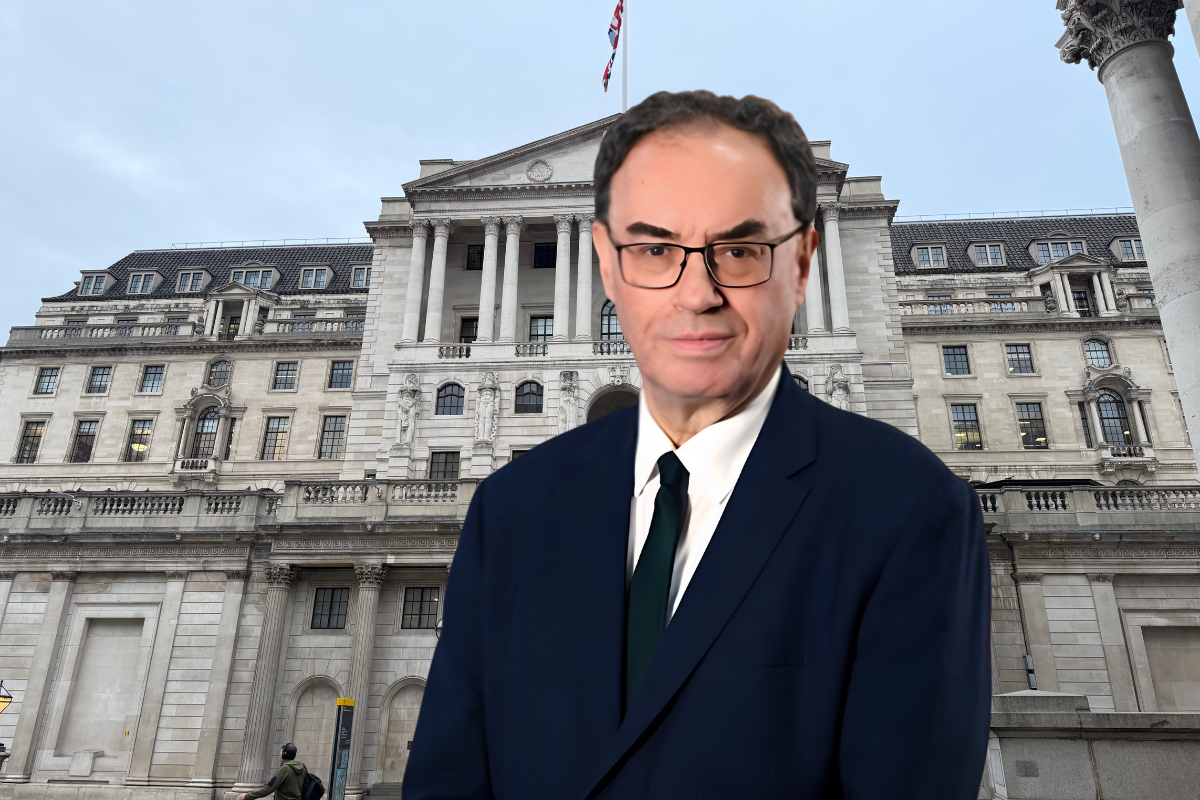
Bank of England Governor Andrew Bailey has signalled that interest rate cuts are likely to remain on hold as policymakers assess the inflationary impact of the ongoing conflict in the Middle East.
Speaking at a central banking conference in Reykjavik, Bailey (main picture, inset) said the sharp rise in oil and gas prices caused by disruption to shipping through the Strait of Hormuz had significantly altered the inflation outlook and forced the Monetary Policy Committee (MPC) to reassess the path of monetary policy.
Before the conflict began in February, inflation had been expected to fall back towards the Bank’s 2% target, opening the door to further interest rate reductions during 2026. However, April inflation came in at 2.8%, with higher household energy costs accounting for much of the increase.
Bailey warned that inflation is likely to rise further this year as higher energy prices filter through to utility bills and wider supply chains.
TIGHTENED POLICY
While the Governor stressed that monetary policy cannot prevent energy price shocks from hitting households and businesses, he said the Bank’s priority was ensuring those increases do not become embedded through higher wage demands and broader inflation expectations.
The comments suggest policymakers are becoming increasingly cautious about easing monetary policy further despite signs of weakness in the UK economy and labour market.
Bailey told delegates that the MPC actively considered the possibility of rate cuts before the conflict but had instead chosen to hold Bank Rate at 3.75% because of the heightened uncertainty surrounding inflation.
He said: “Having taken expected cuts off the table for now, we have already tightened policy considerably in response to the shock relative to what had been expected by markets.”
The Governor acknowledged that mortgage pricing has already reacted to changing market expectations, pointing out mortgage rates have risen since the onset of the conflict.
However, Bailey stopped short of signalling further rate increases, stressing that future policy decisions would depend on how the conflict evolves, the strength of the UK economy and whether any signs of inflation persistence begin to emerge.


