


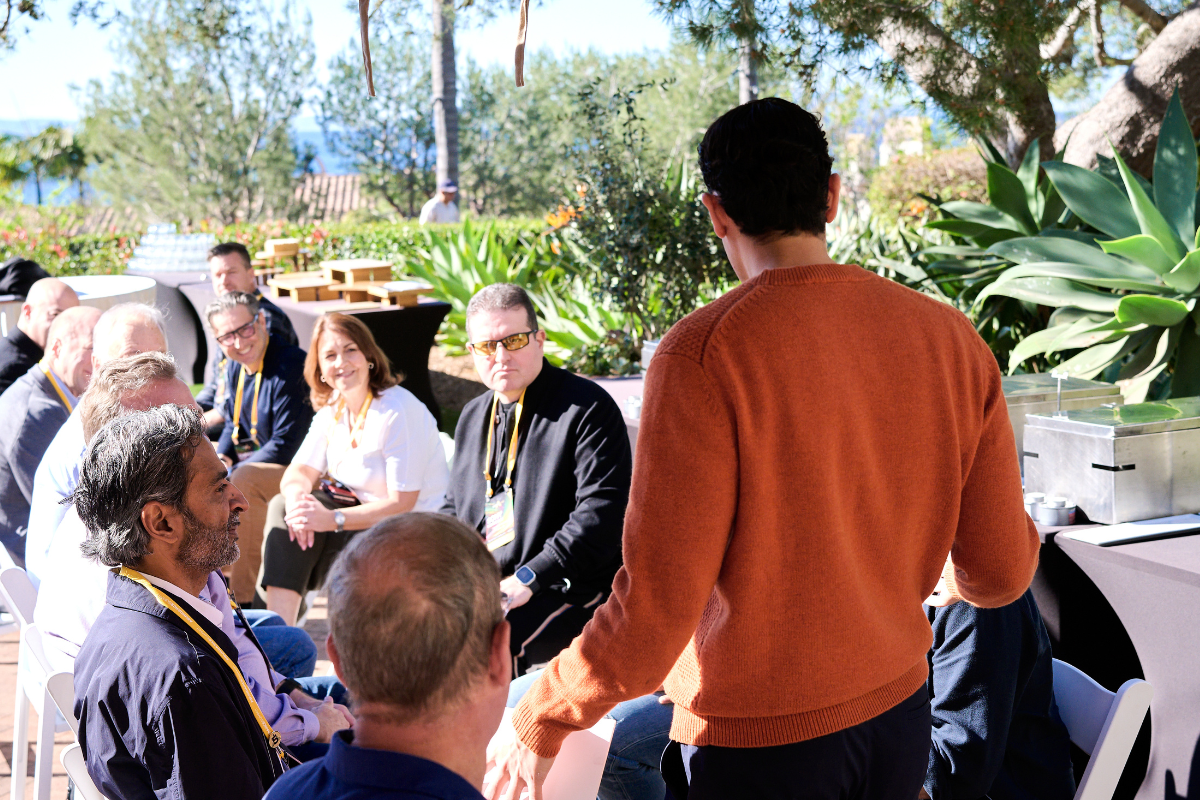
Earlier this month I attended the Abundance 360 summit in Los Angeles, Peter Diamandis’s annual gathering of entrepreneurs, scientists, tech CEOs and investors who are, in various ways, building what comes next.
The former CEO of Google was there. So was the CEO of Uber, the head of science at OpenAI, the founders of half a dozen humanoid robotics companies, a Harvard professor who is days away from the first human trial to reverse ageing, and a 22-year-old who turned down a $100 million valuation for his five-month-old startup. And so was I.
I came home with a head full of ideas and a very clear conviction: our industry needs to wake up to what’s coming because the pace of change being described at this event was not years away. It was months.
THE SPEED OF EVERYTHING
Peter Diamandis, founder of the XPrize, opened the summit with a statement that set the tone for everything that followed: “In the first six months of 2026, we will experience as much technological change as we saw in the entire last decade!”
That sounds exaggerated until you sit in a room where Google’s AI lead analyses a five-minute video for a penny, builds a complete web application from a text description in under two minutes and switches between Swahili, Turkish and Arabic on the fly.
Or where the VP of Science at OpenAI describes running 36,000 scientific experiments in a single day using AI-directed robotic labs, achieving results that would have taken human researchers’ years.
Eric Schmidt, former chairman of Google, described what he calls the ‘San Francisco consensus’ which is the belief among AI insiders that recursive self-improvement, where AI improves itself without human intervention, is imminent.
He shared the story of a young programmer who writes a specification at 19:00, goes to sleep and then wakes up to find the AI has built the entire system overnight. What previously would have taken six months and at least 10 engineers is now done while someone sleeps.
WHY IT MATTERS FOR MORTGAGES
You might be thinking: interesting, but what’s this got to do with arranging a mortgage?
One of the most striking presentations came from Link Ventures, a fund with a 40% internal rate of return.
They showcased a company that went from $250,000 in revenue to 100 times that in a single year with an autonomous code generation platform that is replacing entire software engineering teams.
Another company, founded by two 22-year-olds just five months ago, turned down a $100 million valuation with a team of four people.
These aren’t daydreams. These are real companies with real revenue growing at speeds that would have been unthinkable two years ago.
Now apply that thinking to our world.
If a team of four can build a company valued at over $100 million in five months, what happens when someone with genuine mortgage domain knowledge combines it with these AI tools?
The complexity of our regulated process isn’t a moat, it’s a target. Every pain point, every bottleneck, every manual compliance check is an opportunity for someone to build something dramatically better.
THE HUMAN PIECE
I don’t want to be all doom and disruption because the summit was overwhelmingly optimistic.
The consistent message from almost every speaker was that AI doesn’t replace the human element, it amplifies it.
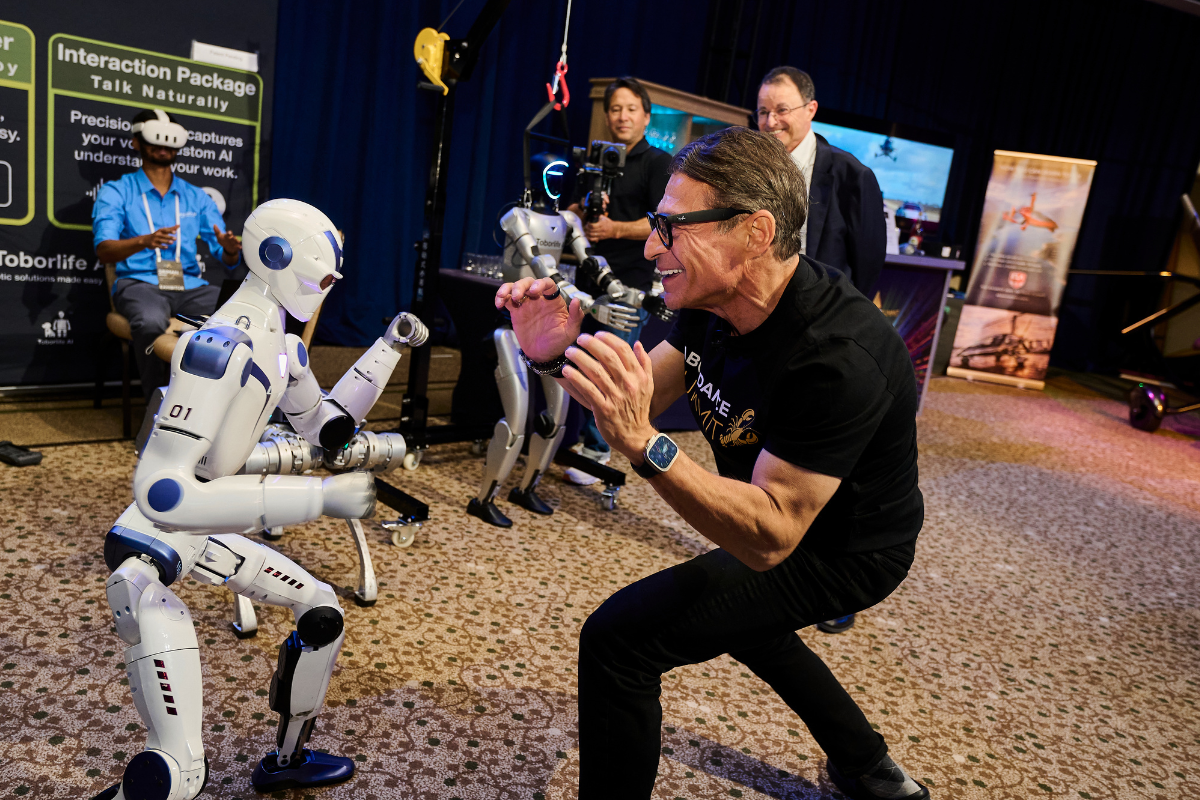
Peggy Johnson, CEO of Agility Robotics, made the point that there are over a million unfilled logistics jobs in the US alone.
The robots aren’t taking jobs people want; they’re filling gaps nobody can fill.
Dara Khosrowshahi, the CEO of Uber, talked about a hybrid future where autonomous and human drivers coexist, with the platform layer being what creates value.
The parallel for the mortgage industry is obvious.
AI can review a mortgage file in minutes rather than the two to three hours it takes a human. It can check documents, flag errors and summarise complex cases.
But the moment a client is sitting across the table worried about whether they can afford their home, or navigating a bereavement, a divorce or a complex income structure, that’s where the human adviser earns their place.
The opportunity isn’t to resist the technology. It’s to embrace it so we can spend more time on the work that actually matters.
FIVE THINGS WE NEED TO DO NOW
First, every adviser needs to be learning to use AI tools. Not next year. Now. Eric Schmidt told the room that universities should stop everything else and teach prompt engineering. I’d say the same about our own training programmes.
Second, we need to sort out our data infrastructure.
The companies that structure their data properly and make it accessible to AI will thrive. Those locked into legacy CRMs with closed APIs will be invisible.
One member at the summit put it brilliantly: Your future customers aren’t people, they’re AI agents. If an agent can’t interact with your business, you don’t exist.
Third, networks and lenders need to invest in open APIs and interoperability.
The walled-garden approach is a dead end when the rest of the world is moving towards connected, intelligent systems.
Fourth, we should be thinking about how to use AI not just internally but for our clients, helping them understand their affordability, their options and their risks and in ways that are personalised and immediate.
And fifth, we need purpose.
In a world where AI can handle almost any cognitive task, the advisers who will thrive are those who see themselves not as form-fillers but as trusted guides.
Tony Robbins, who joined the summit virtually, said something that stuck with me: “Stop trying to manage everything and start creating.”
That applies to our industry as much as anywhere else.
AN OPEN WINDOW
I left LA feeling simultaneously overwhelmed and energised. The scale of what’s being built, from fusion energy to age reversal to autonomous delivery drones that have halved maternal mortality in Rwanda, makes our mortgage process look almost quaint by comparison.

But that’s not a reason for despair. It’s a reason for action.
Can we make getting a mortgage as easy as buying something on Amazon while still ensuring the customer has access to skilled human advice?
The technology to do it either exists today or will within a year.
The question is whether we’re brave enough to reimagine the process from scratch rather than just bolting AI onto what we’ve always done.
The future isn’t happening to us. It’s happening for us. But only if we choose to engage with it.


