

Swansea Building Society has reported growth in assets, mortgages, savings and capital reserves for the fourth successive year.
The mutual held its annual general meeting at the Swansea.com Stadium on Thursday April 23, where its board set out the society’s financial performance for the year to December 31 2025.
The AGM also saw Swansea Building Society present a £2,000 cheque to Prostate Cymru, its official charity partner. The donation reflected a pledge to give £1 for each member vote cast, with the amount rounded up by the society.
Total assets rose by £21.4 million to £715.1 million during the year, while savings balances increased by £16.6 million to £663.9 million.
Mortgage balances grew by £46.8 million to £576.9 million, supported by gross mortgage completions of £117.5 million. Mortgage arrears remained low at 0.33% of total mortgage balances.
The society reported profit before tax of £6.2 million, compared with £6.3 million in 2024. Capital reserves increased by £4.6 million to £49.1 million.
Swansea Building Society said the results had been achieved despite a difficult economic environment and reflected the continued expansion of its branch network across South Wales, as well as the benefits of an investment programme that began in 2015.
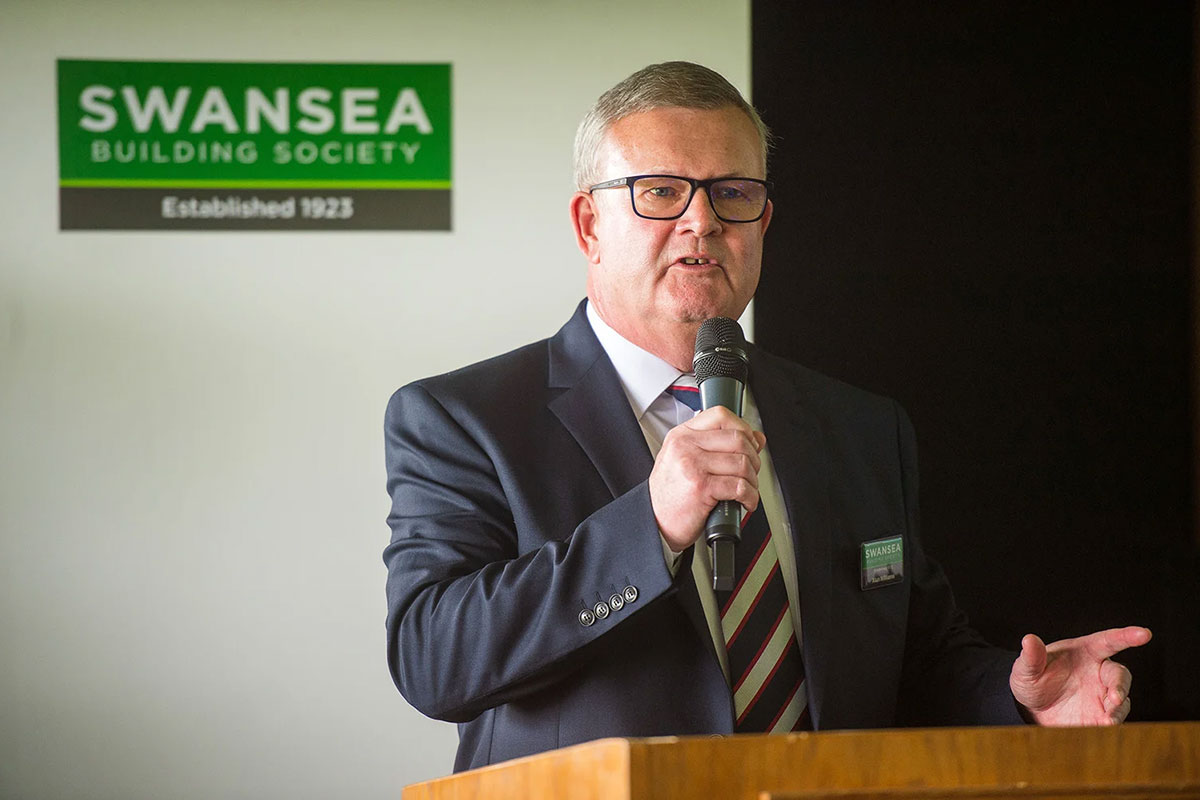
Alun Williams (pictured), chief executive of Swansea Building Society, said: “We’re pleased to report another year of strong, consistent performance for Swansea Building Society, reflecting the continued trust of our members and the strength of our community-focused approach.
“Our growth has been achieved while maintaining prudent lending standards and strong capital reserves, ensuring we remain well placed to support our members for the long term.
“It was also a pleasure to come together at our AGM and continue our support for Prostate Cymru, a charity doing vital work across Wales.
“We’re proud that our members’ engagement has once again helped contribute to such an important cause.”
The society said it remained funded entirely by customer savings balances and its own capital reserves built up from retained profits, with no wholesale funding or support from the Bank of England through cheap funding schemes.


