

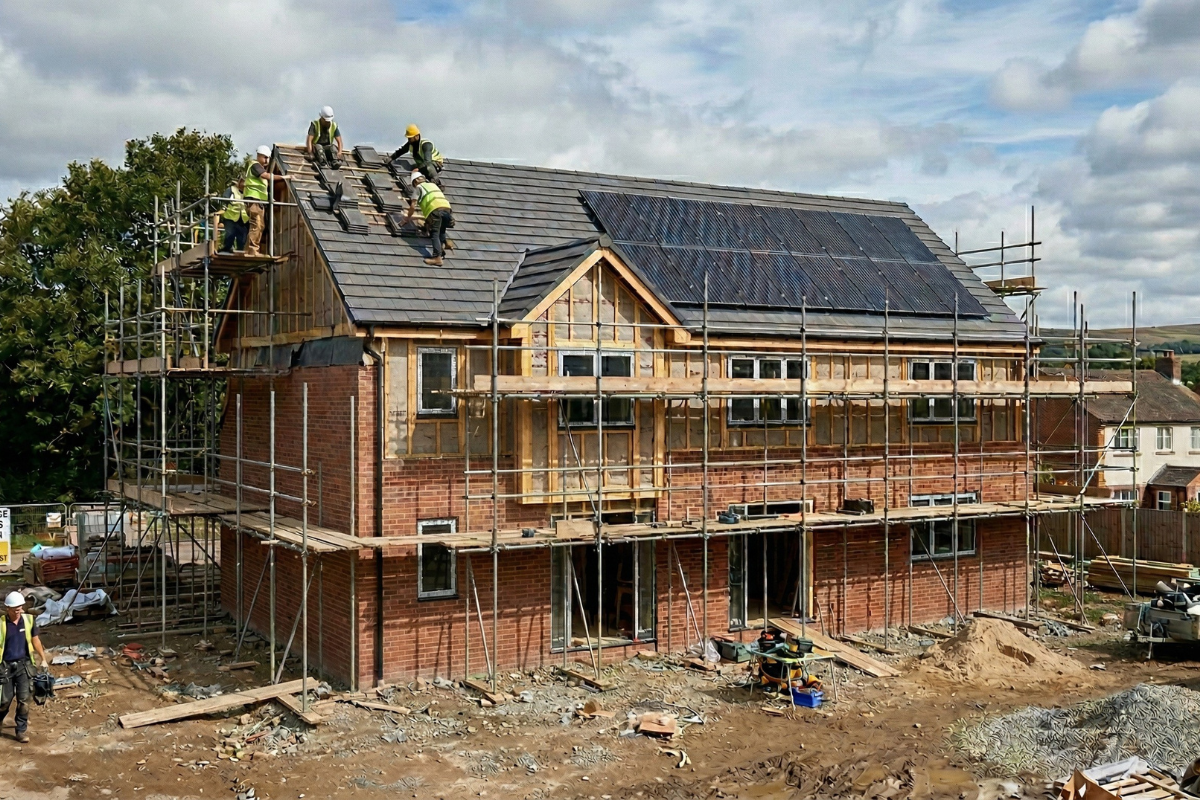
New rules forcing developers to install solar panels and low-carbon heating systems on most new homes could push up property prices and borrowing needs as lenders and brokers brace for higher build costs feeding through into the mortgage market.
The Government has confirmed that under the Future Homes Standard, the majority of new homes in England will have to be built without gas boilers from 2028 and instead use heat pumps, heat networks and on-site renewable power.
Developers will also be expected to fit solar panels covering an area equivalent to around 40% of a home’s ground floor footprint in most cases, a requirement that the industry says could significantly increase construction costs at a time when affordability is already stretched.
The move comes as mortgage rates remain above 5% following recent volatility in swap markets, with lenders repricing deals and borrower demand softening amid wider economic uncertainty linked to global conflict and inflation concerns.
AFFFORDABILITY PRESSURE
Higher build costs are expected to feed through into sale prices on new-build homes, potentially increasing loan sizes for buyers and adding further pressure to affordability calculations that are already being tightened by lenders.
Alongside the changes for new homes, ministers also want to make “plug-in” solar panels available in shops within months, allowing households – including flat owners – to generate electricity without full installation, as part of a wider push to reduce reliance on imported energy.
The reforms are part of the Government’s attempt to improve energy security and reduce long-term household bills, while still delivering its target of building 1.5 million homes before the end of the decade – a goal that many in the industry already believe will be difficult to achieve.
FUTURE OF HOUSING

Energy Secretary Ed Miliband said: “The Iran War has once again shown our drive for clean power is essential for our energy security so we can escape the grip of fossil fuel markets we don’t control.
“Whether through solar panels fitted as standard on new homes or making it possible for people to purchase plug-in solar in shops, we are determined to roll out clean power so we can give our country energy sovereignty.”

Housing Secretary Steve Reed added: “Building 1.5 million new homes also means building high-quality homes that are cheaper to run and warmer to live in.
“As we make the switch to clean, homegrown energy, today’s standard is what the future of housing can and should look like.
“Not only will these changes protect hardworking families from shocks abroad but will also slash hundreds of pounds off their energy bills every year.”
Industry estimates suggest the new requirements could add around £10,000 to the cost of building each home, a rise that could ultimately affect mortgage sizes, deposit requirements and lender affordability checks as buyers take on larger loans to secure energy-efficient new-build properties.


