

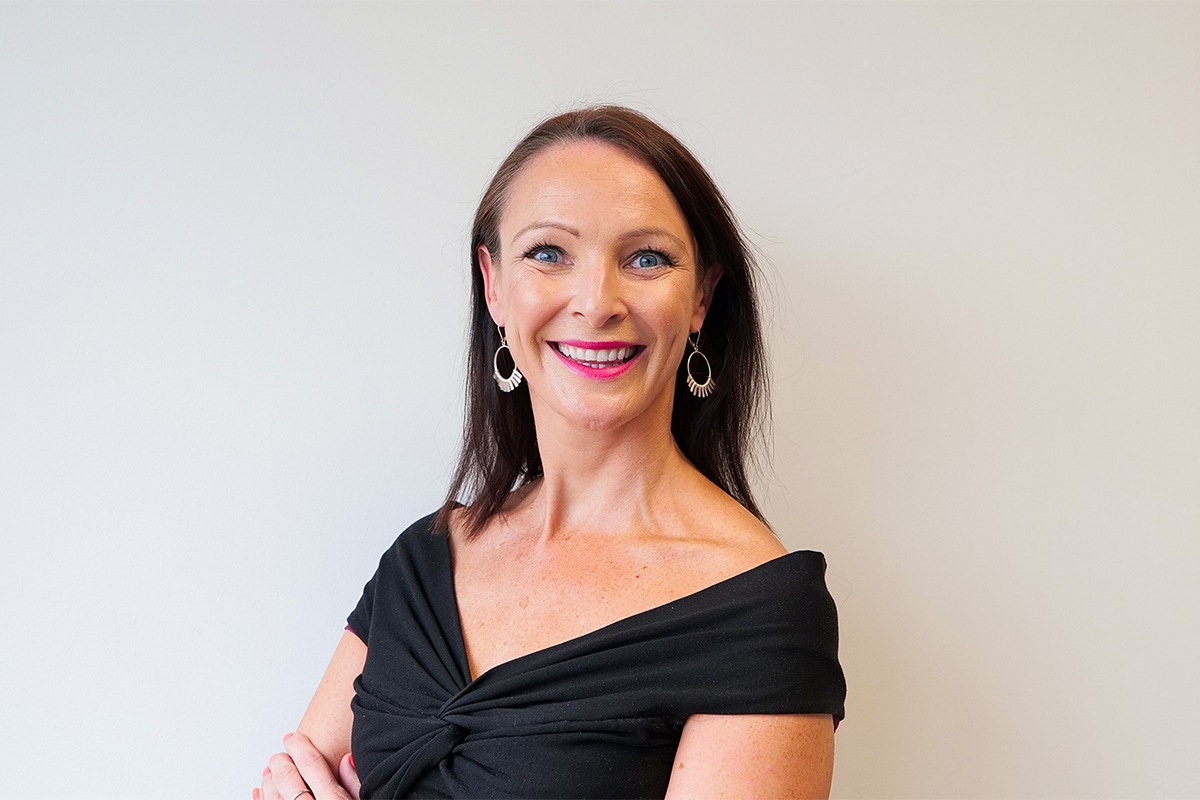
Mortgage Soup fires the questions at Claire Cherrington, director of PMS and Bankhall, Sesame Bankhall Group.
Mortgage Soup (MS): What inspired you to pursue a career in the financial industry? Was it intentional or by chance?
Claire Cherrington (CC): Honestly, I found myself in financial services by chance rather than design. I studied aeronautical engineering at university, which I found fascinating but also incredibly challenging as one of very few women on the course.
At the time, I realised I didn’t want to spend my career constantly fighting to be taken seriously in an industry where the barriers felt quite high.
So I moved into financial services in 2004, thinking it might be a different environment. In reality, it wasn’t hugely different back then, but what I did discover was an industry where you can genuinely help people every day. Whether it’s helping someone buy their first home, protect their family, or plan for their future, the impact is real.
Over the years, the industry has changed enormously, and I’ve grown to really love it. The combination of strategy, people and customer outcomes makes it a fascinating place to build a career.
MS: As a woman in leadership, what are the biggest challenges you’ve faced along the way? How have you overcome them?
CC: Earlier in my career, one of the biggest challenges was simply confidence and representation. When you’re often the only woman in the room, it can take time to feel comfortable speaking up or challenging the status quo.
Another challenge is that leadership often comes with expectations about how you “should” behave. Women can sometimes feel pressure to fit a particular mould rather than leading in their own way.
What helped me overcome that was experience and perspective. Over time, you realise that leadership isn’t about fitting a stereotype. It’s about being clear in your thinking, making good decisions and building strong teams around you.
I also learned the importance of backing yourself. The moments where I’ve grown the most are usually the ones where I’ve stepped forward slightly before I felt completely ready.
MS: What progress have you seen in gender diversity in finance over the years?
CC: There has definitely been real progress. When I started in financial services over twenty years ago, senior leadership teams were far less diverse than they are today, and conversations about representation were much less common.
What’s encouraging now is that diversity is much more openly discussed and actively measured.
However, I don’t think the conversation should only be about gender. True diversity also includes culture, background, experience and neurodiversity. If our industry is going to serve customers well, the people designing products and services need to reflect the society we serve.
So while we’ve made progress, there’s always more we can do.
MS: What changes would you still like to see happen?
CC: I’d really like to see more young talent coming into the industry. Financial services plays such an important role in people’s lives, but I don’t always think it’s seen as an exciting career choice by younger generations. In reality, it offers a huge variety – from technology and innovation through to strategy, advice and customer engagement.
Personally, I’d also love to spend more time mentoring and supporting young women entering the sector. Having someone who believes in you early in your career can make a huge difference.
MS: What’s the best piece of career advice you’ve ever received?
CC: One piece of advice that stuck with me was: don’t accept being the coolest dwarf.
It sounds a bit unusual, but the meaning is simple. Don’t measure yourself only against the people immediately around you. If you want to grow, compare yourself to the very best and set your sights slightly higher than what feels comfortable.
That mindset has shaped how I approach opportunities. If something feels a little bit outside your comfort zone, that’s often where the most growth happens.
MS: What advice would you give to young women looking to break into the finance sector?
CC: Be authentic and don’t feel like you have to change who you are to fit the industry.
Find people around you who you can learn from and who support your development. Strong networks and mentors make a huge difference early in your career.
And don’t be afraid to push boundaries. Financial services is evolving quickly, and the industry absolutely benefits from fresh perspectives and new ideas.
MS: Who inspires you?
CC: I’ve been inspired by many people during my career, but one of the biggest influences in my life has been my dad.
He always encouraged me to pursue careers and opportunities that weren’t necessarily the traditional path for women at the time. That mindset of backing yourself and not limiting your ambition stayed with me.
More broadly, I’m inspired by leaders who create opportunities for others and help people see potential in themselves that they might not have recognised yet.
What are some common misconceptions about women in finance and how do you challenge them?
CC: One misconception is that women are less interested in the commercial or technical side of financial services. In reality, the industry is full of incredibly capable women across strategy, risk, technology and leadership roles.
Another misconception is that there is a single “type” of leader who succeeds in finance. In truth, the most effective teams are made up of people with different perspectives and leadership styles.
The best way to challenge those misconceptions is simply through visibility and performance. When diverse leaders succeed and build strong teams, it naturally changes perceptions.
MS: What’s one piece of advice you’d give your younger self?
CC: I’d tell my younger self to believe in myself sooner.
Confidence often comes with experience, and I’d say it probably wasn’t until my mid-thirties that I truly started to trust my own judgement.
I’d also say that the things that make you different from others are often your greatest strengths. What might feel like a weakness early in your career can actually become your superpower once you learn how to use it.


