


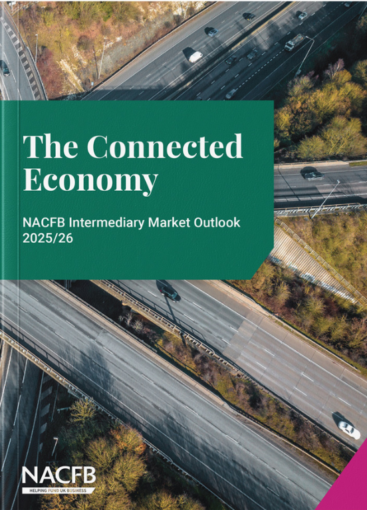
Broker-originated SME lending climbed to £33bn in 2025, up 25% year-on-year, according to the first Intermediary Market Outlook 2025/26 from the National Association of Commercial Finance Brokers (NACFB).
The trade body said its members now represent nearly two-thirds of all broker-facilitated SME lending, placing the total intermediary-led market at around £50bn annually.
In total, NACFB brokers arranged 180,000 loans last year, supporting an estimated £12bn in direct gross value added (GVA) and 185,000 jobs when wider economic effects are taken into account.
More than 60% of lending was delivered outside London and the South East.
The 92-page report draws on internal CRM data, broker surveys and lender insight to analyse volumes, market trends and regulatory considerations, as well as expectations for the year ahead.
UNMISTAKABLE SCALE
Jim Higginbotham (main picture, inset), CEO of the NACFB, says: “For most within our industry, the central role of brokers in SME finance has long been understood through experience.
“What this report does is provide external, data-backed evidence of that reality. The scale is unmistakable. £33 billion arranged by NACFB brokers alone. A 25% year-on-year increase. Lending that supports jobs, regional growth and economic output across the UK.
“This is no longer a peripheral channel within SME finance.”
“This is no longer a peripheral channel within SME finance. Intermediaries are a structural component of how funding flows to small businesses.
“As complexity in the market increases, so too does the value of informed, professional guidance. The evidence shows a mature, resilient and increasingly influential intermediary market – one that policymakers, lenders and stakeholders cannot afford to overlook.”
PROBLEM-SOLVING

Kieran Jones, Head of Communications & Advocacy at the NACFB, added: “The £33 billion headline understandably draws attention, but the real substance of this report sits beneath that number.
“When you look closely at the data, you see brokers considering an average of six lenders per deal, a
quarter of clients having been declined elsewhere before being successfully funded, and nearly two-thirds of lending delivered outside London and the South East.
“Those details reveal how this market actually operates – through careful structuring, regional reach and problem-solving capability.
“We also see a shift in behaviour. Relationships are increasingly ongoing rather than transactional, core lender panels are deepening, and a growing proportion of lender portfolios are now broker-originated. That speaks to maturity and consolidation, not fragmentation.”
The full Intermediary Market Outlook 2025/26 is available to download and read online HERE.


