

The Mortgage Industry Mental Health Charter’s (MIMHC) third annual 144-mile Walk & Talk challenge finally came to an end on Friday last week as leaders Jason Berry and Charlie Morley crossed the finish line at HSBC’s Birmingham head office at 15:45.
Some 64 participants from across the mortgage sector, joining for different stages of the route, took part in the week long challenge that spanned the length of the Grand Union Canal.

The event was led by Jason Berry, group sales director at Crystal Specialist Finance and co-founder of the Mortgage Industry Mental Health Charter, who completed the full route alongside Charlie Morley, director of mortgage distribution, operations and servicing at Metro Bank.
Between them they averaged almost 24 miles per day throughout the week, completing a total of 309,817 steps during the challenge.
Over the last four weeks Mortgage Soup has been firing the questions at both sponsors and those taking part.
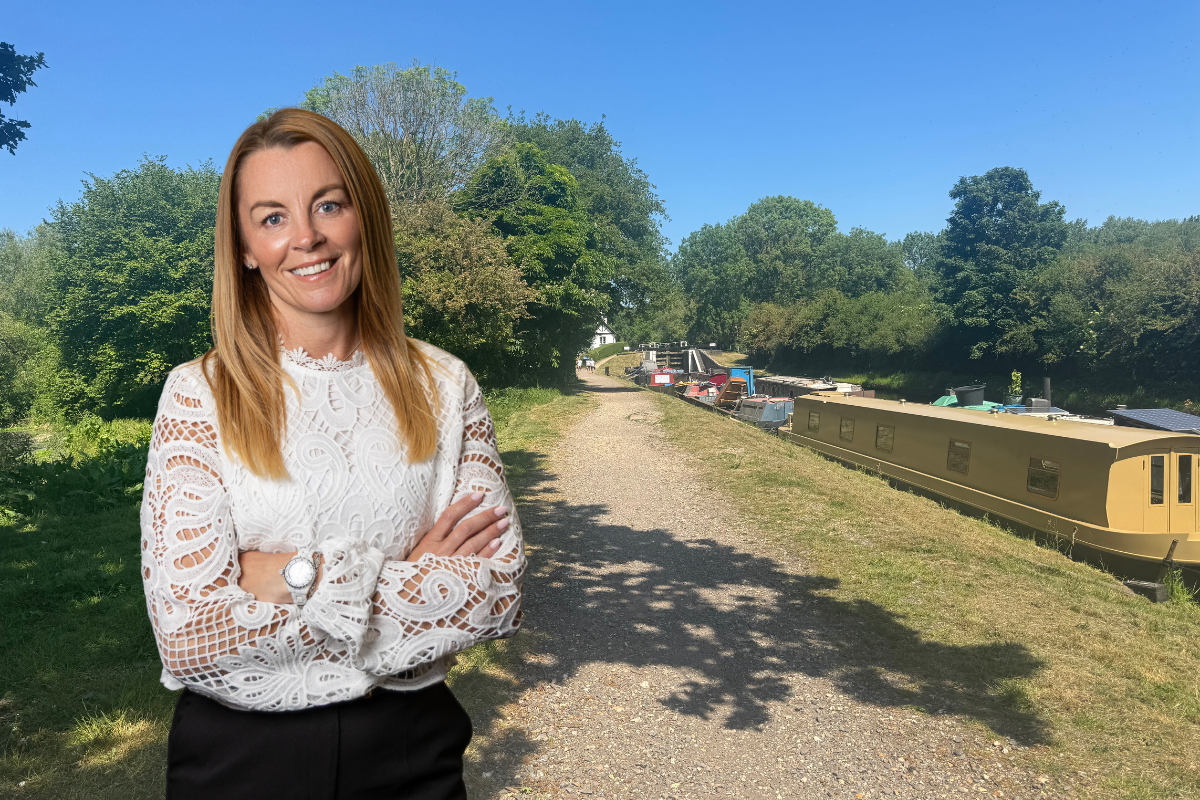
Today, Natalie McNamara (main picture, inset), mortgage distribution manager at ModaMortgages and CHL Mortgages, is under the spotlight.
MS: What made you want to support and be part of the Walk & Talk initiative / event?
I wanted to be part of something that creates a genuinely supportive and open environment where people feel comfortable talking.
From what I’ve seen and heard about Walk & Talk, I didn’t just want to observe it, I wanted to actively be part of it and contribute in some way.
For me, it’s about being part of a positive movement within an industry I care deeply about, one that encourages connection, meaningful conversations and reminds people to look after their mental wellbeing.
MS: From your perspective, what are the biggest mental health and wellbeing challenges brokers/clients are facing right now?
There’s a combination of personal and professional pressures that people are navigating at the moment.
On a personal level, the constant stream of negative news, global uncertainty and ongoing cost of living challenges can feel overwhelming and difficult to switch off from.
Professionally, the market remains volatile. Rates are changing quickly, lenders are repricing and brokers are having to work incredibly hard to stay ahead of that while continuing to deliver the best outcomes for their clients.
That pressure is constant, and clients are understandably leaning on brokers more than ever.
At the same time, many people are juggling multiple roles outside of work – as parents, partners and friends – and trying to balance all of that while maintaining a high level of performance isn’t easy.
On the surface, the industry can look very successful but that doesn’t always reflect the reality of how people are feeling behind the scenes.
MS: What is your organisation doing to better support staff and the wider market
At Chetwood Bank, culture plays a huge role in how people are supported. There’s a real emphasis on recognising that people are human first, and that life can be unpredictable at times.
There are multiple avenues for support, whether that’s through internal resources, wellbeing platforms, or simply having open and honest conversations.
What stands out most is how encouraged it is to speak up – there’s no stigma attached to that.
There’s also a proactive approach to wellbeing. We’re encouraged to step away from our desks, with dedicated time to go for a walk, get fresh air, or do something that helps reset.
It’s those small but meaningful actions that make a real difference.
That same mindset extends to how we support the wider market. In a volatile environment, giving brokers more notice around rate withdrawals helps reduce pressure and allows them to better manage their clients’ expectations.
Being involved in industry-wide initiatives like Walk & Talk is also important in helping to normalise conversations around mental health and wellbeing.
MS: Looking ahead, what trends or changes would you like to see in the next 12–24 months?
I’d like to see the industry continue moving towards more open and honest conversations around mental health.
There is progress being made, particularly on platforms like LinkedIn, where people are starting to share more real experiences – but there’s still a long way to go.
There can still be an underlying mindset of just pushing through or “getting on with it,” and it’s important that we continue to challenge that.
More broadly, I’d like to see employers placing an even greater focus on supporting their people, and for the wider conversation – across social media and the industry – to reinforce that it’s ok not to be ok.
Creating an environment where people feel supported, valued and able to speak openly is key.
MS: What does success from this initiative/event look like for you?
Success, for me, is about continuing and expanding the conversation around mental health.
If this initiative helps more people feel comfortable opening up, asking for support, or simply realising they’re not alone in how they’re feeling, then that’s a huge step forward.
There’s often a gap between what we see externally, particularly on social media, and the reality of how people are actually doing.
I’d love this to encourage more honesty, more connection and greater awareness that support is there.
Ultimately, success is about helping shift the narrative, so that asking for help is seen as a strength, not a weakness.


