

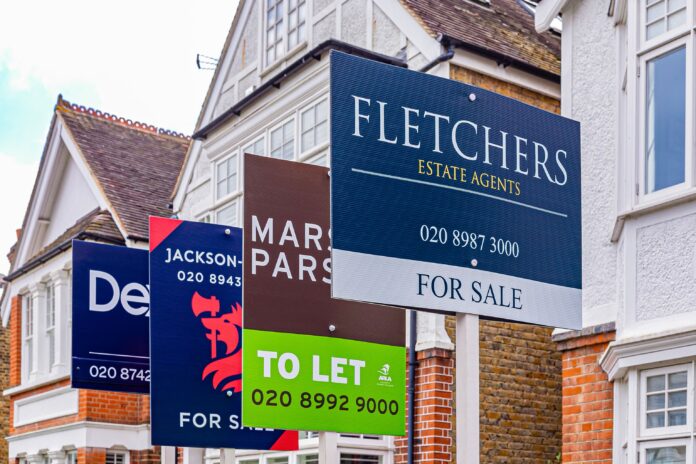
UK property transactions stabilised at the end of 2025, with residential sales holding firm after months of distortion caused by stamp duty changes, the latest figures from HM Revenue & Customs reveal.
The provisional seasonally adjusted estimate for residential transactions in December 2025 stood at 100,440, down by less than 1% on November but 5% higher than the same month a year earlier.
The figures point to a market that has levelled out after a surge in activity earlier in the year driven by buyers rushing to complete ahead of the stamp duty land tax threshold reductions introduced on 1 April 2025.
AFFORDABILITY PRESSURES
On a non-seasonally adjusted basis, residential transactions rose to 105,730 in December, an increase of 1% on November and 7% higher year-on-year, underlining the resilience of buyer demand despite higher borrowing costs and affordability pressures.
HMRC said monthly residential transaction levels have remained broadly stable since Summer 2025, following a sharp pull-forward of activity at the start of the 2025 to 2026 financial year.
The fading impact of tax incentives has removed volatility from the data, revealing a housing market operating at a consistent, if subdued, pace.
INDUSTRY REACTION

Tomer Aboody, director of specialist lender MT Finance, said: “Although it looks as though transaction numbers are trending higher, both buyers and sellers are not completely committed as yet.
“Hopefully, a period of lower mortgage rates combined with a lack of patience and eagerness to get deals done, will see higher transaction levels in the forthcoming year.”
SLOW START

Richard Donnell, executive director at Zoopla, said: “Home buyers agreed housing sales at an increasing rate over 2025 building the largest pipeline of sales working their way to completion since the pandemic. This is why there were over 100,000 residential transactions in December 2025, up 5% on the year before.
“Zoopla data shows that 2026 has got off to a slower start than a year ago with slightly fewer buyers and new sales, but there are clear signs that momentum is building. There is a strong desire to move home, but buyers remain cautious and price sensitive.”
PLAN AHEAD

Mark Harris, chief executive of mortgage broker SPF Private Clients, said: “Transaction numbers slipped slightly in December but now that the Budget is out of the way, buyers and sellers who may have put decisions on hold are pressing ahead with their plans.
“We have seen a strong level of enquiries since then, with application levels very similar to last January’s.
“Lenders are doing their bit to encourage activity with a number trimming their mortgage rates this month although we have seen some increases as Swap rates, which underpin the pricing of fixed-rate mortgages, have edged upwards.
“December’s increase in inflation means that another base rate cut from the Bank of England at next week’s meeting is unlikely but longer term, further reductions are expected as inflation eases.
“With mortgage pricing expected to edge up and down in coming weeks, borrowers would be sensible to plan ahead and book a rate in advance of when they need it.
“If rates have fallen when they come to take out the mortgage, they should be able to move onto a cheaper rate at that time; if they have risen, they will be pleased they secured a rate when they did.”
UNDERLYING RESILIENCE

Ryan McGrath, Director of Second Charge Mortgages at Pepper Money, said: “It’s important to note that these figures don’t yet reflect the pause in activity ahead of the November Budget, due to the current lag between agreed sales and recorded completions.
“What they do show, however, is underlying resilience. The uptick in transactions came before the full benefit of recent rate improvements had filtered through, and with inflation easing and mortgage pricing continuing to soften, the direction of travel is becoming clearer, giving households greater certainty as we move into 2026.
“The ‘improving versus moving’ trend remains a defining feature.”
“However, improving market conditions doesn’t automatically mean more people are choosing to move. The ‘improving versus moving’ trend remains a defining feature, with many homeowners still anchored to historically low fixed-rate mortgages. Refinancing their entire balance at today’s rates is often a step too far financially.
“As a result, demand remains strong among borrowers looking to improve their homes or rebalance their finances rather than relocate.
“In the right circumstances, second charge mortgages play a key role, allowing customers to unlock equity for renovations or consolidate existing debts, while keeping their main mortgage rate untouched.”
MAKE BUYING AND SELLING EASIER

Maria Harris, chair of the Open Property Data Association (OPDA), said: “I’m confident that we’ll see a steady increase in 2026 as affordability improves and more people look to move home.
“However, it’s consistently acknowledged that the experience of buying and selling a home just isn’t where we need it to be.
“There were more than 1.2million residential property transactions last year, according to HMRC data. But thousands of house sales fell through because of the outdated and inefficient systems we have in place.
“Data published in The Times this week shows the percentage of property sales collapsing increased last year, from 23.3 per cent in 2024 to 23.8 per cent in 2025. This compares with 21.9 per cent of deals collapsing at the height of the low-rate mortgage period before Covid in 2019.
“This is a worrying trend in the market, causing heartache and stress for sellers and costing the UK economy millions each year. We need to transform the process, based on a common, trusted foundation for data sharing.”
SLOW RECOVERY

Hamza Behzad, business development director at Finova, said: “Today’s figures suggest the housing market remains cautious rather than stalling, with buyers still taking time to respond to improving conditions.
“While mortgage product availability is at its highest level in 18 years, many households are clearly still weighing up their next move.
“Mortgage rates are lower than a year ago, which is helping to rebuild confidence, but this is shaping up to be a slow and measured recovery rather than a rapid rebound. Most forecasts continue to point to low single-digit house price growth in 2026, as buyers remain price-sensitive after a prolonged period of economic and political uncertainty.
“As large numbers of borrowers reach the end of fixed-rate deals this year, competition among lenders is intensifying, improving pricing and choice. With further rate cuts still expected, the foundations for stronger activity are being laid, even if many buyers are choosing to wait for clearer signals before committing.”
BUYERS HESITATING

Richard Sexton, commercial director of proptech surveyor portal Houzecheck, said: “A slightly softer set of transactions doesn’t mean demand has disappeared, it means buyers are hesitating. Buyers are being cautious and considered, not absent and afraid.
“When uncertainty creeps in, buyers apply the brake to the process, and that’s where proptech has a real role to play. Reducing friction, speeding up early-stage checks and helping people ease off the brake with confidence when ready.
“While activity for this quarter may be slower than some would like, there is a lot of latent demand in the market. Once confidence returns this pause could quickly turn into a surge, and the year ahead could see a much busier time for both buyers and sellers.”
TENTATIVE MOMENTUM

Andrew Lloyd, managing director at Search Acumen, said: “December’s figures show a market holding the line against the usual seasonal slowdown.
“Transactions saw a 1% month-on-month increase, defending against the drop the festive period usually dictates. This suggests the tentative momentum we saw building in November has managed to weather the winter chill, showing surprising resilience at the tail end of a turbulent year.
“In the residential sector, affordability constraints and mortgage pricing continued to dictate the pace of play right up to the year-end. While November showed signs of the market testing the water, December’s figures remind us that consumer confidence is still fragile. Buyers are entering 2026 with a sense of cautious optimism, waiting for definitive signs of economic stability before committing to major financial decisions.
“December is often a race to the finish line for corporate deals, but the broader picture remains one of selective investment. The appetite is there, but high financing costs mean investors are scrutinising the long-term fundamentals of every asset more intensely than ever.
“The market craves certainty.”
He added: “As we look into the first quarter of 2026, the overarching theme remains the same: the market craves certainty. Pent-up demand is building, but activity will continue to come in fits and starts until we get a stable economic and political runway.
“For the property industry, January is the time to prepare for this returning demand. Law firms and conveyancers who used the December lull to audit their workflows, integrate AI, and digitise their due diligence will be the ones winning market share as the spring pipeline builds. The market might be in a seasonal freeze, but the firms that act now will be first out of the blocks in the new year.”
DEMAND WILL INCREASE

Joe Pepper, UK Chief Executive Officer at PEXA, said: “This is more than simply a seasonal anomaly. The Autumn Budget was a bit of a damp squib in terms of housing reform, and a marginal drop in transactions is a reflection of that, deterring some buyers’ efforts until better circumstances arise.
“With some product innovation at the back end of 2025, these circumstances may well be just around the corner, and demand will likely increase over the next few months. In the meantime, the backlog of those wanting to buy continues to grow, threatening to overwhelm the system when they decide to take the leap.
“Readiness to deal with such a surge will be crucial. It will be the difference between a prosperous housing market that drives economic growth and a market that collapses under the pressure.
“When further demand comes, conveyancers will do all they can to serve their customers as they always do, but if they don’t have adequate infrastructure in place to process transactions with certainty and transparency, it won’t be long before the system crumbles, placing enormous strain on a market that we’re depending on for economic growth.
“We need urgent public and private investment in the digitalisation of a system that is currently failing every stakeholder – conveyancers, lenders, brokers and consumers alike.”


