

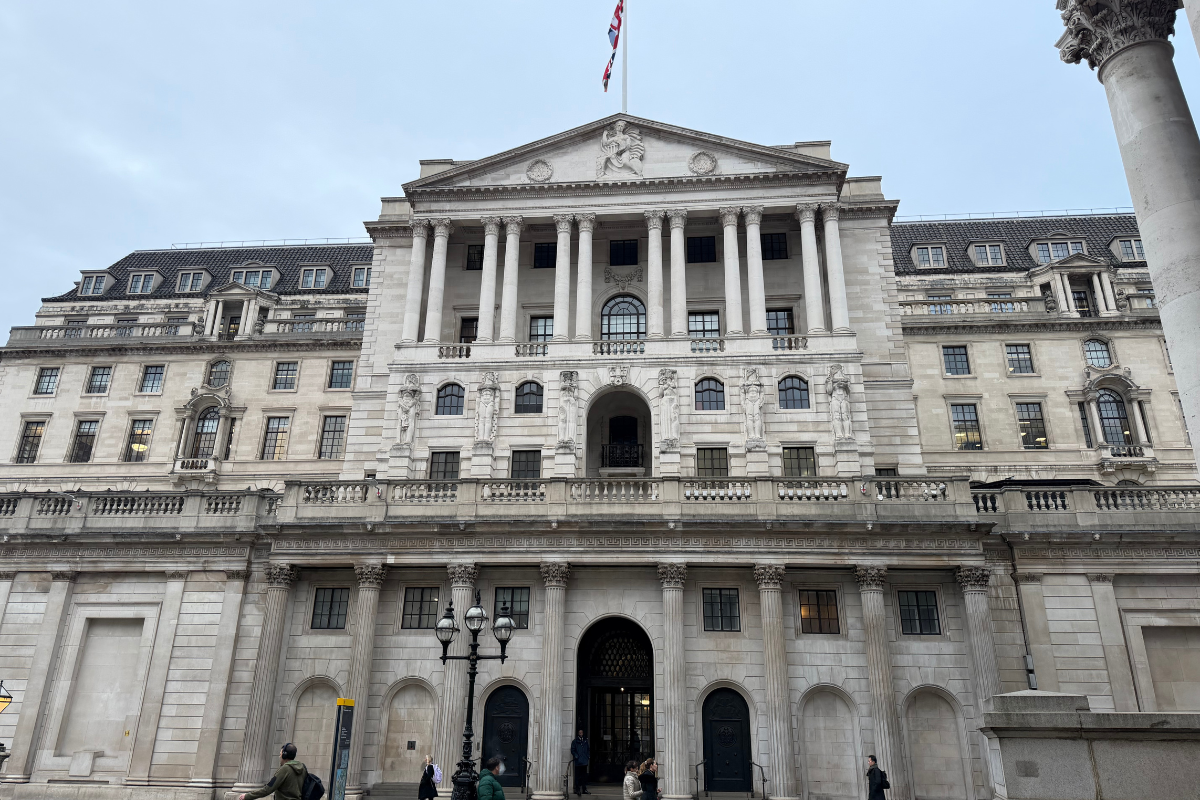
The Bank of England’s Monetary Policy Committee (MPC) has voted to keep the Bank Rate unchanged at 3.75%.
The decision was unanimous among the nine-person strong committee.
Explaining its decision, the MPC cited the conflict in the Middle East and the subsequent rise in global energy and other commodity prices. CPI inflation will be higher in the near term as a result of the new shock to the economy, the MPC said.
In a statement, the MPC added: “The Committee will continue to monitor closely the situation in the Middle East and its impact on global energy supply and energy prices.
“It stands ready to act as necessary to ensure that CPI inflation remains on track to meet the 2% target in the medium term.”
NO SURPRISE

Tony Hall, head of business development at Saffron for Intermediaries, said: “Today’s decision will come as little surprise given the current geopolitical backdrop and the knock-on effects it is having on the UK economy. With inflationary pressures building, many lenders have been reviewing pricing and product availability carefully.
“While this may temper some of the optimism seen in recent months, the mortgage market has repeatedly shown its ability to adapt to changing economic conditions. In periods like this, the role of a mortgage adviser becomes even more important, helping borrowers navigate a market where rates and product availability can shift quickly.”
DRIVE DOWN HOUSE PRICES

Frances Haque, chief economist at Santander UK, said: “The MPC chose to proceed with caution today, as expected, until the outlook regarding the Middle East conflict and inflation becomes clearer.
“With lower growth, a looser labour market and rates still slightly restrictive, this should help to stabilise the impact of inflation and any second-round effects, so while cuts may be put on hold, hikes are less likely as we look ahead to 2026.”
“After a steady start to the year in the housing market, the changing economic backdrop has meant swap rates have climbed; in the short-term, we have seen a huge spike in activity in the market, with borrowers racing to lock in their mortgage ahead of anticipated rate rises.
“Looking ahead, while the delay to rate cuts will impact consumer confidence, and in some cases affordability, it’s important to note that this period of adjustment in the market will reduce competitive pressure and, in some cases, drive house prices down.”
INFLATION CONCERN

Adrian Moloney, group lending distribution director, OSB Group, said: “While some borrowers may have been hoping for the first rate cut of the year, a decision to hold reflects ongoing uncertainty in the inflation outlook, particularly given recent geopolitical tensions and pressure on energy prices, and provides a degree of stability that has been largely absent over the past couple of years.
“With affordability still stretched for many households, greater clarity on the outlook for interest rates will be just as important as when and how quickly any future reductions may come. Mortgage pricing continues to respond quickly to wider market volatility, meaning borrowers and lenders alike are still navigating a changing rate environment
“That means more borrowers may begin to revisit plans that were put on hold, particularly home buyers and movers who have been waiting for a more stable rate environment before committing.”
AFFORDABILITY TO TAKE A HIT

Ryan Etchells, chief commercial Officer at Together, said: “Holding the base rate may not be as bad as feared amid rising Middle East tensions but for mortgage borrowers, there’s little relief.
“The mortgage market had been expected to turn a corner with a period of stability and falling inflation leading to a cut in the base rate – ushering in lower borrowing rates for home buyers, movers and businesses.
“However, Trump’s ‘excursion’ into Iran has sent oil prices soaring and created a period of instability, meaning the Bank had few options to bring expected rising inflation under control by sticking with a higher base rate.
“As a result, the property market – until recently buoyed by rising house prices and improved mortgage affordability – looks set to take a hit. Many buyers will likely hit pause on their plans, waiting for better deals to return later this year.”
GEOPOLITICAL UNCERTAINTY

Colin Bell, founder and COO of Perenna, said: “With the current geopolitical uncertainty causing inflation to bare its teeth once again, the Bank has been left with no choice but to adopt a wait-and-see approach.
“Whatever the outcome later down the line, one thing is clear: the level of vulnerability the UK market has to uncontrollable factors needs to be addressed. Too many borrowers are still stuck in a system where they have to come back and refinance every two years, leaving them exposed whenever the market takes a turn.
“A more resilient system would give people more ways to have certainty for longer, so their finances are not thrown off course every time there is a wider economic shock. There is of course a place for shorter mortgage products which include increased interest rate risk, but they shouldn’t be the default option. We can’t control everything, but we can take control of our own mortgages.”
UNCERTAIN TIMING

Charles Resnick, chief finance officer at Afin Bank, said: “Today’s decision to hold interest rates was no surprise given soaring energy prices caused by the war in the Middle East. However, timing for the next cut is now more uncertain and will depend on how long the price shock lasts.
“Minutes from February’s meeting showed that the MPC expected inflation to fall back to its 2% target from April, but the rise in oil and gas prices has made the near-term inflation outlook more uncertain. The Monetary Policy Committee could still cut the Base Rate next month or it could remain on pause for even longer.
“Although we have already seen some fixed rate mortgage deals being pulled from the market, overall lenders are likely to remain disciplined and cautious, reflecting uncertainty over the timing of the next cut.”
NO LENDER IS IMMUNE

Steve Cox, chief commercial officer at Fleet Mortgages, said: “A month ago, a Bank Base Rate (BBR) cut at this meeting looked almost certain, but the global picture has changed dramatically in a very short space of time.
“The war in Iran, the conflict in the Middle East and the wider instability it has created, particularly the sharp movements in oil prices, has understandably made the MPC far more cautious.
“Energy costs have a direct line into inflation expectations and, given the potential knock-on effects for the UK economy, it makes sense that the MPC has chosen to pause and give itself time to see how these events develop before taking the next step on rates.
“Unfortunately, the knock-on effect of this uncertainty has been felt quite sharply in the mortgage market, including in buy-to-let. We’ve seen something of a concertina effect in recent weeks, with product withdrawals and rates edging up as lenders have needed to respond to the sharp movements in funding costs. It’s been clear that no lender is immune from this.
“At the moment the path to further BBR cuts looks much narrower than it did at the start of the year, and the two or three cuts many were forecasting for 2026 now feels much less certain. That said, markets can move quickly. If there were to be a relatively swift de-escalation in the Middle East, the outlook could shift again, but right now it would take a very brave call to predict that outcome, and an even braver MPC to move ahead of the evidence.”
BORROWER PROTECTION

Rob Clifford, chief executive of Stonebridge, said: “Borrowers have had the best outcome we could have hoped for as the conflict in the Middle East clearly had real impact on energy and financial markets, causing swap rates to jump.
“The situation will have tested policymakers’ ability to weigh up how a tumultuous and, potentially, short-term crisis might outweigh the impact of longer-term trends.
“The Bank has protected UK borrowers from higher borrowing costs, and this will help support the mortgage and residential sales market. It also takes the heat out of the situation facing anyone with a fixed term coming to an end, who may be reluctant to lock in a rate for some years that is somewhat higher than the one they were expecting just a month ago.
“Markets were signalling they no longer expected 0.5% of rate cuts this year but these predictions can change swiftly in situations like this. Depending on how long the disruption to energy supplies lasts, swap rates could come down as quickly as they went up. Advisers will no doubt be watching them like hawks, as they continue to be best placed to guide their customers through a pretty fluid environment.”
BROKERS WILL BE CRUCIAL

Emma Hollingworth, chief distribution officer at LSL Financial Services, said: “The Monetary Policy Committee’s decision to hold interest rates today suggests the Bank of England is keen to see how the situation in the Middle East unfolds before deciding on its next move.
“The most prominent threat to the UK economy is the prospect of higher inflation from pressure on energy prices. Even if this does not become a full-blown inflation crisis, the conflict is already affecting the UK mortgage market.
“Swap rates – the key driver of fixed-rate mortgage pricing – have surged in recent weeks, prompting lenders to reprice or withdraw products almost daily. That has left just a handful of sub-4% deals, a blow to the estimated 1.8 million borrowers reaching the end of fixed-rate mortgages this year.
“With the outlook highly uncertain, brokers will be crucial in guiding borrowers. Proactively contacting clients coming to the end of their deals allows them to understand pricing and product availability, make informed decisions, and be better positioned to navigate an increasingly volatile market.”
EXPECTATIONS PRICED IN

Ben Thompson, director of home moving strategy, Mortgage Advice Bureau, said: “Few will be surprised that The Bank of England has held the base rate at 3.75%.
“With energy price pressures and ongoing geopolitical tensions creating uncertainty, the bank will want clearer evidence that inflation is moving sustainably back towards its 2% target before making any further moves.
“These external pressures could mean the first cuts take longer to arrive than many had hoped. Rate movements can feel unsettling, but mortgage markets often price in expectations well in advance, meaning the impact on new deals may be less significant than many fear.”
MARKET SHOCKWAVES

John Phillips, CEO of Just Mortgages and Spicerhaart, said: “It’s a relief to see the MPC sit on its hands at its first meeting since the Middle East conflict. Speaking with industry colleagues, there was certainly a worry that we would see the central bank react with a rate rise.
“That said, it’s hard to predict where we go from here and what the future path of interest rates now looks like. So much depends on how drawn out this conflict becomes and the impact it has on prices and inflation more broadly. We shouldn’t rule out the prospect of increases in the future.
“It has certainly sent shockwaves through the mortgage market and forced many lenders to quickly remove and re-price products. As a result, we have seen around a 20% increase in remortgage business over the last week or so as clients looked to secure rates before they were pulled.
“Brokers have been putting in the hard graft and working late to ensure applications are submitted and rates are secured. Beyond that, we haven’t seen a real drop off in buyer registrations, valuation requests or mortgage appointments, signalling that the wider turmoil and uncertainty hasn’t yet filtered through to all buyers and movers. People are still getting on with the task at hand and are seeking expert advice to do so.
“It’s a real example of where advisers prove their value. As clients continue to navigate a volatile market in the coming days, weeks and months, it’s crucial that we remind them of that value and the expertise we can offer. While rates may be shifting, all is certainly not lost – there still plenty of opportunities out there in the market. It’s up to us to be proactive and to share our knowledge.”
BEHAVIOURAL SHIFT

Sarah Thompson, group financial services director at Mortgage Scout, part of LRG, said: “Today’s decision to hold the base rate reflects a market that has been moving in the right direction, but is still adjusting to ongoing global uncertainty.
“While recent headlines have focused on mortgage rates edging upwards, the reality is that these movements remain relatively modest and far from the sharp increases seen in previous years.
“What we are seeing in practice is a clear shift in borrower behaviour. There is a greater sense of urgency, particularly among those approaching remortgage, as customers look to secure a rate and bring forward decisions they may have otherwise delayed. That is being driven as much by confidence and sentiment as it is by the actual cost of borrowing.
“Importantly, affordability remains the key consideration. For most borrowers, recent rate changes equate to manageable differences in monthly payments, rather than a fundamental barrier to moving or refinancing. Lenders continue to have a strong appetite to lend, and there are still competitive products available across the market.”
MORE HAWKISH

Simon Gammon, managing partner, Knight Frank Finance, said: “The Bank of England’s unaminous decision to hold rates is slightly more hawkish than economists had anticipated. Consensus had pointed to some dissent.
“The shift in inflation expectations is notable. The MPC now expects CPI to sit between 3% and 3.5% over the coming quarters, rather than falling back towards target as previously forecast.
“For borrowers, there is little immediate comfort in this decision. While there is a possibility that mortgage rates begin to stabilise if energy markets settle, any prolonged geopolitical pressure is likely to keep upward pressure on pricing.
“We have already seen best fixed rates move from just above 3.5% a month ago to sub-4% deals disappearing quickly. Lenders are also repricing products with very little notice, which creates a challenging environment for borrowers.”
VOLATILE SWAPS

Mark Harris, chief executive of SPF Private Clients, said: “There was very little chance that the Bank of England would cut interest rates this month given the Middle East conflict and concerns as to what impact this might have on inflation.
“MPC members voted unanimously for a hold in base rate with the committee ‘alert to the increased risk of domestic inflationary pressures’.
“Market expectations for two or three further quarter-point rate cuts this year resulted in a fall in Swap rates, which underpin the pricing of fixed-rate mortgages. Now, with market expectations that those reductions won’t happen, and a possibility that rates may even rise at some point, Swaps are extremely volatile and have edged upwards again.
“Mortgage repricing has happened in stages, initially in response to the increase in cost of funds and recently as a result of service preservation. The ‘big six’ lenders have attempted to reprice away from the top of the ‘best buys’ but no sooner do they do so, then the next in the table does the same and so on.
COMPETITIVE RATES

Enzo Mora, CEO and founder of The Mortgage Brain, said: “An interest rate cut by the Bank of England was nigh on impossible with the uncertainty of the Iran war affecting swap rates, prices and inflation.
“However, we’ve seen a significant increase in mortgage activity since the conflict began from clients needing to remortgaging and those purchasing, including new build buyers. Instead of prevaricating, borrowers are seizing deals at current rates, which although have been rising, can be reserved for up to six months.
“There’s a strong possibility that we’ll see more competitive rates from lenders in the next month or so, as they seek to achieve 2026 lending targets or the global situation improves.”
STILL LOWER THAN A YEAR AGO

Richard Pike, sales and marketing director of Phoebus Software, said: “The Iran conflict has global implications, and the restricted supply of oil is affecting every economy in the world. Swap rates have risen on the back of inflationary fears, and lenders have been pulling rates at the fastest pace since the 2022 mini-budget.
“With no clear exit plan to the Iran war and ongoing price volatility, the Bank of England had no choice but to hold rates. How long this conflict continues will determine where rates move in the future.
“From a servicing perspective, product transfer rates are rising so lenders will need to manage payment shocks carefully, and there is always the concern that arrears will start to rise if affordability is affected by rising prices. On a positive note, rates are still lower than a year ago so there is hope that the market can continue to recover, albeit slowly.”
CAUTIOUS APPROACH

Matt Harrison, customer success director at Finova Broker, said: “The Monetary Policy Committee’s cautious approach continues with today’s decision, but this is the calm before the storm. Many high street lenders are already repricing deals and inflation is looking menacing.
“Borrowers not switched on to changing rates won’t take long to realise the tide is now turning against them, especially those remortgaging from pandemic-era deals.
“What was already set to be a busy year for brokers, just gained even more traction. Efficiency will be the key to keeping abreast of changing deals and moving fast to lock in rates for clients.”
SIGNIFICANT CONSEQUENCES

Joe Pepper, CEO of PEXA UK, said: “The consequences for the property and mortgage market are significant. We have already seen UK lenders collectively pull hundreds of mortgage products as they are forced to deal with the mounting pressures of geopolitical volatility.
“From homeowners looking to remortgage to those only just beginning their property search, many were hoping for a rate cut this month so this will have an impact and stall market activity.
“This is driving a sense of uncertainty in the conveyancing sector. Pipelines will freeze, chains collapse, and resource planning becomes almost impossible.
“When rates do eventually ease, it could release a deluge of mortgage applications and transactions, putting significant strain on the UK’s conveyancing infrastructure as well as immense pressure on lenders to release funds as quickly as possible.”
SHOULD BE GLAD

Andrew Gething, managing director of MorganAsh, said: “The conflict in the Middle East turned what looked like a nailed-on cut into the hold we see today. Frankly, we should be glad it is a hold after growing fear of a reactionary increase.
“Just as the economy was starting build some slow but steady momentum, this has now been stifled by Donald Trump and his war which has turned the art of the deal into the art of distraction.
“While the outlook remains hugely uncertain, what we can say is that the impact on oil and energy prices will likely hit inflation and in turn, limit the ability of the MPC to lower rates. How big an impact depends on how protracted the conflict becomes. With all that being said, higher for longer seems to be the expected path for the rest of the year.
“Mortgage pricing has already reacted to the turmoil with products being withdrawn and repriced in recent weeks, adding to the financial strain already felt by households – particularly those set to remortgage or who need to move.
“Not only does it reinforce the need for clear, consistent communication with customers, it places fresh emphasis on the need to identify and support vulnerable customers – a segment that is only likely to grow in the current climate.”


