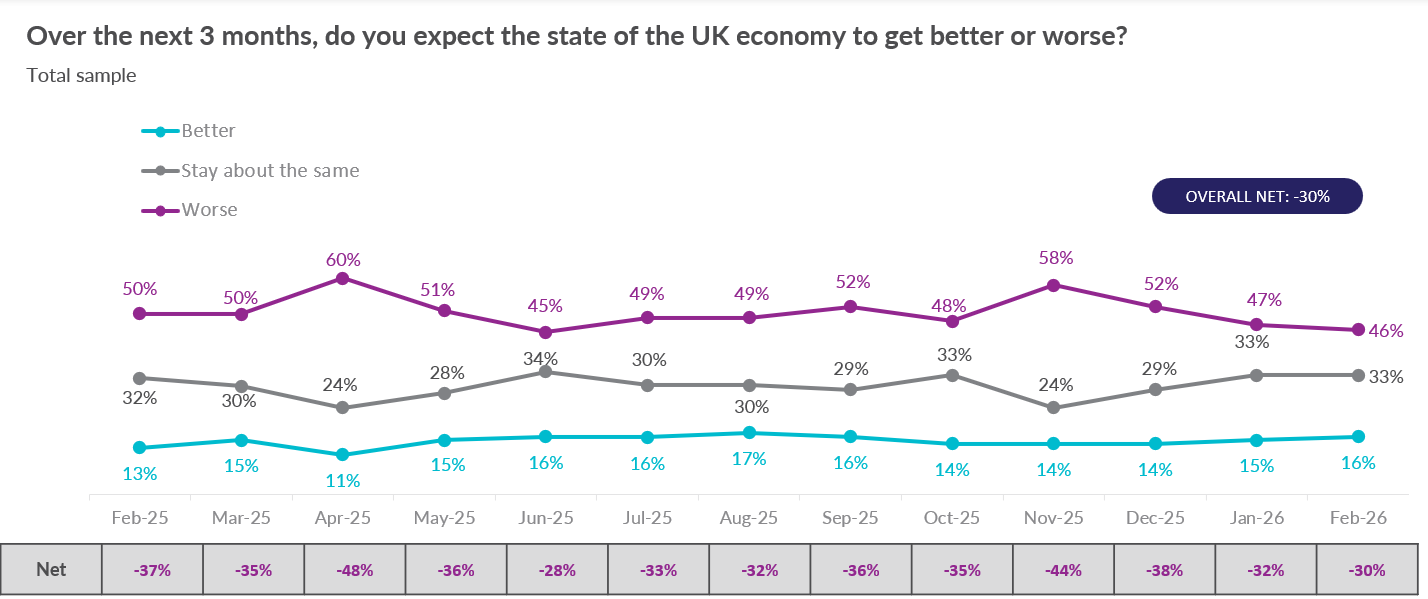
Consumer confidence rose for a third consecutive month in February with households reporting improved expectations for both personal finances and spending.
The latest BRC-Opinium survey, conducted between 10 and 13 February 2026, found that expectations for the state of the economy over the next three months improved to -30, up from -32 in January.
Sentiment around personal finances also edged higher, rising to -6 from -8. Expectations for personal spending on retail saw a marked uplift, moving to 0 from -6, while overall spending expectations increased slightly to +6 from +5.
However, expectations for personal saving slipped back to 0 from +2, suggesting households may feel marginally more comfortable spending rather than building cash reserves.
CAUTIOUS ENCOURAGEMENT
While overall confidence remains in negative territory, the steady improvement may offer cautious encouragement for the mortgage market, particularly if greater willingness to spend translates into stronger housing activity in the spring.

Helen Dickinson, CEO of the British Retail Consortium, said: “Consumer confidence improved for a third straight month, hitting its highest level since last June. Young people remain the most upbeat, with men notably more confident than women about the months ahead.
“Spending expectations also edged up in February, but retail demand remains weak by historical standards, leaving retailers under continued pressure.”
ECONOMIC HEADWINDS
And she added: “This lift in confidence is encouraging, but fragile. Slow growth and rising unemployment still weigh heavily on the economy.
“Potential future rate cuts and rising real wages could help unlock discretionary spending, but only if Government acts too – tackling economic headwinds and mitigating business costs to help ease the cost of living.
“Only by boosting consumer spending can retail begin to unlock more jobs and investment in local economies across the country.”
For brokers and lenders, the direction of travel will be closely watched. Any sustained improvement in sentiment – particularly if supported by rate cuts or wage growth – could help underpin borrower appetite as the market moves deeper into 2026.