

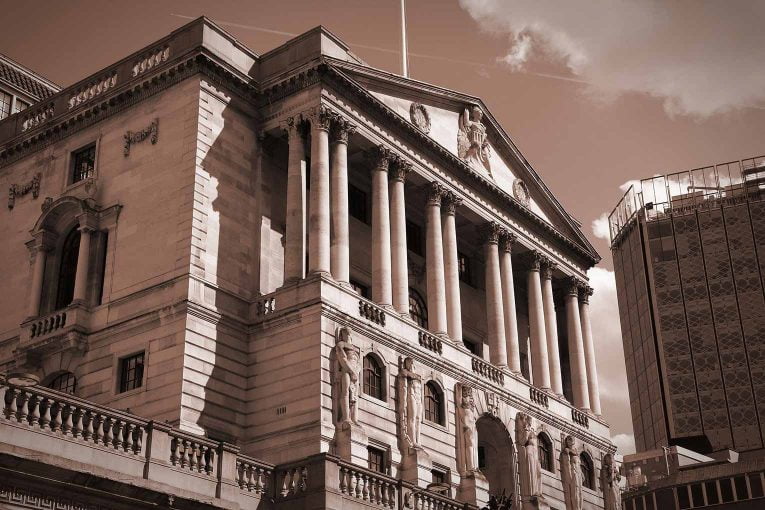
The Bank of England’s Monetary Policy Committee (MPC) has voted 6-3 to increase the Bank Rate by 0.25 percentage points to 1%, from 0.75%.
The other three members of the committee had called for a 0.50 percentage point rise, which would have taken the Bank Rate to 1.25%.
The decision comes as the MPC warned that inflation in the UK would reach double digits during the final quarter of 2022 following further energy price rises in October.
In its latest report, the Bank said: “We expect inflation to rise further to around 10% this year. Prices are likely to rise faster than income for many people. That means that people will be able to buy less with their money. The UK economy has been recovering from the effects of Covid, but we expect the increased cost of living to lead to slower growth overall.
“The Bank of England can’t do anything about the global supply problems or the energy prices that are currently pushing up inflation. But we do have tools to make sure inflation comes back down to our 2% target. The main tool we use to bring inflation down is to increase interest rates.
We raised the UK’s most important interest rate (Bank Rate) from 0.1% to 0.25% in December 2021, to 0.5% in February 2022, and then again to 0.75% in March. This month we have raised Bank Rate to 1%.
“We expect inflation to fall back next year and be close to our target in around two years.”
Frances Haque, Santander UK’s chief economist, added: “The decision to raise Bank Rate for the fourth consecutive meeting did not come as a surprise to markets and forecasters alike.
“With inflation continuing to rise to levels not seen in decades and with the possibility of inflation peaking above 9% due in part to increases in energy costs, the Committee’s concerns over it rising further trumped any apprehension around the effect on economic growth of raising Bank Rate again.
“However, the increase in cost of living is becoming acute for many as the prices of goods and services continue to rise, causing negative real income growth. This will inevitably impact on economic growth and the MPC will continue to need to balance inflation expectations against this lower growth as we move through 2022.”


