

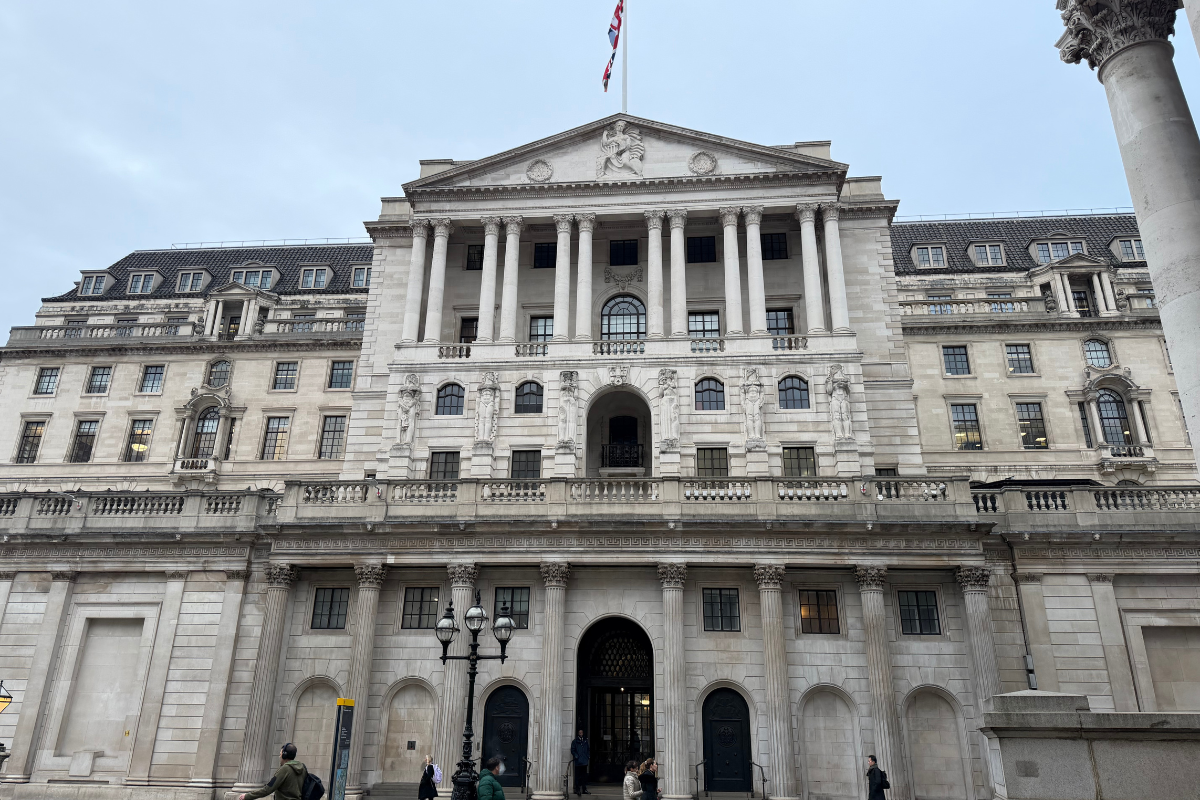
The Bank of England kept interest rates on hold at 3.75% today in a closely divided vote as policymakers signalled that further cuts are likely but stopped short of easing amid lingering concerns over inflation persistence.
Mortgage Soup reported this morning that a cut was unlikely. The Monetary Policy Committee voted 5–4 to maintain Bank Rate, with four members backing an immediate quarter-point reduction to 3.5%.
The decision reflects growing confidence that inflationary pressures are easing, counterbalanced by caution over whether the slowdown will prove durable.
Consumer price inflation has fallen from 3.8% in September to 3.4% in December and is expected to return to the 2% from April.
LOWER ENERGY PRICES
The Bank said the improvement was driven largely by lower energy prices, including the impact of measures announced in Budget 2025, with additional downward pressure from easing wage growth and softer services inflation.
The Bank said that monetary policy has already become significantly less restrictive, with rates cut by 150 basis points since August 2024. While the risk of inflation proving more persistent has diminished, policymakers highlighted increasing downside risks from weak demand and a loosening labour market.
Unemployment has risen to just over 5%, while economic growth remains below estimates of potential. The Bank’s central forecast now assumes a wider output gap than previously expected, reflecting subdued household spending and a cautious outlook for business demand.
MORE EVIDENCE NEEDED
Despite this, the majority of the committee argued that more evidence was needed before cutting rates again.
They pointed to uncertainty over how quickly falling headline inflation would feed through into wage settlements and price-setting behaviour, and warned that easing too soon could risk inflation settling above target in the medium term.
Those voting for an immediate cut said policy remained overly restrictive given the scale of labour market slack and the prospect of inflation undershooting the target without further easing. Several members judged that wage growth was now close to levels consistent with the inflation target and that expectations would normalise as inflation falls.
The Bank said future decisions would depend on incoming data, adding that further reductions in Bank Rate were likely but that the timing and pace of easing would be a “closer call” as policymakers balance competing risks.
INDUSTRY REACTION

Joshua Elash, director of specialist lender MT Finance, says: “While further cuts are expected later this year, it is not surprising that bank rate has been held at 3.75% this time around.
“The news that UK inflation rose in the 12 months to December 2025 effectively shut down the possibility of a drop in February, particularly as the US Federal Reserve also voted against a decrease last week.
“There is still an appetite to lend though, and we are hopeful that in the absence of any rate increases, borrowers will continue to transact.”
WAITING GAME

Paul Noble, CEO of Chetwood Bank, said: “I don’t think anyone believes today’s result means rates will stay at their current level for long.
“The MPC might be getting mixed signals from the economy, but it feels like there’s a general sense that it’s only a matter of time before we see another cut.
“That expectation is already feeding into pricing, particularly at the short end of the market. Whilst we’re seeing savings rates gently ease back as the market anticipates lower bank rates later this year, longer-term borrowing costs, including mortgage pricing, remain influenced by where longer-dated swap rates settle. These have been more resilient.
“Falling swap rates will mean we almost certainly see rates go down across the entire savings space in the coming weeks, which means smart savers will look to lock down the best fixed-rate deals while they’re still high.
“Across the board, savers need to be alert and make sure they’re making the most of their money, particularly any funds left in low- or no-interest accounts when they could be making more of a difference.”
WE NEED A MINDSET SHIFT

Paresh Raja, CEO of Market Financial Solutions, said: “Given the historic lows we saw between 2008 and 2022, it’s understandable that there remain loud calls for the base rate to fall further and further.
“But a mindset shift is perhaps required – the Bank of England is not going to rush to cut the base rate, and when we zoom out and look at the last three or four decades, we see that the cost of borrowing today is highly competitive.
“Positively, we are seeing greater pragmatism, with brokers and borrowers having adapted well to the rates on offer across the mortgage market, aided by the fact that these rates have been largely stable for more than a year.
“The market is in a strong position. The data suggests that transactional activity is still somewhat subdued, but prices are holding firm and we’re certainly seeing healthy levels of demand among buyers and investors across the country.
“Base rate movements will always be influential, but should not overshadow broader market conditions, nor the need for lenders to double down on supporting clients to get deals done rather than waiting for the Bank of England’s policymaking to shift.”
SLOW AND STEADY

Tim Parkes, CEO of RAW Capital Partners, said: “Having done so just before Christmas, a second consecutive base rate cut was always very unlikely; it would have been at odds with how the Bank of England has approached the challenge of reducing borrowing costs over the past two years.
“Slow and steady seems to be the unofficial motto, especially with inflation remaining sticky. That said, it is expected that the base rate will fall further in 2026, and conditions have improved for UK borrowers.
“The opening five weeks of the year have, from our perspective, been far busier and more positive than the same period in 2026. There is greater confidence among buyers, and with rates having fallen in the past 12 months, demand seems higher.
“We are also now well into Labour’s second year in power, which has meant a little less uncertainty around policy direction and potential reform. As a lender, the focus is on removing friction from the finance process for brokers and borrowers so we can ensure this uptick in confidence and calming of conditions translates into market activity, which we expect to see in the weeks ahead.”
PLANNING WITH CONFIDENCE

Adrian Moloney, group lending distribution director, Precise, said: “While many borrowers will have been hoping for an interest rate reduction, a period of stability should at least provide some reassurance and help households plan with greater confidence.
“Despite the base rate remaining unchanged, there is good news on affordability – with positive movement on mortgage rates and more flexible products coming to market, to help more home buyers and movers make the leap this year.”
STICKY INFLATION

Colin Bell, founder and COO of Perenna, said: “A hold will feel disappointing to some, but it reflects the reality borrowers are already living in: higher rates are no longer a temporary phase.
“They are here to stay as inflation remains sticky, and for many households, it is simply better to opt for long-term certainty now, than to keep holding out for a quarter-point cut later in the year that will make little difference to their monthly finances.
“It’s increasingly clear that rate decisions alone aren’t shifting the dial on homeownership. The average first-time buyer is now well into their thirties, and around a third of renters aged 25–44 say they don’t expect to ever own a home. That tells us the challenge isn’t whether the base rate has moved this month, but whether the system is actually opening the door rather than leaving people knocking.
“We need to stop treating rate cuts as the solution and focus instead on products and policy that give borrowers more control, flexibility and longer term stability. That’s where real progress will come from.”
RATE CUTS ON PAUSE

Ryan Etchells, CCO at Together, said: “The Bank of England remains firmly in “wait and see” mode, with hopes of early rate cuts tempered by inflation.
“However, while policymakers pause, the property market continues to move forward. The year has started with a noticeable spring in its step, as buyer demand picks up and the fog of late 2025 uncertainty begins to clear.
The Bank of England’s latest decision puts on pause hopes that significant savings from mortgage rate cuts are just around the corner.”
AFFORDABILITY BOOST

Tony Hall, head of business development at Saffron for Intermediaries, said: “The decision to hold the base rate is hardly a surprise given that inflation has proven more stubborn than expected, climbing further from the Government’s 2% target.
“With the wider economy showing pockets of resilience, policymakers have opted for caution, and that’s filtering through to the mortgage market where rate reductions have slowed compared to recent weeks.
“Despite this pause, some analysts suggest mortgage affordability is reaching its most manageable level in five years, thanks to easing rates and rising incomes, boosting buyer confidence.
“If inflation begins to ease back towards the Government’s target, attention will quickly turn to the next rate decision and the prospect of cuts later in the year. In a fast-changing market, speaking to a mortgage adviser is the best way for homebuyers to understand what these shifts mean for their own plans.”
DISCIPLINED APPROACH

Charles Resnick, CFO at Afin Bank, said: “Following December’s cut in interest rates another one this early in 2026 was always unlikely. In fact, the market is not expecting to see a rate cut until April’s meeting where the Monetary Policy Committee (MPC) should have a clearer view on pay awards and whether this is further evidence of slack emerging in the economy.
“MPC members appear to have little appetite to loosen policy again so the voting at each meeting will continue to be close.
“I expect lenders to remain disciplined with their mortgage rates given the uncertainty over the timing of the next cut and the MPC’s more cautious approach to returning inflation sustainably to its 2% target.”
WIDELY EXPECTED

Steve Cox, CCO at Fleet Mortgages, said: “Today’s decision by the Bank of England to hold Bank Base Rate at 3.75% comes as no surprise, particularly after inflation edged up slightly to 3.4% last month.
“With a cut already delivered in December, and the Bank keen to avoid moving too quickly, this pause was widely expected.
“That said, the broader expectation is still for inflation to fall through the year, which could pave the way for two or possibly three cuts to BBR during 2026, potentially taking us down to 3% by the end of the year.
“That may provide advisers and their clients with some degree of forward visibility but with no guarantees, and one suspects, that the pace of change is likely to remain ultra-cautious.”
BUMP IN THE ROAD

Ryan McGrath, director of second charge mortgages at Pepper Money, said: “Holding the base rate at 3.75% acts as a speed bump for borrowers who might have been banking on consecutive cuts after December.
“With inflation ticking up slightly, the Bank is clearly signalling that the route back to lower rates will be gradual, not a straight line.
“For homeowners, this pause means the pressure lingers a bit longer. Anyone coming to the end of a fixed-term deal is still looking at a sharp jump in payments compared to the rates they secured five years ago. In that context, a full remortgage remains an unappealing, and often expensive, move for many.
“This is where second charge mortgages continue to prove their worth. Instead of disturbing a low-interest first charge mortgage just to raise capital or consolidate debt, homeowners can use a second charge to access equity. It’s a practical way to manage finances efficiently without exposing the entire mortgage balance to today’s higher rates.”
NO NEWS IS GOOD NEWS

Jonathan Samuels, CEO of specialist lender, Octane Capital, said: “No news is good news in the grand scheme of things, and today’s decision to hold the base rate provides welcome consistency for both lenders and borrowers, particularly given the fact that inflation climbed in December and remains higher than the Bank of England’s two percent target.
“With this considered, a static base rate should provide lenders with the confidence to maintain competitive product ranges and pricing, whilst it also allows borrowers to plan with greater certainty. This will create a supportive environment for buyers and investors alike, helping to sustain activity and confidence across the property market.”
ECONOMIC UNCERTAINTY

Nathan Emerson, CEO of Propertymark, said: “Today’s decision to hold interest rates reflects the Bank of England’s cautious approach in the face of ongoing economic uncertainty.
“While we would ultimately welcome lower borrowing costs, stability at this stage gives buyers and sellers clarity about the cost of borrowing and allows the market to continue adapting.
“For those planning moves, knowing that many mortgage products are unlikely to change in the immediate term can provide space to make informed decisions about house purchases or remortgaging.”
NO BIG BANG

Rob Clifford, CEO of Stonebridge, said: “The market has been on tenterhooks waiting to see if the Bank would deliver consecutive cuts but it wasn’t to be. Inflation rose for the first time in five months in December and that seems to have been just enough for the rate setters to press pause despite a weakening jobs market.
“Confidence is still clearly returning, however, after a glut of unnecessary uncertainty around the autumn Budget, but the property market isn’t getting the big bang that might have been anticipated.
“Borrowers understand that rates are only going in one direction for now. Ultimately that can cause people to delay under certain circumstances but the lower rates go, the less that will really make a difference. We’re gradually returning to the rate sweet spot where borrowing costs no longer represent a hump that causes consumers to hold out for better times.
“When the next couple of rate cuts do arrive, and they’re certainly expected this year, these will spur significantly more activity and that’s going to be great news, not just for advisers but agents, housebuilders and lenders as well. Advisers should be prepared for that, and it may be that some now start to increase investment in their lead generation and pipeline in anticipation.”
POSITIVE TONE

David Hollingworth, associate director at L&C Mortgages, said: “Although the base rate fell in December, the tone was cautious and a subsequent rise in the rate of inflation didn’t boost hopes for another rate cut to come this soon. The decision to hold is therefore one that was widely anticipated.
“The hold therefore won’t come as a shock to markets, which should avoid causing any turbulence for mortgage rates. There is still a broad expectation that interest rates will fall further through the course of this year, which is already broadly priced into fixed rates.
“The fact that four members of the committee voted to cut the base rate again this month should be received positively. The tone could give markets more confidence that another cut will be applied in coming months, with potential for more as the data firms up to support more reductions.
“However, borrowers can’t afford to be complacent as we have seen a growing number of lenders edging their fixed rates up recently. As more lenders edge rates higher it only makes it more likely that others will follow in the short term.
“This isn’t resulting in rocketing rates but does act as a sharp reminder to borrowers that things can change quickly.”
COMPETITION REMAINS STRONG

Emma Hollingworth, chief distribution officer at LSL Financial Services, said: “With inflation unexpectedly rising in December, the Bank of England was always likely to err on the side of caution and keep interest rates on hold at this meeting.
“While overall inflation is likely to fall back towards the Bank’s 2% target this year, stubbornly high services inflation will worry policymakers at the central bank. Until there is clear evidence that it is easing, the Bank’s rate-setters are likely to keep its powder dry.
“Before the latest inflation data, markets had been pricing in two further 25-basis-point cuts this year. That path looks less certain now, although if December’s inflation jump proves to be a one-off and price growth starts to soften again, we could see one or two more cuts this year.
“For borrowers, this means mortgage rates are unlikely to move much lower – if at all – in the near term. In fact, recent increases in Swap rates have caused some lenders to put up their mortgage rates.
“That said, competition remains strong and pricing remains relatively attractive, which is good news for the estimated 1.8 million borrowers rolling off fixed rate mortgages in 2026. And it presents brokers with the perfect opportunity to re-engage with these borrowers and help them find the perfect deal for their circumstances.”
SAFETY OF THE SIDELINES

Ben Thompson, director of home moving strategy, Mortgage Advice Bureau, said: “The Bank of England has opted for the safety of the sidelines with today’s rate hold.
“Despite inflation moving in the right direction, the MPC clearly isn’t ready to hit the accelerator on further rate cuts yet. That said, we still hope for a couple more cuts this year before we get close to some sort of new equilibrium.
“Since lenders will have already priced in this latest hold, the deals you see on the shelves today are likely as good as they’re going to get for a little while. Arguably, the smart move right now isn’t trying to wait out the market for a perfect moment that might not come: it’s about finding a deal that actually fits your life and your budget.
“This is where an expert adviser really comes into their own. They do all the heavy lifting for you, looking past the headline rates to find a deal that matches your specific needs.”
MPC 5-4 SPLIT

Simon Gammon, managing partner, Knight Frank Finance, said: “The Bank holding rates was widely expected, but the fact that four of the nine members of the Monetary Policy Committee voted to cut is a positive sign.
“Strong economic figures released over the past fortnight had prompted many of the larger lenders to raise mortgage rates in recent days, but this decision should reinforce a period of pricing stability. The best fixed rates have not moved higher and still sit at around 3.5%, but there has been considerable repricing across the middle of the market.
“Rates are already low enough to support a gradual recovery in activity, with borrowers broadly comfortable at current levels. That said, the pace is likely to remain slow and steady, particularly given the high level of homes currently for sale, which should limit upward pressure on prices and keep any renewed exuberance in the market in check.”
INFLATION CONCERNS

Mark Harris, CEO of SPF Private Clients, said: “There was a slim chance that the Bank of England would cut interest rates this month with ongoing concerns over inflation, which rose to at 3.4% in the year to December, meaning caution prevailed.
“However, we are hugely encouraged by four members voting for a reduction in base rate to 3.5% and hope more of the Committee come round to their way of thinking in due course. Market expectations are for a further quarter-point reduction at the April meeting with perhaps one or two more reductions this year, with base rate potentially settling at around 3%.”
RENEWED CONFIDENCE

Richard Merrett, managing director of Alexander Hall, said: “Today’s decision to hold the base rate is unlikely to dampen the market momentum that has been building in recent months, and we’ve already seen a noticeable increase in activity following the cut in December, with buyers hitting the ground running in the new year with a renewed sense of confidence.
“This confidence has been mirrored by lenders, who continue to offer greater product choice and more flexible terms, particularly when it comes to loan-to-income multiples.
“As a result, the average homebuyer is now around £1,000 better off each year when it comes to the cost of their mortgage repayments when compared to just 12 months ago.”
SHIFTING OPTICS

Ben Allkins, head of mortgages and protection at Just Mortgages, said: “The decision to hold the base rate was widely expected and consistent with the bank’s long-held approach.
“However, it’s clear that the optics around this decision have shifted. We’ve all seen mortgage rates edge back up as swap rates react to the growing expectations of fewer cuts. It’s a reminder to brokers and the wider market to not count its chickens – particularly given the challenges at home and abroad.
“For brokers, it’s a moment to be proactive. In particular, we need to be engaging with those clients who may have been holding off in the hopes of further competition and movement on rates. The focus has the shift away from a rate conversation and one that prioritises top quality, holistic advice – helping borrowers navigate the market and explore the wide variety of options still available to those from all backgrounds and circumstances.”
HIGHER FOR LONGER

Daniel Austin, CEO and co-founder at ASK Partners, said: “The Bank of England’s decision to hold rates at 3.75% underlines the ‘higher for longer’ reality facing households and property markets.
“While policymakers are signalling cuts later this year, the recent uptick in inflation shows the path back to target won’t be linear, and that’s keeping confidence fragile among buyers and developers alike. Mortgage pricing has improved and any further easing will be welcome, but it will take time for meaningful relief to filter through to monthly costs.
“In the meantime, mainstream housing activity is likely to remain subdued, with capital continuing to favour structurally resilient, income-led sectors such as build-to-rent, co-living, logistics, storage and data centres where undersupply supports demand. A clearer downward trajectory for inflation and rates moving sustainably lower would be the real catalyst for unlocking stalled projects. Until then, disciplined, income-focused and debt strategies offer a pragmatic way for investors to stay active while managing risk.”
SAVING GRACE

Adam Oldfield, managing director of Phoebus Software, said: “It was probably too much to hope for another rate reduction so soon, particularly as inflation came in higher-than-expected last month.
“If inflation comes back under control, then I expect the base rate will come down further this year, but gradually and steadily, so it will be interesting to see which way the MPC votes in March.
“Phoebus is a servicing software provider for mortgages and savings, so while borrowers might be disappointed with this news, we know savers will be relieved that rates haven’t dropped any further.”
EXPECTED CAUTION

Nick Hale, CEO at Movera, said: “This hold on the base rate aligns with the caution expected from the Bank of England, following the latest cut to 3.75% in December. It is clear the MPC is still concerned with measures to reduce inflation in the long term after it rose slightly to 3.4% at the end of last year, especially when wages are set to keep growing.
“Nevertheless, Rightmove recently announced that February is the best month to list a house and successfully find a buyer, and this won’t have gone unnoticed by consumers, many of whom will be keen to take advantage of mortgage rates announced the wake of the last MPC rate cut. At Movera we are committed to helping brokers and conveyancers keep up with the pace of these transactions and make property sales more efficient for all parties involved.”
LOOMING CRISIS

Joe Pepper, UK Chief Executive Officer, PEXA, said: “Today’s decision prolongs the wait for thousands of UK borrowers looking to remortgage or buy a property, especially with the recent rate hikes being seen across the industry. It also highlights a looming crisis – the more people wait for better circumstances to buy, the more the backlog grows.
“Eventually, when the right triggers are pulled, the flood gates will open and demand for transactions will soar. Inevitably, the system will be entirely overwhelmed because the infrastructure supporting conveyancers is not set up to handle this many transactions at once – it is struggling as it is.
“But this can be prevented. The key priority must be to support those who keep the housing system functioning. That means ensuring conveyancers are not buried under administrative backlogs without the capacity or resources to manage such heightened demand.
“The Future Property Transaction Group found that transaction times could be halved with the right digitalisation freeing up conveyancers to focus on tasks that need their expertise. Getting this right is essential not just to keep the housing market afloat, but to ensure it can operate efficiently and sustainably for all – more investment in the right technology cannot come soon enough.”
GRADUAL RECOVERY

Andrew Lloyd, managing director of Search Acumen, said: “Holding the base rate at 3.75% forces it in line with the majority of expectations in the market at the moment. After December’s cut, few were geared up for a further loosening of policy, and the recent inflation figures have further consolidated this view.
“For the commercial real estate sector, this decision means the recovery in transaction volumes will be gradual rather than immediate. Investors are ready to deploy capital, but with borrowing costs staying put for now, we expect a continued period of price discovery as buyers and sellers try to align their expectations.
“That said, stability has its own value. A hold allows firms to plan with a degree of certainty. The smart money isn’t waiting for the bottom of the market; they are using this time to conduct thorough due diligence and get their data in order, ensuring they can move quickly when the next window of opportunity opens later in the spring.”
CHANGING EXPECTATIONS

Andrew Gething, managing director of MorganAsh, said: “With a hold coming as no real surprise, the bigger story is the aftermath of changing expectations on interest rate cuts.
“That shifting view, from two cuts down to one, means we are likely returning to a ‘higher for longer’ scenario. This will be a painful realisation for those households which have long felt the burden of significant financial pressures. The cumulative impact of prolonged cost and inflationary pressures continues to strain household resilience. It places increasing focus on arrears levels and the growing protection gap – as highlighted again by the FCA’s interim findings of the Pure Protection Market Study.
“This backdrop only emphasises why customer vulnerability is so critical. Ongoing pressures can quickly tip customers into vulnerable circumstances. If we don’t know who these customers are, or we wait for them to make the first contact, we reduce the window needed to take meaningful action and achieve a positive outcome. Alongside capable tech, the guidance is out there to help firms resolve this and meet the requirements of Consumer Duty.
While the path of interest rates remains hard to predict, we know with real certainty that firms need to be alive to the challenges of their vulnerable customers. This is the reality, no matter the direction of the base rate.”
More to follow…


