

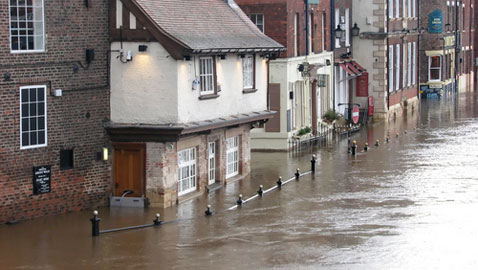
A quarter of UK homes that are at risk of flooding could be left uninsured this year, leaving mortgage lenders exposed to £214 billion of potentially blighted property, according to research carried out by xit2.
Based on data provided by property search firm SearchFlow, xit2 has warned that lenders could be left at risk as mortgage borrowers find themselves unable to secure insurance against flooding when the ‘Statement of principles’ agreed between the government and the insurance industry expires on 30 June 2013.
This could mean property owners are unable to insure their properties from summer 2012 as insurers become unwilling to offer policies which expire after the principles agreement. The end of the insurance cover leaves lenders’ mortgage book exposed to property at risk of floods where there is already a mortgage agreement in place.
“No insurance equals no mortgage,” said Mark Blackwell, managing director of xit2. “This means the only people who’ll be able to buy property at risk of flooding will be cash buyers – the lack of competition means prices will plummet. It is vital lenders are able to identify properties at risk before they value it and grant a mortgage.
“Failure to do so exposes them to potentially terminally blighted property and will increase the risk in their mortgage book. As the value of uninsured property falls, owners will be left in negative equity. It’s a real booby trap for buyers, surveyors and lenders.”
xit2 claims that uninsured properties could leave owners in breach of their mortgage contract. Many UK insurers are already trying to rid themselves of properties at significant risk of flooding and some property owners have been unable to secure policies with excesses below £20,000. The end of the insurance agreement also leaves surveyors exposed to a rise in over-valuation claims, where lenders feel the surveyor has been negligent and not taken flooding risk into account when valuing the property on their behalf.

Blackwell said: “Property blighted by flood is already a real headache for surveyors. Unless a solution is found, when government insurance of at risk properties ends next summer those headaches will become more serious migraines. Surveyors will need to make sure property at risk of flooding is identified so they can value it accordingly and protect themselves against over-valuation accusations.
“They should be encouraging the lender and the borrower to make sure the conveyancer doesn’t cut any corners when searching to establish whether or not the property is at risk of flooding.”




