

Latest research from Lloyds Bank has established that house prices in market towns are on average £24,766 (12%) higher than their county.
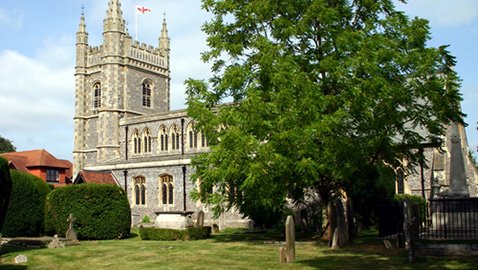
Two out of three market towns in England have an average house price that is above their county average. Close to the Chiltern Hills and within the London commuter belt, Beaconsfield in South Buckinghamshire has the largest house price premium with homes trading at 156% (or £501,648) above the county average.
Wetherby has the next highest premium with prices 99% (£157,016) above the West Yorkshire average, followed by Bakewell in the Derbyshire Peaks (88% or £147,224). One in eight market towns in the survey have a house price premium of at least £100,000.
Beaconsfield is the most expensive English market town with an average house price of £822,753. Petersfield in Hampshire (£402,216) and Cranbrook in Kent (£393,778) are the next most expensive market towns in England. Outside southern England, Bakewell is the most expensive market town with an average property value of £314,966.
Three of the top five least expensive market towns are in County Durham; Ferryhill with an average house price of £85,763, followed by Crook (£106,591) and Stanhope (£128,114). The other towns include Immingham (£110,565) and Tickhill (£133,550).
Andy Hulme, mortgages director at Lloyds Bank, said: “Market towns are important hubs of social interaction and cohesion, as well as providers of employment and support for local business. Market towns are also, in most cases, very attractive places to live. This is reflected in the majority of market towns having higher property prices than their surrounding counties – a premium that increased in the past decade.
“Home buyers continue to be attracted to the high quality of life, architecture, history, setting and community spirit offered by market towns and are prepared to pay a premium to live there.”
The average house price in market towns across England has risen by £60,586 or 34% from £179,535 in 2004 to £240,121 in 2014. This is equivalent to an average rise of £505 per month over the past decade.
The biggest increase in prices over the past decade was in Ferryhill where the average price rose by 76% from £48,743 to £85,763. Ferryhill is followed by Saffron Walden in Essex (59%). Lewes on the south coast (48%), Beaconsfield, Midhurst in West Sussex, Berwick upon Tweed and Yately in Hampshire (all 47%) saw the next biggest rises.
Average house prices have risen in nine out of ten market towns since the bottom of the housing market in 2009. Contrary to the decade as whole, it has been market towns in the south that have performed best in the past few years. Beaconsfield in Buckinghamshire recorded the largest price growth in the past five years (37%), followed by Saffron Walden (36%) and Yateley (36%). The average price growth since 2009 for all market towns in the survey was 13%.


