

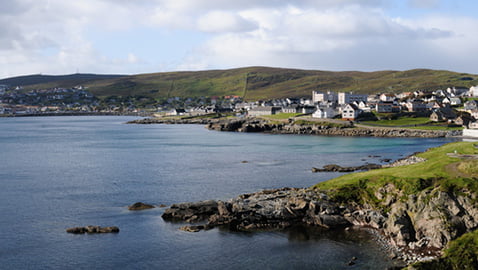
The Shetland Islands and the Western Isles are two of the UK’s top performing local areas in terms of falling unemployment and rising house price rises, according to new research from Bank of Scotland.
Homeowners in local authorities with the largest falls in the unemployment rate have seen the value of their property rise by almost £136,000 over a decade.The average house price in the ten local areas across the UK that recorded the largest falls in the unemployment rate in the decade to March 2014 rose by 68%, or £198,709, to £334,404. The unemployment rate in these areas fell by 1.3% during the period.
The rise in house prices in the 10 top performing employment locations over the past decade is split between areas of northern Scotland and inner London. In the Shetland Islands the average house price has more than doubled (104%) in the past decade to £153,782. The Shetlands is followed by Hackney (84%), Southwark, Western Isles (both 78%), Lambeth (76%) and Tower Hamlets (72%). All of these areas have seen their unemployment rate fall by between 1.1% and 1.8% since 2004.
These areas have outperformed the rest of the country as a whole, with UK average property prices growing by 22% (£36,482) to £199,039 over the same period, whilst the national unemployment rate is 0.5% higher.
At the other end of the spectrum the 10 areas with the lowest house price performance and a higher unemployment rate are generally concentrated in Northern Ireland and outside southern England.
Nitesh Patel, housing economist at Bank of Scotland, said: “In general, house price growth over the past decade has been stronger in the areas that have seen the biggest falls in the unemployment rate as measured by the claimant count. Areas in northern Scotland and inner London have generally outperformed other areas on both house price performance and a lower unemployment rate.
“During the recession of 2008-09 property values fell across most areas, even where the unemployment rate rose only marginally. This does highlight that while unemployment is important there are also other factors that drive house prices, such as affordability, earnings growth and low housing supply which will have contributed to rising prices in the earlier year.”


